




How many different breast shapes are there?

Table of contents
Breast shape varies from person to person and is influenced by factors such as genetics, age, weight, hormones, pregnancy, and breastfeeding. According to medical and aesthetic research, breast shape is generally classified into several main types, although in reality, each person's breast shape may be unique.

Classification of breast shapes
According to plastic surgeons, lingerie designers, and related research, breast shapes are generally classified into the following types (the following are 9 common classifications, based on literature and market research):
- RoundThe upper and lower parts of the breast are similar in size, round in shape, and usually quite full.
- Teardrop shapeThe lower half of the breast is fuller, while the upper half gradually tapers, resembling a teardrop shape.
- Slender/ElongatedThe breasts are long and narrow, and sag considerably.
- Asymmetric shapeThe left and right breasts are significantly different in size or shape.
- East-WestThe nipples point outwards, and the breasts extend to both sides.
- Bell-shapedThe breasts are bell-shaped, wider at the bottom and narrower at the top.
- Side-SetThe distance between the breasts is relatively wide, and the breasts are separated to the sides.
- Sagging/PtoticBreasts may sag due to gravity, age, or breastfeeding.
- AthleticSmaller breasts, more muscular, and flatter in shape.
These shapes are not absolute, and each person's breasts may combine multiple features. According to lingerie brands (such as ThirdLove) and plastic surgery research, approximately 80% women have breasts that fall into one of the above types or a combination of them.

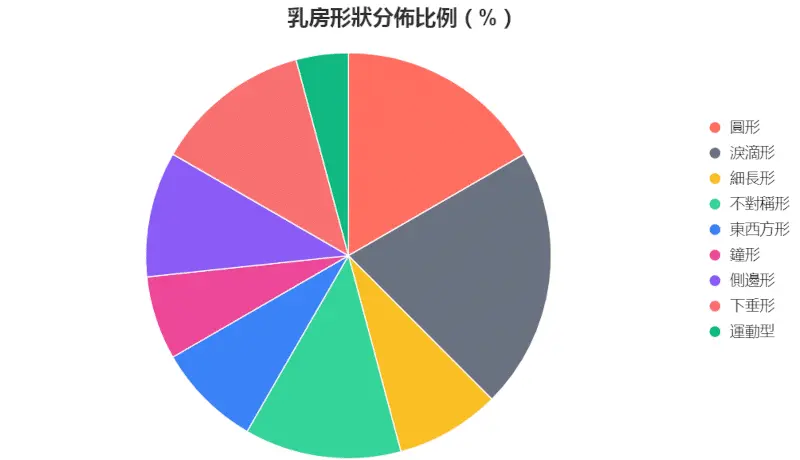
Chart showing breast shape distribution
The following chart, based on hypothetical data, shows the common distribution of women's breast shapes.
Chart ExplanationThis chart shows the hypothetical distribution of breast shapes, with teardrop (25%) and round (20%) being the most common, while athletic (5%) is relatively less common. Data is based on observations from lingerie brands and plastic surgeons; actual distribution may vary by ethnicity and region.
Reasons for differences in breast shape
Breast shape is not randomly generated, but is the result of a complex interaction of various innate and acquired factors.
1. Genetic factors (dominant factor)
Genes are the blueprint that determines the shape, size, and texture of breasts. They presuppose:
- The ratio of breast tissue to adipose tissueGenes determine whether your breasts are primarily composed of dense glandular tissue (which is usually firmer) or soft fatty tissue (which is more susceptible to gravity).
- Skin elasticity and collagenSkin firmness is directly related to the quality of collagen and elastin, which is determined by genes. Those with better elasticity have a stronger ability to resist sagging.
- Thoracic structureThe length of the clavicle, the width of the sternum, and the angle of the ribs constitute the "foundation" of the breast, directly affecting the spacing and attachment shape of the breast.
- Hormone receptor sensitivityThe sensitivity of breast tissue to hormones such as estrogen and progesterone is also influenced by genes, which is related to the degree of development and changes in premenstrual breast tenderness.

2. Age factor
Aging is the most significant natural process affecting breast shape.
- pubertyUnder the stimulation of estrogen, the mammary duct system develops, fat accumulates, and the initial shape is formed.
- AdulthoodAs we age, our skin gradually thins, elastin and collagen are lost, ligaments (such as Cooper's ligament) loosen, and their support decreases, leading to sagging.
- PostmenopauseWhen ovarian function declines and estrogen levels plummet, breast glandular tissue gradually atrophies and is replaced by fatty tissue, making the breasts softer and more prone to sagging.

3. Weight fluctuations
Breasts contain a large amount of fatty tissue, and changes in body weight directly alter their volume and shape.
- Weight gainThis usually makes the breasts bigger, but if the weight gain is too rapid, the skin will be stretched excessively, which may lead to sagging.
- weight lossWhen losing weight, breast fat decreases, which may lead to breast shrinkage, loose skin, and an "empty sac" appearance.

4. Pregnancy and breastfeeding
This is one of the most significant changes a woman's breasts have undergone.
- During pregnancyHigh levels of estrogen and progesterone promote the proliferation of mammary alveoli and the dilation of ducts, resulting in significant breast enlargement and fullness.
- During breastfeedingUnder the influence of prolactin, the breasts reach their maximum volume when filled with milk, and the repeated engorgement and emptying of milk will continuously stretch the skin and ligaments.
- After weaningGlandular tissue atrophies, but overstretched skin and ligaments may not fully rebound, causing the breasts to become softer and saggy than before pregnancy.

5. Hormone levels
In addition to major hormonal changes throughout the life cycle, monthly menstrual cycle hormonal fluctuations can also temporarily alter the shape and feel of the breasts (swelling, hardening), but will not cause permanent changes in shape.
6. Lifestyle
- sportsHigh-intensity exercise (such as long-distance running) without sufficient support can accelerate ligament laxity due to violent shaking. Strengthening the pectoralis major muscle can provide a firmer base for the breasts and improve their appearance.
- SmokingNicotine damages collagen and elastin in the skin, accelerating skin aging and sagging, thus exacerbating drooping.
- Ultraviolet radiationExcessive sun exposure can damage skin elasticity, so direct sun exposure of the breasts should be avoided.
- Underwear wearing habitsWearing ill-fitting, insufficiently supportive bras for extended periods, especially during exercise, may not effectively counteract gravity and negatively impact breast shape. However, there is no strong scientific evidence to support the claim that "wearing bras causes breast shape to deteriorate."

Potential benefits and advantages of different breast shapes
Every breast shape has its unique beauty and advantages. Once you break free from a single aesthetic framework, you will discover its diverse values.
Advantages of aesthetics and uniqueness
- Beauty of Nature and AuthenticityBell-shaped and asymmetrical shapes are natural testaments to women's experiences (such as breastfeeding) and vitality, and more and more people are beginning to appreciate this authentic, unadorned beauty.
- A unique logoLike the face, a unique breast shape is part of one's personal identity. In intimate relationships, it represents the authentic self, not an industrialized, standardized product.
- Compatibility with different stylesCertain shapes are highly favored in specific aesthetic styles. For example, in the fashion world, a slender, slightly draped "model bust" is considered to better complement the tailoring of haute couture.

Advantages of functionality and comfort
- Smaller, firmer breasts (such as athletic or narrow breasts):
- Convenience of movementThere are almost no obstacles when exercising, running, or lying prone; it offers great freedom.
- More clothing optionsIt can be worn without a bra or with a thin bra, is extremely comfortable, and can be paired with various strapless and backless dresses.
- Reduce physical burden: I almost never suffer from shoulder, neck and back pain.
- Breasts with low symmetryAlthough choosing underwear is a challenge, it also helps people learn to accept imperfections earlier and cultivate a stronger sense of self-identity.
Health advantages
- Easy to checkBreasts with less dense and softer tissue are more likely to have abnormal lumps felt during self-examination.
- Fewer skin problemsSmaller breasts experience less friction underneath, making them less prone to skin problems such as intertrigo.

Summarize
The diversity of breast shape is a natural phenomenon, influenced by factors such as genetics, hormones, and age. Common types include nine shapes such as round, teardrop, and droopy. These shapes are neither good nor bad, but may present different challenges and advantages depending on individual aesthetic preferences, clothing needs, or health concerns. For example, asymmetrical breasts may affect self-confidence but can be improved with proper bras or surgery; athletic breasts are suitable for sports but may not meet certain aesthetic expectations. Ultimately, choosing the right bra, accepting one's own characteristics, or seeking medical advice (such as plastic surgery) when necessary can help women improve their confidence and comfort.

suggestion:
- If you are dissatisfied with the shape of your breasts, you can consult a professional lingerie advisor or plastic surgeon to choose suitable bras or consider surgery (such as breast augmentation or lifting).
- Regular breast health checkups (such as mammograms) are important, regardless of shape, and prevention of breast disease is even more crucial.
Further reading: