




What do the Azure Dragon, White Tiger, Vermilion Bird, and Black Tortoise refer to?

Table of contents
Overview of the Four Symbols Mythology
Four Symbols MythologyMainly refers to traditional Chinese cultureEastern Azure Dragon,Western White Tiger,Southern Vermilion Bird,Northern Black TortoiseThese four mythical beasts represent the four cardinal directions, the five elements (Azure Dragon representing wood, White Tiger representing metal, Vermilion Bird representing fire, and Black Tortoise representing water), and the 28 constellations in astronomy. The Four Symbols myth originated from ancient star worship and is found in the ancient Chinese texts...ZhouyiIt was further elaborated in works such as [the book title], reflecting the order of nature and the concept of Yin and Yang.Five ElementsThought.
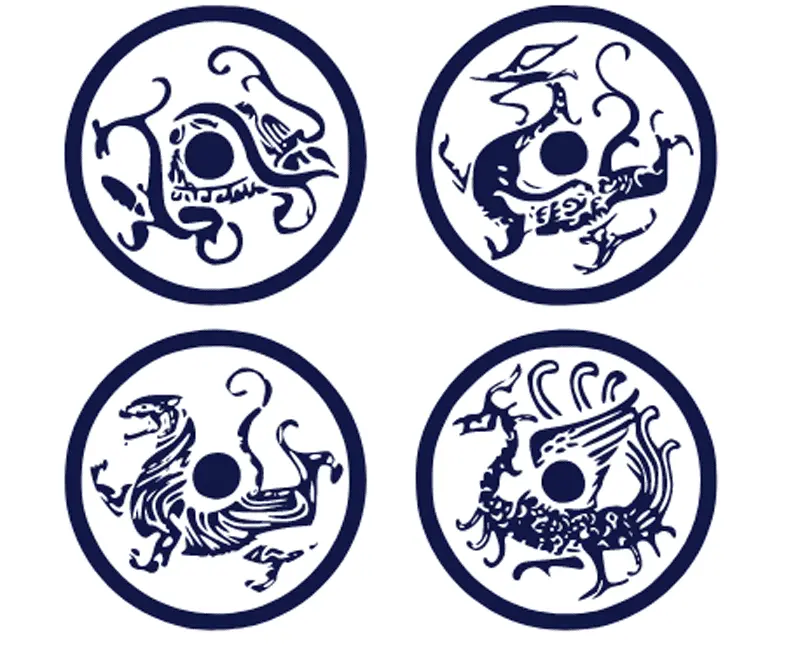
The symbolism and meaning of the Four Symbols
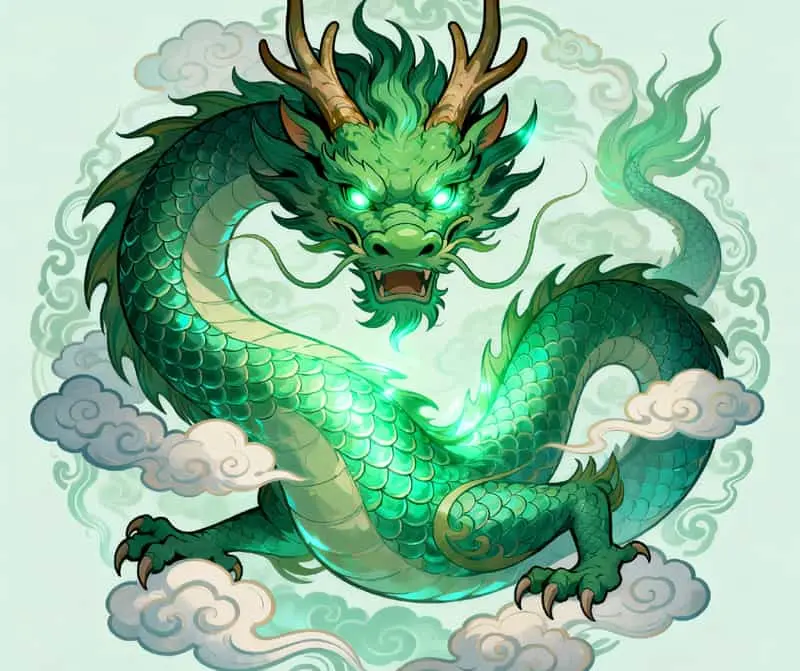
Azure Dragon
- Direction and Five ElementsThe East, associated with the element of wood, corresponds to spring and symbolizes vitality and growth.
- Cultural significanceAs a totem of the Chinese nation, the Azure Dragon represents authority, auspiciousness, and creativity. Ancient emperors often used the Azure Dragon as a metaphor for themselves, signifying their divine mandate.
- Constellation CorrespondenceThe seven constellations—Horn, Neck, Root, Room, Heart, Tail, and Winnowing Basket—form a dragon-shaped constellation.
Azure Dragon
- Direction and Five ElementsThe West, associated with the element of metal, corresponds to autumn and symbolizes desolation and conquest.
- Cultural significanceThe White Tiger is both a war god and a god of warding off evil. It is commonly found in tombs and architectural decorations to guard the west.
- Constellation CorrespondenceThe seven constellations, namely Kui, Lou, Wei, Mao, Bi, Zi, and Shen, resemble a fierce tiger.
Without hair
- Direction and Five ElementsThe south, associated with fire, corresponds to summer and symbolizes light and passion.
- Cultural significanceThe Vermilion Bird is the spirit of fire, representing happiness and rebirth. In Taoism, it is often regarded as a divine bird that guides the soul.
- Constellation CorrespondenceThe seven constellations—Well, Ghost, Willow, Star, Extended Net, Wings, and Chariot—form a bird-shaped pattern.
Vermilion Bird
- Direction and Five ElementsThe north, associated with water, corresponds to winter and symbolizes wisdom and longevity.
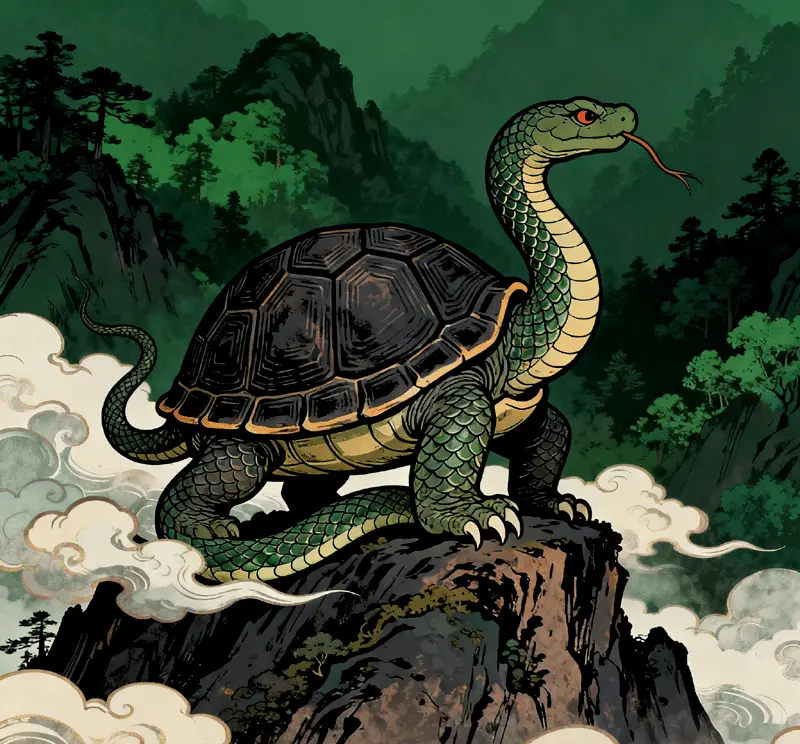
- Cultural significanceXuanwu is a combination of a tortoise and a snake, embodying the harmony of Yin and Yang. It is the embodiment of the water god and the North Star, and is revered as the Xuanwu Emperor in Taoism.
- Constellation CorrespondenceThe seven constellations—Dou, Niu, Nü, Xu, Wei, Shi, and Bi—are shaped like an intertwined tortoise and snake.
Xuanwu
The Four Symbols system is intertwined with the Five Elements theory (wood, fire, earth, metal, and water) and the Yin-Yang philosophy:
- Azure Dragon (Wood)andVermilion Bird (Fire)It belongs to the Yang element, representing growth and expansion;
- White Tiger (Metal)andXuanwu (Water)It belongs to Yin, representing gathering and storage;
- Central EarthAlthough it does not directly correspond to mythical beasts, it serves as the pivot for balancing the four elements, embodying the philosophy of "the five elements residing in the center".
The Origin and Evolution of the Four Symbols Myth
The development of the Four Symbols spans thousands of years, evolving from primitive star worship to a systematized mythology, and its evolution can be divided into three stages.
Ancient times: The beginnings of star worship (c. 3000 BC – 1000 BC)
- Archaeological evidenceThe clam shell dragon and tiger pattern (circa 4500 BC) at the Xishuipo site in Puyang, Henan Province, shows that the ancients had already associated star clusters with animal images.
- Documentary recordsThe Book of Documents, Yao Dian, mentions "the gods of the four directions," which is the prototype of the concept of the Four Symbols.
- Star worship:
The Four Symbols originated from the ancient Chinese worship of stars. The ancients associated the constellations in the sky with animal figures, each corresponding to one of the four directions: east, south, west, and north. This reflects the ancients' observation and imagination of celestial phenomena, personifying natural phenomena as deities.
Zhou to Han Dynasties: Theoretical Systematization (1000 BC – 220 AD)
- The Influence of the Book of Changes:
The *Xici Zhuan* (Appended Remarks) proposes that "Taiji generates Yin and Yang, Yin and Yang generate the Four Symbols," combining the Four Symbols with Yin and Yang and the four seasons, thus endowing them with philosophical connotations. The *Zhouyi Xici Zhuan* (Appended Remarks of the Book of Changes) also states that "Taiji generates Yin and Yang, Yin and Yang generate the Four Symbols," interpreting the Four Symbols as a further development of Yin and Yang, representing the four seasons and the composition of the Eight Trigrams. This elevates the Four Symbols from astronomical worship to a philosophical level, integrating them into the Yin-Yang and Five Elements system. - Development of Astronomy:
The Twenty-Eight Mansions system was perfected in the "Treatise on Celestial Offices" in the Records of the Grand Historian, and the Four Symbols became the standard for dividing the celestial regions. - Han Dynasty Apocryphal Books:
The Spring and Autumn Annals and other texts link the Four Symbols with the Emperor's Mandate of Heaven, thus strengthening their political symbolic significance.
Tang and Song Dynasties to Ming and Qing Dynasties: Religion and Folklore (618 AD – 1912 AD)
- Taoism absorbedThe Four Symbols were incorporated into the Taoist pantheon. For example, Xuanwu evolved into Zhenwu the Great, becoming the supreme god of the north.
- Folk ApplicationsThe Four Symbols are widely used in feng shui, architecture, and festivals. For example, the layout of Chang'an City in the Tang Dynasty was based on the Four Symbols.
Development and Key Milestones
The development of the Four Symbols myth can be traced back to ancient times, evolving from star worship to philosophical symbolism, and then to cultural symbolism. The following is a timeline of its important milestones, presented in tabular form:
| Time period | Important Milestones | Historical significance |
|---|---|---|
| c. 1600-1046 BC (Shang Dynasty) | The concept of the Four Symbols has its origins in historical records, such as the "Shanghai Classic," which mentions dividing the sky into four palaces, corresponding to the constellations of the southeast, northwest, and southwest. | Laying the foundation for star worship, the ancients began to imagine star clusters as animal figures, forming the prototype of directional deities. |
| 1046-256 BC (Zhou Dynasty) | When the Book of Changes was completed, it first proposed the concept of "two principles giving rise to four phenomena," interpreting the four phenomena as the development of yin and yang, representing the four seasons and the eight trigrams. | The shift from astronomy to philosophy, incorporating the concepts of Yin and Yang and the Five Elements, became a core element of traditional Chinese philosophy. |
| 221 BC - 220 AD (Qin and Han Dynasties) | The Four Symbols evolved into the Azure Dragon, White Tiger, Vermilion Bird, and Black Tortoise, which were combined with the Twenty-Eight Mansions; during the Han Dynasty, the dragon became a symbol of the emperor. | Integrating national symbols with Taoism, it was widely used in astronomy, military affairs, and folk customs; it first appeared in Taoist classics such as the "Seven Tablets of the Cloudy Bookcase". |
| 220 AD onwards (Wei, Jin, Northern and Southern Dynasties and later generations) | The Four Symbols are integrated into Taoism, folk customs, and art, such as in tomb murals and flag symbols; they are also combined with concepts such as the Four Spirits and the Six Gods. | It has become an auspicious symbol, influencing architecture, feng shui, and cultural heritage to this day. |
This timeline, based on historical documents and archaeological discoveries, shows the evolution of the Four Symbols from primitive worship to a mature system.
Application and Practice of the Four Symbols
The Four Symbols are not only theoretical concepts, but also deeply involved in various aspects of ancient society.
Astronomy: The Framework of Cosmic Order
- Division of the Twenty-Eight MansionsThe four symbols each govern seven constellations, used to mark the orbits of the sun, moon, and five planets.
- Calendar FormulationBy observing the four cardinal directions, the twenty-four solar terms and agricultural seasons are determined.
- Ancient star chartsThe Dunhuang star map (Tang Dynasty) marks the four celestial officials, showing their core status in astronomy.
Military: A Symbol of Location and Strategy
- Military formation layoutDuring the Spring and Autumn Period, Sun Tzu's Art of War emphasized that "square formations should be based on the four symbols," with the army using the Azure Dragon flag (east) and the White Tiger flag (west) to direct the direction.
- Weapon InscriptionsThe Four Symbols motif is commonly found on bronze mirrors and swords from the Han Dynasty, symbolizing warding off evil and achieving victory.
Architecture and Feng Shui: The Construction of Spatial Order
- Capital DesignThe Tang Dynasty's Chang'an city and the Ming Dynasty's Beijing city were both modeled after the Four Symbols, with the palace located in the Black Tortoise position (north) and the market located in the Vermilion Bird position (south).
- Mausoleum Feng ShuiThe imperial tombs of the Han Dynasty were laid out according to the four symbols, such as the Maoling Mausoleum of Emperor Wu of Han, which was guarded by stone carvings of the Azure Dragon and the White Tiger to the east and west.
Religion and Folklore: Carriers of Faith
- Taoist ritualsThe Four Symbols appear as guardian deities in religious ceremonies and talismans.
- Folk SacrificesThe custom of worshipping the Azure Dragon at the Spring Equinox and the White Tiger at the Autumn Equinox has continued into modern times.
- Festival ArtThe Four Symbols motif in New Year paintings and paper-cutting symbolize warding off evil spirits and bringing good fortune to the home.
The relationship between the Four Symbols and related concepts
The Four Symbols interact and influence other mythical beast systems, forming a complex cultural network.
The Four Auspicious Beasts: Dragon, Phoenix, Qilin, and Tortoise
- Differences and ConnectionsThe Four Symbols represent auspicious creatures, while the Four Symbols focus on directional mythical beasts; the Azure Dragon and the Phoenix belong to both the Four Symbols and the Four Symbols, reflecting the integration of the systems.
Six Gods: Expansion of Gouchen and Tengshe
- The Six Lines of the Book of ChangesThe Six Gods (Azure Dragon, Vermilion Bird, Hooked Serpent, Soaring Serpent, White Tiger, and Black Tortoise) are used in divination to reflect the auspiciousness or inauspiciousness of events. For example, the Azure Dragon signifies joy and celebration, while the White Tiger signifies calamity.
Correspondence between the Four Symbols and the Twenty-Eight Mansions
The table below shows the detailed division of the Four Symbols and the constellations:
| Four Symbols | Five Elements | Qisu | Symbolic meaning |
|---|---|---|---|
| Azure Dragon | Wood | Horn, Neck, Root, Room, Heart, Tail, Winnowing Basket | Vitality, Emperor |
| Without hair | gold | Kui, Lou, Wei, Mao, Bi, Zi, Shen | Severity, conquest |
| Vermilion Bird | fire | Well, Ghost, Willow, Star, Zhang, Wing, Chariot | Light and happiness |
| Xuanwu | water | Dou, Niu, Nv, Xu, Wei, Shi, Bi | Wisdom, Longevity |
The Modern Influence of the Four Symbols Myth
The four symbols remain active in the fields of culture and science, demonstrating their enduring vitality.
Cultural heritage
- Film and GamesThe Japanese anime "The Twelve Kingdoms" and the Chinese game "The Legend of Sword and Fairy" both use the Four Symbols as their core elements.
- Company logoSouth Korean company Samsung uses the design of the Azure Dragon and White Tiger to represent balance and innovation in its brand image.
Science Inspiration
- astronomyThe International Astronomical Union (IAU) names constellations after the four cardinal directions, such as Scutum, which corresponds to the seven constellations of Xuanwu.
- Environmental PhilosophyThe concept of the balance of the four elements and the five elements has been applied to ecological protection, emphasizing harmony between humans and nature.
Controversy and Reflection
- cultural appropriationWestern films and television shows often misuse the four symbols, such as simplifying the Vermilion Bird to "Firebird" in Harry Potter, which has sparked discussions about cultural accuracy.
- Gender symbolismModern scholars criticize the gender metaphors of the Four Symbols (such as the Azure Dragon representing Yang and the Black Tortoise representing Yin), and call for a re-examination of traditional symbols.
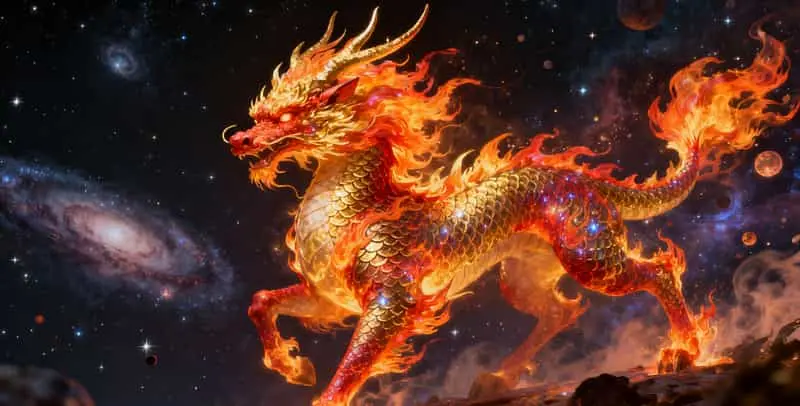
The Four Symbols myth, a crystallization of ancient Chinese wisdom, is not only a product of star worship but also a convergence point of philosophy, science, and art. From the Yin-Yang and Four Symbols of the *I Ching* to modern popular culture, its evolution reflects humanity's eternal exploration of the cosmic order. In the future, the Four Symbols will continue to inspire global cultural dialogue, serving as a bridge connecting the past and present.
Further reading: