
Evaluation of women in northern China
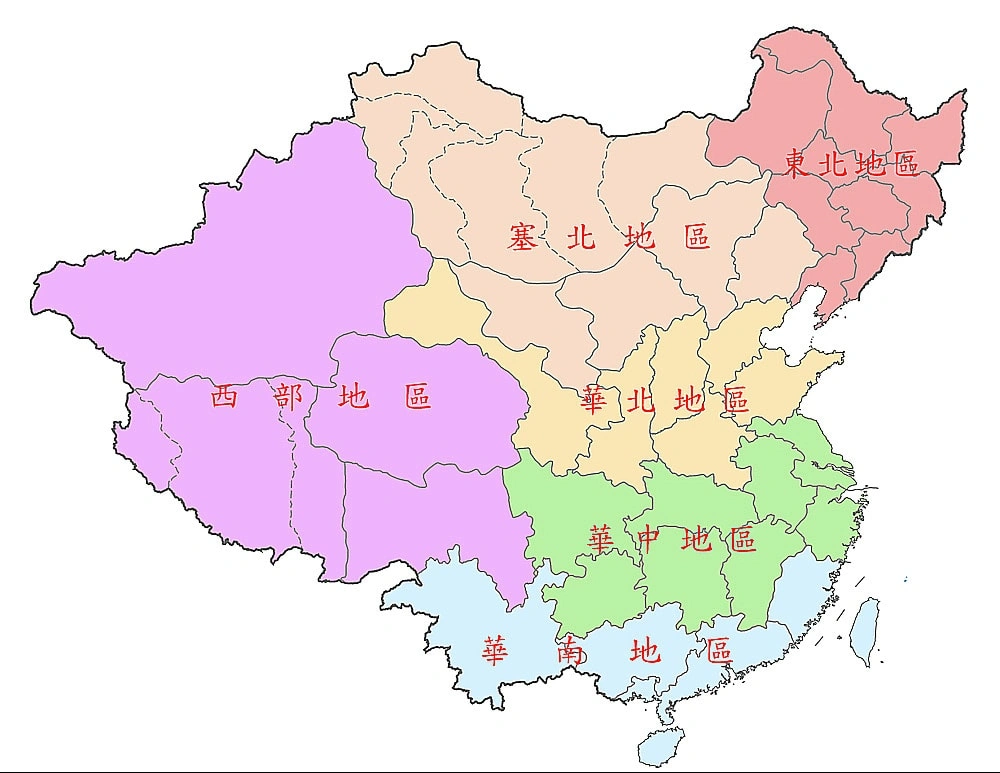
Northern ChinaIt mainly refers to the vast area north of the Great Wall in northern China, includingInner Mongolia Autonomous Region,HebeiNorthernShanxiNorthernLiaoningThe western and parts of the northwestern border regions. Historically, this area was a frontier region where nomadic peoples and agricultural Han Chinese intersected, and its culture blends characteristics of multiple ethnic groups, including the Mongols and Han Chinese.
Table of contents
The "Northern Frontier Region" no longer exists as a formal administrative division. It usually refers to the area during the Republic of China period. "The Four Provinces of Northern China" The four provinces and their respective capitals (now known as such) are as follows:
| province | The provincial capital at that time |
|---|---|
| Chahar Province | Zhang Yuan(present-day Hebei Province)Zhangjiakou City) |
| Rehe Province | Chengde(present-day Hebei Province)Chengde City) |
| Suiyuan Province | Guihua(now Inner Mongolia Autonomous Region)Hohhot) |
| Ningxia Province | Yinchuan(now Ningxia Hui Autonomous Region)Yinchuan City) |
A little supplement:
The term "Saibei" originates from "north of the border (Great Wall)," which was once the dividing line between Han Chinese agricultural civilization and northern nomadic peoples.
After the founding of the People's Republic of China, in order to adjust administrative divisions, these four provinces were successively abolished between 1952 and 1955, and their territories were mainly incorporated into the Inner Mongolia Autonomous Region, as well as Hebei, Liaoning and other provinces.
Body characteristics
Women in northern China tend to be taller and more robust than those in the south, a physique significantly influenced by climate, diet, and historical genetics. While Han Chinese in the north are generally taller than those in the south, the average height is even more pronounced in the northern regions due to their proximity to grasslands and plateaus.
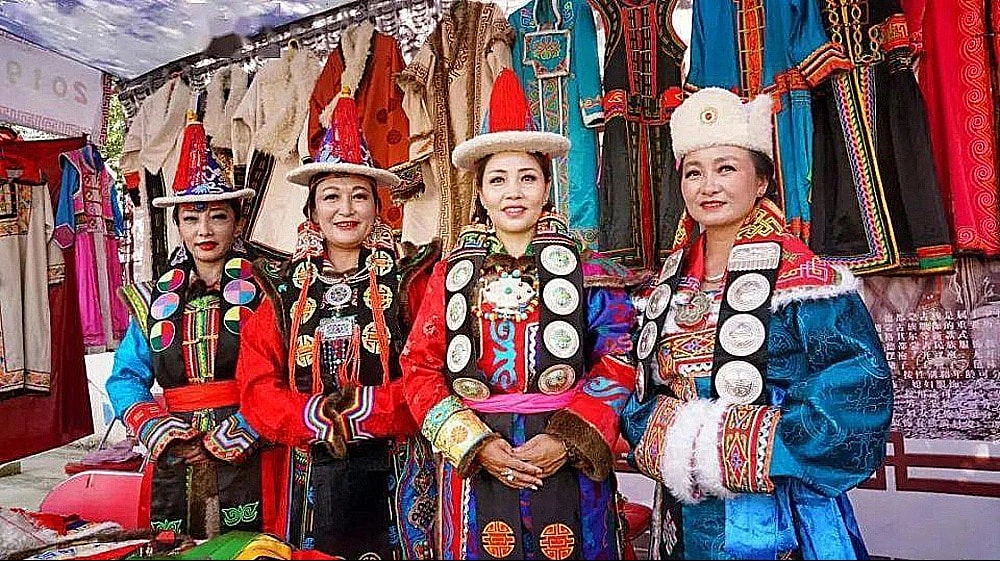
The female population is diverse, including both pure Mongolians and descendants of Han, Manchu, and other ethnic minorities. The following assessment is a comprehensive summary based on cultural anthropological observations, regional customs, physical characteristics statistics, and social feedback, but it must be emphasized that:Any regional generalization carries the risk of stereotyping. Individual differences are vast, greatly influenced by education, urbanization, and personal experiences, and therefore cannot be generalized..
| Features | illustrate |
|---|---|
| Tall and slender | Women in northern China are generally tall, which is related to the dry and cold climate and nomadic lifestyle. |
| muscular | Ordos Mongolian women are characterized by "long torso and broad chest" and are relatively robust, with a "very medium build" among Mongolian groups. |
| Wider hips and narrower waist | The long-term life on horseback has made the women of northern China have wider hips and thinner waists, presenting a unique curvaceous beauty. |
| sturdy build | Compared to the delicate and graceful women of the south, women of the north have larger frames and are more robust and powerful. |
According to physical anthropology data, women in North China, Northwest China, and Northeast China are generally 6-10 centimeters taller than those in the South. Mongolian or mixed-race women in Inner Mongolia and other areas have an average height of 165-170cm, with many exceeding 172cm. Their body proportions are relatively balanced, with a slightly longer upper body and strong, powerful lower limbs, which is related to horseback riding and labor in nomadic lifestyles. They have larger frames, with broad shoulders and moderate hips, creating the impression of a "large northern frame." Their subcutaneous fat layer is relatively thick, a physiological characteristic adapted to cold climates, providing warmth in winter, but also making some women appear fuller and rounder, rather than the slender, bony figures commonly seen in the South.
Breasts and hips are generally well-developed. Mongolian women tend to have fuller breasts and legs, with strong curves, and relatively flexible yet strong waists. Many possess a "horseback figure"—smooth leg lines and strong calves, suitable for wearing boots or riding attire. Their skin, due to wind, sand, and ultraviolet radiation, is relatively rough but elastic, and after care, it has a high luster. With modern urbanization, many women in northern China maintain their figures through fitness, yoga, or dance; grassland dances (such as Andai dance) naturally train core strength and coordination.
In terms of diet, the people of northern China mainly consume beef, mutton, dairy products, and pasta, which are high in protein and calories, promoting muscle and bone development, but also easily leading to localized fat accumulation. Compared to the south, women in northern China are less likely to be "skinny" and more likely to be "healthy and plump" or "athletic." The downside is that some rural women experience changes in their figure earlier due to labor and childbirth; the advantages are cold resistance, stress tolerance, and strong physical fitness.
In terms of fashion perception, women from northern China exude a powerful aura when wearing cheongsams or modern business attire, their tall figures carrying off the oversized garments. Compared to the "petite and delicate" women of the south, they are more like "heroic figures from the north," giving off a reliable and resilient feeling, someone who can weather any hardship together. Overall assessment: Their figures are excellent for the north, strong and fit, suitable for those who appreciate a "well-endowed" rather than a "skinny" aesthetic.
physical characteristics
The appearance of women in northern China blends northern Mongoloid features with northern Han Chinese characteristics. Typical Mongolian features include: straight, coarse, and shiny black hair; a relatively wide forehead; high cheekbones close to the eye sockets; small eye openings, often with single eyelids or inner double eyelids; long, narrow, and slightly upturned eyes (leaning towards almond-shaped eyes); a straight nose with relatively wide nostrils; full lips; a round or square chin; and often free-floating earlobes.
| Features | illustrate |
|---|---|
| With striking features, she possesses an "international flair." | The integration of multiple ethnic groups in the northern region (Han, Manchu, Mongolian, Siberian, etc.) has given them a more three-dimensional appearance and a unique mixed-race look. |
| Long, narrow eyes with a pure gaze | Women from the grasslands typically have long, narrow eyes with a clear and pure gaze. |
| Skin tone is a healthy wheat color | Due to the strong winds and intense sunshine on the grasslands, the skin is mostly a healthy wheat color or darker; some women have "highland red" on their faces. |
| There are also quite a few people with a "pinkish-white" skin tone. | Physical anthropology studies show that approximately 48.731% of Buryat Mongol women have a "pinkish-white" skin tone, not all of them are dark-skinned. |
| Historically known as the "Land of Beautiful Women" | Datong, Shanxi (located in the northern part of China), has been known as the "Hometown of Empresses" since ancient times, having produced 25 empresses and 9 imperial concubines throughout history. During the Ming Dynasty, "Datong women" were considered one of the three most outstanding women in China. |
Their skin is fair or wheat-colored, and due to the northern sun and wind, they easily develop a natural rosy glow, which, when properly cared for, appears healthy and radiant. Many have striking features and obvious mixed-race characteristics—retaining both Eastern softness and the rugged, heroic air of the grasslands. (Eastern Inner Mongolia, such as...)HulunbuirWomen in this region tend to have softer, more delicate features, while those in the west or near Mongolia have more defined, angular features.
Han Chinese women from the northern frontier tend to inherit more of the characteristics of North China: higher nasal bridges, larger eyes, and slightly smoother skin. Overall, northern frontier women are often described as "bright and cheerful," unlike the "gentle and refined" women of the Jiangnan region or the "lively and delicate" women of the Southwest. Their smiles are hearty, their eyes are firm, and they possess a distinctive frontier charm.
Influenced by modern trends, makeup styles tend to be natural and elegant, favoring earth-toned lipsticks and highlighters to emphasize a healthy look. Many online celebrities and models hail from Inner Mongolia, possessing a strong international flair, and their appearance is easily accepted by Westerners as "exotic Eastern beauty." The downside is that some may have overly high cheekbones or small eyes, requiring cosmetic procedures to correct in the pursuit of the "internet celebrity face." The advantages are natural beauty, slow aging, and a timeless elegance.
In literature and folklore, women from the northern frontier are often associated with figures like Wang Zhaojun and Hua Mulan, symbolizing a combination of resilience and beauty. Contemporary assessment: Their appearance scores highly in northern China; their unique grassland charm is a major plus, making them more appealing to those with a "heroic spirit" than a "delicate" type.
Personality traits
The character of women in northern China is profoundly shaped by nomadic culture, frontier history, and the harsh climate. Core traits:Straightforward, resilient, independent, and passionate.
Their straightforwardness is their biggest strength. They speak frankly and express their likes and dislikes clearly. The Mongolian tradition of "saying what you mean" also influences Han Chinese in northern China, leading to an extroverted personality. Compared to the reserved and introverted nature of southern women, northern women are more like "buddies"—they can drink heartily and laugh loudly at gatherings. This personality manifests in the workplace as a willingness to take risks and be enterprising, with a significant proportion choosing entrepreneurship or politics.
| Features | illustrate |
|---|---|
| Generous and straightforward, not bothered by trivial matters | Women in northern China are naturally open and straightforward, speaking their minds without hiding anything, and possessing a spirit that is "no less than that of men." |
| Resilient, independent, and hardworking | Life in the frontier was tough. When the men went out to herd livestock or fight, the women had to shoulder all the responsibilities of the family—taking care of the old and young, doing hard work, and keeping watch against wild animals at night, which fostered their resilient and independent character. |
| Broad-minded and forgiving | They are open-minded and quick to forgive others, making them the "jokers" in their social circles. |
| Courageous and decisive | They displayed immense courage in the face of danger. For example, the Mongolian women depicted in "Wolf Totem" dared to fight wolves that broke into their livestock pens with their bare hands. |
| Simple and sincere | Even if they leave the grasslands and enter the city, the simplicity and kindness inherent in women from northern China will not change. |
Resilience stems from the environment. The northern border region is characterized by harsh winters and hot summers, frequent sandstorms, and historically, numerous wars and migrations. Women were involved in labor from a young age—riding horses, herding livestock, and managing household chores—cultivating a spirit of hard work and perseverance. Even modern urban women often possess the qualities of "resilience queens," rarely collapsing in the face of life's setbacks. They quickly return to work after childbirth, balancing family and career.
They possess a strong sense of independence. In nomadic traditions, women enjoy relatively equal status and high participation in property and decision-making. Many women in northern China do not depend on men and retain a strong sense of self even after marriage. Inner Mongolian women are often described as having "a personality similar to those of Northeast China, but even more bold and forthright." They value friendship and loyalty, and are committed to their promises.
Warmth and hospitality are another defining characteristic. They are generous and open-handed when entertaining guests, and women are highly active in singing and dancing, especially at traditional Mongolian Naadam festivals and weddings. In romantic relationships, they are proactive and not coy.
Weaknesses: Their straightforwardness can be misunderstood as "rudeness" or "unapproachable"; their resilience can sometimes become stubborn; some are emotional and can be quite temperamental, but they are easy to communicate with once they calm down. Compared to the "gentle and virtuous" women of the South, they are more "wild and untamed," and are best suited to partners who can tolerate their personality.
Overall personality assessment: Energetic, reliable, and loyal; the type to "conquer the world together" rather than "a clingy little bird."
Views on love and attitudes towards marriage
Northern women's views on love blend tradition and modernity:Loyal but not blindly obedient, passionate but practical..
Traditional Mongolian wedding customs are grand, emphasizing purity and family approval. Ritual such as fire sacrifices and the offering of hada scarves demonstrate respect for love. Han Chinese women in the northern regions, influenced by frontier culture, value "sharing weal and woe." Once they commit to a partner, they are extremely devoted, willing to follow them to the ends of the earth. However, they are not bound by limits and their independent nature makes them prone to breaking up.
Criteria for choosing a partner: Values a sense of responsibility, ambition, and character. Appearance is not paramount; height, financial stability, and personality compatibility are more important. Many admire the "responsible" Northern man or a similarly forthright man. In cross-regional marriages, Southern men often find them "too assertive" and need to adapt to their straightforward style.
| Features | illustrate |
|---|---|
| Actively pursue happiness | Women in northern China are unwilling to wait passively in love. One Mongolian woman shared that if she likes someone, she will confess directly, and even tame a horse on the spot to prove herself. |
| Marriage is relatively equal | In the traditional culture of the Subei Mongolian people, gender equality is practiced, children have equal rights to inherit property, and marriage is generally based on free choice. |
| Value commitment and family | In wedding customs, there is a ceremony of giving "Zusu" (adhesive), which symbolizes the hope that the children will love each other and grow old together after marriage. |
| I am unwilling to compromise in love. | Women from the northern frontier are strong-willed and cannot be expected to follow the traditional "three obediences and four virtues" of women in the ancient Central Plains. They seek equal partnerships, not one-sided subservience. |
| Deep feelings for my hometown | Even after venturing out and seeing a wider world, women from northern China still have deep feelings for their hometown and always want to "board the train home" during festivals. |
Their romantic style is passionate and direct. They'll take the initiative to confess or hint at their feelings, avoiding ambiguity. They enjoy outdoor activities on dates, like barbecues and stargazing in the grasslands. Their way of expressing affection is simple: cooking a meal, drinking and chatting with you, and planning for the future together. Jealousy exists, but they usually resolve it through communication.
They value equality in marriage and have a relatively fair division of household chores. Their views on childbearing are traditional yet modern; they are willing to have children but not necessarily insist on having many. The divorce rate is not low in the north because people are unwilling to settle. They have high loyalty and will generally do their best to maintain their family once married, but if their partner cheats, they will act decisively in revenge or separation.
advantage:Strong sense of companionship, able to face difficulties together, a "comrade-in-arms" type of lover. Weaknesses: High expectations; easily disappointed if the partner is not independent enough or sincere enough. Overall, suitable for relationships seeking equality, passion, and stability.
performance in bed
Women from northern China often exhibit the following characteristics in bed:Enthusiastic, proactive, persistent, and sensory-richThese characteristics are related to a robust physique, a straightforward personality, and a naturalism in the culture.
Good physical foundation: Full curves provide a good tactile experience, skin elasticity is excellent, and stamina is strong. The hormone levels and constitution of Mongolian or northern women make their libido more natural and less repressed. Many respond enthusiastically to foreplay, actively engaging in kisses and caresses, and their voices are loud and genuine (unlike the shyness portrayed in some stereotypes). High sensitivity in the breasts and buttocks, and strong legs provide a good sense of being enveloped.
Personality projection: Their straightforwardness makes them less hesitant in bed. They prefer clear communication of their needs and are good at expressing themselves.I like it this way"or"Apply more forceShe is proactive and may take a riding position or lead the rhythm, demonstrating her desire for "woman on top" control. Her enthusiasm livens up the atmosphere, accompanied by laughter, whispers, or unrestrained movements, and she will not remain silent throughout.
Outstanding stamina. A body adapted to cold and physical exertion, with good endurance, allowing for extended enjoyment. Quick recovery and a strong capacity for multiple orgasms. Emotional connection is important—after falling in love, performance in bed becomes more engaged, seen as a way to deepen the relationship.
Preferences: Prefer natural and wild elements, such as soft lighting, background music (Mongolian music or folk songs), and even outdoors or spacious areas. Acceptance of various positions is high, but hygiene and safety are important. Some are influenced by tradition and value "masculinity" and "a sense of conquest," but modern education promotes equality and reciprocity.
Potential drawbacks: A straightforward personality might make expression too direct, which sensitive individuals may perceive as lacking "romance"; cooperation may decrease if the individual is in a bad mood. Some individuals from rural backgrounds may be initially conservative and require patience to develop a relationship.
Overall assessment: In the "bedroom performance" dimension, women from northern China often receive feedback of being "intense, exciting, and unforgettable." They are suitable for partners who seek passion and real interaction, rather than purely delicate and artistic types. They view sex as a natural extension of love, and their performance improves after they become faithful.
Famous actress
| Name | Year of birth/place of origin | Representative works | Notes/Honors |
|---|---|---|---|
| Siqin Gaowa | 1950, Chifeng, Inner Mongolia | Rickshaw Boy, The Grand Mansion Gate, Kangxi Dynasty | A Golden Rooster Award and Hong Kong Film Award Best Actress winner, widely recognized as a veteran actress. |
| Ode to Plum Blossoms | 1970, Hohhot, Inner Mongolia | So Long, My Son; A Little Reunion | The first mainland Chinese actress to win the Berlin Film Festival's Best Actress award |
| Sarina | 1968, Baotou, Inner Mongolia | "Crossing the Guandong" and "The World" | The first actress to win the Feitian Award, Golden Eagle Award, and Magnolia Award for Best Actress, known for her "professional mother roles". |
| Wang Likun | 1985, Chifeng, Inner Mongolia | "Beauty's Rival in Palace" and "Beijing Youth" | Known as the "Goddess of Natural Beauty" |
| Wang Luodan | 1984, Chifeng, Inner Mongolia | "Struggle" and "Du Lala's Promotion Diary" | She was once selected as one of the "Four Little Actresses" in the entertainment industry. |
| Xu Lu | 1994, Hohhot, Inner Mongolia | The Legend of Zhen Huan and Our Shining Days | New generation popular actors |
| Yu Yuexian | 1971, Chifeng, Inner Mongolia | The Country Love series (as Xie Dajiao) | A beloved actor (deceased) |
| Hasgaowa | 1962, Chifeng, Inner Mongolia | The Legend of the Return of the Heroes and Huo Yuanjia | She was once married to Tengger and was hailed as "Inner Mongolia's No. 1 Actress". |
| Saren Gaowa | 1962, Jining, Inner Mongolia | Public Relations Lady | She was a goddess in urban dramas during the 80s and 90s, and later devoted herself to drug rehabilitation public welfare. |
| Naren Flower | 1962, Xilinhot, Inner Mongolia | "Xiang Girl Xiao Xiao" and "Heavenly Grassland" | Golden Rooster Award and Huabiao Award winners |
| Arya | 1965, Hohhot, Inner Mongolia | "Ermo" and "Forever and Ever" | A Golden Rooster Award-winning actress, she is hailed as a "veteran actress of the grasslands." |
| Jiang Luxia | 1986, Tongliao, Inner Mongolia | Operation Red Sea | Action star, Best Supporting Actress at the Changchun Film Festival |
| Zhu Yanmanzi | 1993, Hohhot, Inner Mongolia | "Unrequited Love" and "The Wandering Earth 2" | New generation of acting talents |
Replenish: Deeply rooted in the image of "the people's mother"Song Chunli(Representative work: "Nine Fragrances") Although her ancestral home is Jizhou, Hebei, she was born in Zhangjiakou, near the border of Hebei and Inner Mongolia (also belonging to the broader northern region), and her temperament also has the resolute characteristics of a northern woman.
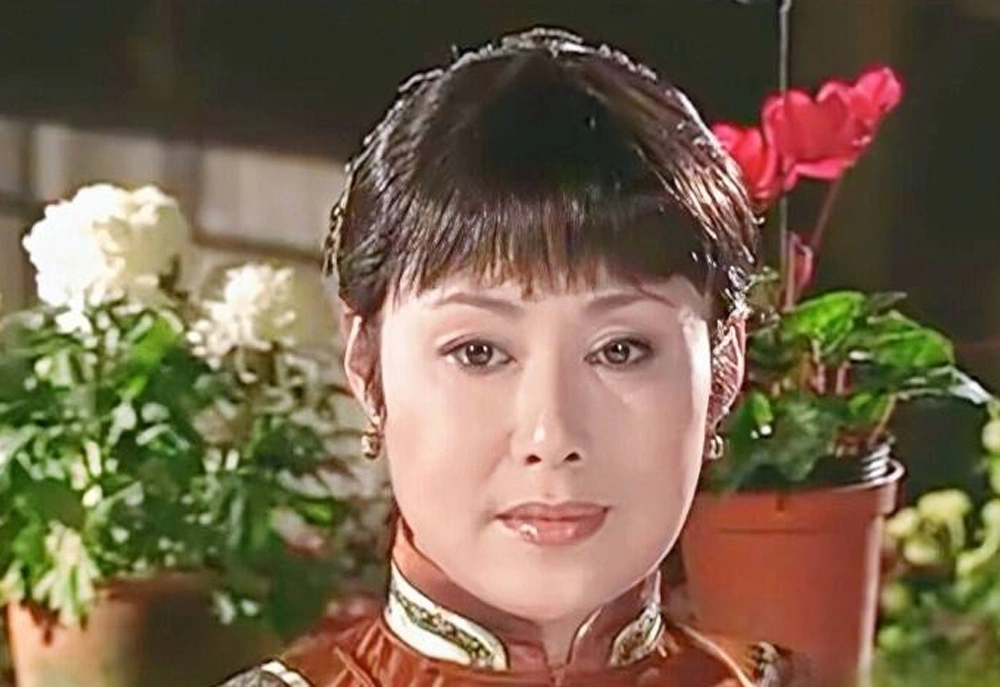
Famous singer
| Name | Year of birth/place of origin | Representative works | Remark |
|---|---|---|---|
| Yang Wei Linghua | 1980, Ordos, Inner Mongolia | "Above the Moon" and "The Most Dazzling Ethnic Trend" | The lead singer of the duo "Phoenix Legend" is hailed as the "new generation's grassland queen." |
| Ulan Tuya | 1983, Horqin Grassland, Inner Mongolia | "The Lasso" and "Standing on the Grassland, Gazing at Beijing" | A young Mongolian singer, known as the "Flower of Mongolia". |
| Siqin Gerile | 1968, Xilin Gol League, Inner Mongolia | Folk songs are like the waters of the spring river. | Rock singer, former lead singer of the band "Knights" |
Famous female models (and related fields)
Strictly speaking, there are relatively few internationally renowned supermodels from the "Northern Region," but the following models and actors with modeling experience are worth noting:
| Name | Year of birth/place of origin | identity | Remark |
|---|---|---|---|
| Wang Li Danni | Nanyang, Henan (work/development has little connection with northern China) | Actors, models | She won an award at the 2010 China Fashion Lingerie Model Competition and was dubbed "Mainland China's Amy Yip" due to her outstanding figure. |
| Gulina | 1986, Yining, Xinjiang (in a broader sense, the northern border region) | Models, Actors | Kazakh, one of the top ten contestants in the 2000 "General's Cup" Model Contest |
| Zhang Yanan | Datong, Shanxi | Actor (Shanghai Theatre Academy, Department of Performance) | Although primarily actors, their physical appearance meets modeling standards, representing the new generation of people in the northern region. |
| Du Weilin | Datong, Shanxi | Host (CCTV-7) | A graduate of the Communication University of China, she possesses the dignified image and temperament of an on-location host. |
| Yan Fengjiao | 1989 · Yanbian, Jilin (Northeast/Broadly defined Northern Frontier) | model | She was the third runner-up in the 2009 Rayli Cover Girl Contest and later rose to fame through the variety show "If You Are the One". |
Multi-faceted developmentMany actors have backgrounds in dance, hosting, and modeling, demonstrating comprehensive artistic cultivation.
Solid acting skillsActors such as Siqin Gaowa, Yong Mei, and Sarina are all accomplished actresses who have won top awards.
StylishWhether it's Wang Likun's "no-makeup" image or Jiang Luxia's "action heroine" persona, both embody the unique straightforwardness and heroic spirit of women from northern China.
The singing was loud and clearSingers such as Linghua and Ulan Tuya brought the vastness of the grasslands into popular music, and their songs became extremely popular.
Conclusion by Women in Northern China
Women from the northern frontier are a unique sight in China: physically fit, with striking appearances, resilient personalities, loyal in love, and passionately expressive in intimate moments. They represent the vitality of frontier culture—unpretentious, genuine, and capable of sharing hardships. But remember, everyone is an independent individual, influenced by education, family, and personal choices. Urbanization is making the new generation more open and diverse, sparking new ideas as tradition and modernity collide.
Suitors should treat their partners with equality, respect, and sincerity. Cross-cultural understanding is crucial. Ultimately, love and intimacy are an art cultivated by both parties, not something that can be fully defined by regional labels. Women from the northern regions are...The "Resilient Rose" nurtured by the grasslands and wind and sand..
- externalShe is tall and sturdy, with distinctive and well-defined features, a healthy complexion, and an overall dashing and heroic appearance.
- InnerThey are forthright, resilient, and independent, never pretentious; they are sincere, honest, and value relationships.
- Views on loveThey value equality, take initiative, and are loyal to their relationships. They don't need to depend on anyone; instead, they hope to stand shoulder to shoulder with their partners.
Further reading: