


![[有片]把與生俱來的「好色」,用以點燃事業的雄心](https://findgirl.org/storage/2025/11/有片把與生俱來的「好色」,用以點燃事業的雄心-300x225.webp)


China's Struggle to Develop the Atomic Bomb
Table of contents
Foreword
China's nuclear weaponsThe research and development process isPeople's Republic of ChinaOne of the most iconic technological achievements in history. This history not only demonstrates...Chinese scientistsexistExtremely difficult conditionsThe resilience and wisdom displayed during this period also reflect China's determination to pursue national security and international standing during the Cold War. From its initial efforts in the early 1950s to the successful test of its first atomic bomb in 1964, China accomplished in less than a decade what many major powers took decades to achieve. This article will provide a detailed review of this history, covering key periods and important milestones, and presenting major progress in chart form.
Part One: Historical Background and Decision-Making
1.1 Global Context of Nuclear Weapons
During World War II, the United States' "Manhattan ProjectIn 1945, the United States successfully developed and tested the world's first atomic bomb, subsequently dropping two atomic bombs on Hiroshima and Nagasaki, demonstrating the destructive power of nuclear weapons. Following this, the Soviet Union successfully tested an atomic bomb in 1949, and the United Kingdom (1952) and France (1960) joined the nuclear weapons club. Nuclear weapons became a crucial symbol of national power and security during the Cold War.
In China, when the People's Republic of China was founded in 1949,The country is in dire need of reconstructionChina's industrial base was weak, and its technological level was backward. At the same time, the international environment was extremely unfavorable to the new China. The Korean War broke out in 1950, and the United States repeatedly threatened to use nuclear weapons against China. For example, in 1951, US General MacArthur proposed bombing Northeast China with 20 to 30 atomic bombs, a threat that deeply agitated the Chinese leadership.Mao ZedongHe once clearly stated: "We not only need more airplanes and artillery, but also atomic bombs. In today's world, if we don't want to be bullied, we cannot be without these things."
1.2 Decision-making: Self-reliance and "Project 596"
On January 15, 1955, at an enlarged meeting of the Secretariat of the Central Committee of the Communist Party of China, Mao Zedong formally decided to launch the nuclear weapons research and development program, codenamed "02". This decision was made against the backdrop of limited Soviet aid and extreme scarcity of domestic resources, reflecting the profound consideration of national security by the Chinese leadership. In 1956, Zhou Enlai presided over the formulation of the "Outline of the Long-Term Plan for the Development of Science and Technology (1956-1967)," which clearly identified the atomic bomb, missiles, and artificial satellites (i.e., "Two Bombs, One Satellite") as priority projects for national science and technology development.
In June 1959, Sino-Soviet relations deteriorated, and the Soviet Union unilaterally tore up the Sino-Soviet Pact.Sino-Soviet Defense New Technology AgreementThe withdrawal of all experts and technical assistance from the United States has put China's nuclear weapons development in a difficult situation, but it has also inspired...Self-relianceThe determination to "…". In 1960, China officially launched the project codenamed "…".596The atomic bomb development program was named in 1959 to commemorate the Soviet Union's reneging on its promises and its determination to build a "..."A pity ball。
Part Two: Research and Development Process and Challenges
2.1 Initial Preparations (1955-1959)
2.1.1 Infrastructure Development and Talent Cultivation
Nuclear weapons development requires a strong industrial base and a large pool of scientific and technological talent. In the early 1950s, China began building its nuclear industrial infrastructure, such as establishing its first experimental nuclear reactor in Beijing (completed in 1958) and discovering uranium deposits in Guangxi that could be used as nuclear fuel. At the same time, the Institute of Modern Physics of the Chinese Academy of Sciences (established in 1950) became the center of nuclear research, and Qian Sanqiang was appointed as its director, responsible for coordinating nuclear science research.
A large number of scientists who had studied abroad returned to China during this period, including Qian Sanqiang, Deng Jiaxian, Qian Xuesen, and He Zehui. They gave up their comfortable lives abroad and devoted themselves to the construction of their motherland. For example, Qian Sanqiang had worked at the Curie Laboratory in France, collaborating with Marie Curie's daughter, Hélène Curie, on research into nuclear fission. After returning to China in 1948, he became a leading figure in China's nuclear science.
2.1.2 Soviet Aid and Technological Accumulation
In 1957, China and the Soviet Union signed the "Sino-Soviet Agreement on New Defense Technologies," under which the Soviet Union pledged to provide atomic bomb technology, missile samples, and expert support. Soviet experts helped China build a nuclear reactor and provided some technical blueprints and data. However, this assistance was incomplete, and the Soviet Union always held back some core technologies. For example, the atomic bomb pressure data provided by the Soviet Union was later proven to be incorrect, leading Chinese researchers to spend nearly a year performing "nine calculations" to verify the data's accuracy.
2.2 Self-reliance (1960-1964)
2.2.1 Sino-Soviet Deterioration and Challenges
After the Soviet Union withdrew all its experts in 1960, China's nuclear weapons development entered its most difficult phase. At that time, it was during the "Three Years of Natural Disasters" (1959-1961), when the domestic economy was in extreme difficulty. Researchers often worked in hunger and cold, and could only rely on abacuses to calculate data. Living conditions were rudimentary, and some even lived in tents.
Despite this, Chinese scientists demonstrated remarkable perseverance. In 1961, the Central Committee of the Communist Party of China established a "Central Special Committee" led by Zhou Enlai to coordinate the research and development of nuclear weapons and missiles. Nie Rongzhen, Deng Jiaxian, Zhou Guangzhao, and others became the core technology leaders. The "221 Base" in Qinghai and the Malan Base in Lop Nur, Xinjiang, became the main research and testing sites.
2.2.2 Technological Breakthrough and "Nine Calculations"
The development of the atomic bomb required precise calculations of the pressure data from a nuclear explosion. The data provided by the Soviet Union differed from the calculations made by Chinese researchers, sparking a year-long debate known as the "Nine Calculations Incident." Zhou Guangzhao, by introducing the principle of "maximum work," proved the Soviet data incorrect, clearing the way for the development of the atomic bomb. His work not only solved a technical problem but also demonstrated the independent thinking ability of Chinese scientists.
Furthermore, the purity of the nuclear materials also posed a challenge. On October 15, 1964, the eve of the test explosion, the Lop Nur base discovered that the atomic bomb materials contained excessive impurities, which could lead to test failure. Zhou Guangzhao led his team to calculate overnight and concluded that the probability of a successful test was higher than 99.9%, ultimately persuading the leadership to proceed with the test explosion as planned.
2.3 Successful test explosion (1964)
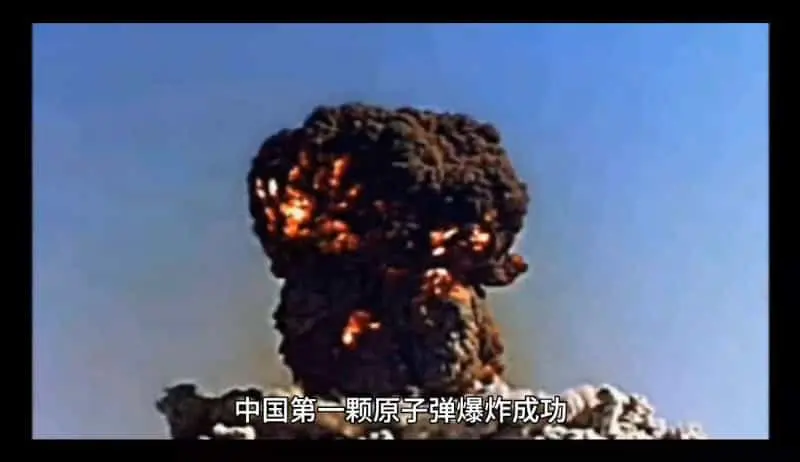
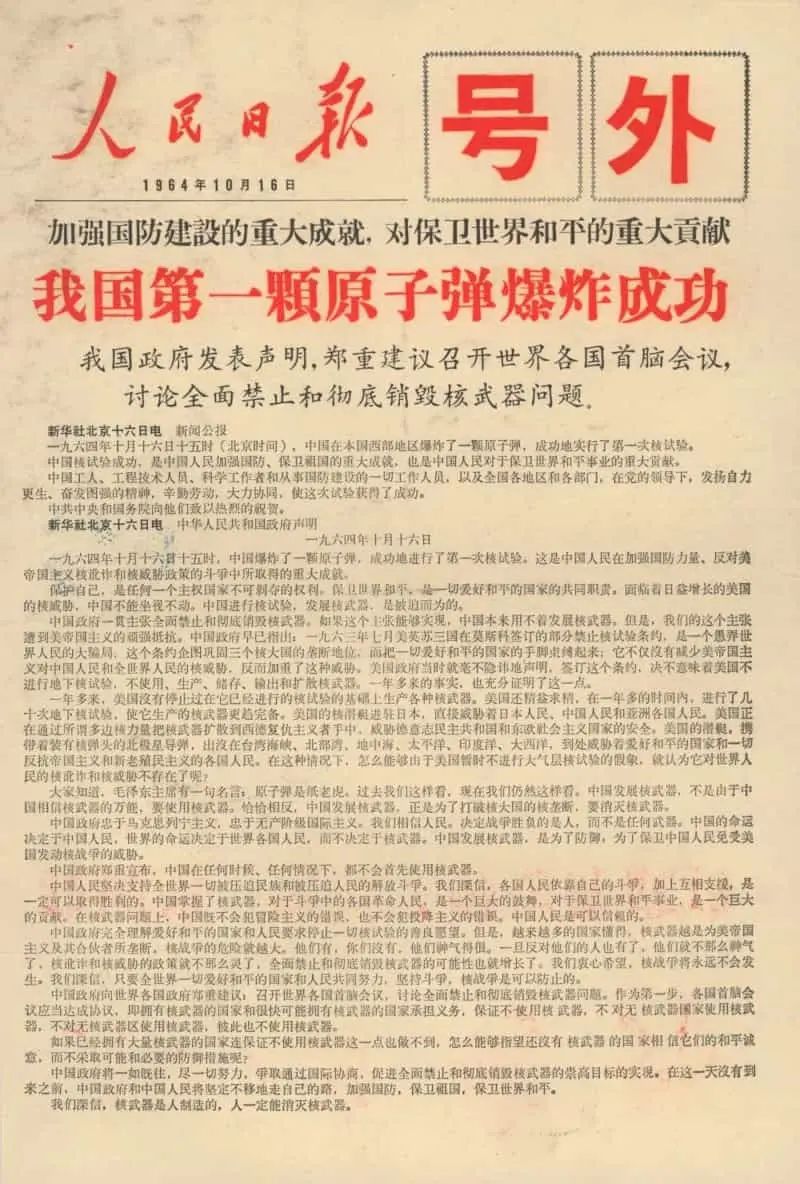
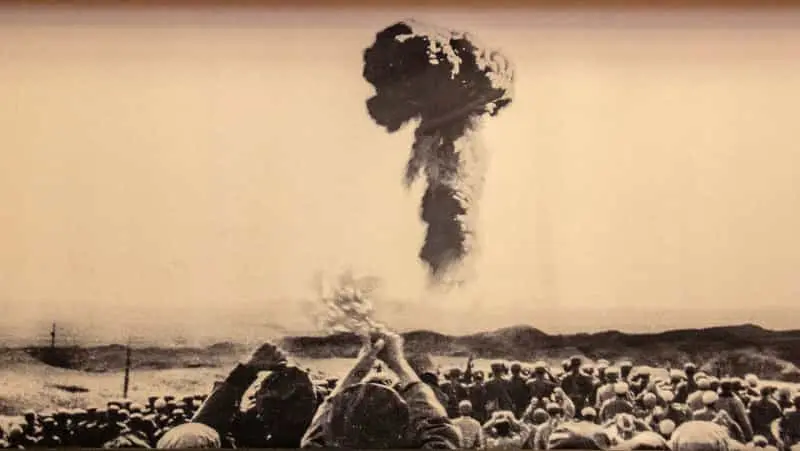
At 3:00 PM on October 16, 1964, China successfully detonated its first atomic bomb in Lop Nur, Xinjiang, with a yield equivalent to 22,000 tons of TNT. This marked China as the fifth country in the world to possess nuclear weapons. Following the successful test, the People's Daily published an editorial announcing that China's nuclear policy was "no first use" and pledged never to use nuclear weapons against non-nuclear-weapon states or nuclear-weapon-free zones.
The successful test explosion greatly enhanced China's international standing.Deng XiaopingLater assessments stated: "If China had not developed atomic and hydrogen bombs and launched satellites since the 1960s, it could not be called a major power with significant influence, and it would not have the international standing it has today."
Part Three: Key Milestones
The following are key milestones in China's atomic bomb development:
| Time | event | significance |
|---|---|---|
| January 1955 | The Central Committee of the Communist Party of China decided to launch a nuclear weapons research and development program (codename "02"). | Establishing nuclear weapons development as a national strategic goal |
| 1956 | Formulate the "Outline of the Long-Term Plan for the Development of Science and Technology (1956-1967)" | The "Two Bombs, One Satellite" project was listed as a key area for scientific and technological development. |
| October 1957 | China and the Soviet Union signed the "Sino-Soviet Agreement on New Defense Technologies". | Received Soviet technical assistance, accelerating the construction of the nuclear industry |
| 1958 | Beijing's first experimental nuclear reactor completed | Laying the foundation for nuclear material production and research |
| June 1959 | The Soviet Union broke the agreement and withdrew its experts. | China shifted towards self-reliance and launched "Project 596". |
| 1961 | A central special committee was established to coordinate nuclear weapons research and development. | Strengthen organizational leadership and concentrate resources to tackle key problems. |
| 1962 | Breakthroughs achieved in uranium-235 production and atomic bomb theoretical design | Laying the technical foundation for the test explosion |
| October 16, 1964 | China's first atomic bomb was successfully tested in Lop Nur. | China becomes the fifth nuclear-armed state, elevating its international standing. |
| June 17, 1967 | The first hydrogen bomb was successfully tested. | China achieved the leap from atomic bomb to hydrogen bomb in 2 years and 8 months, setting a world record for the fastest progress. |
Part Four: Key Figures and Contributions
4.1 Qian Sanqiang
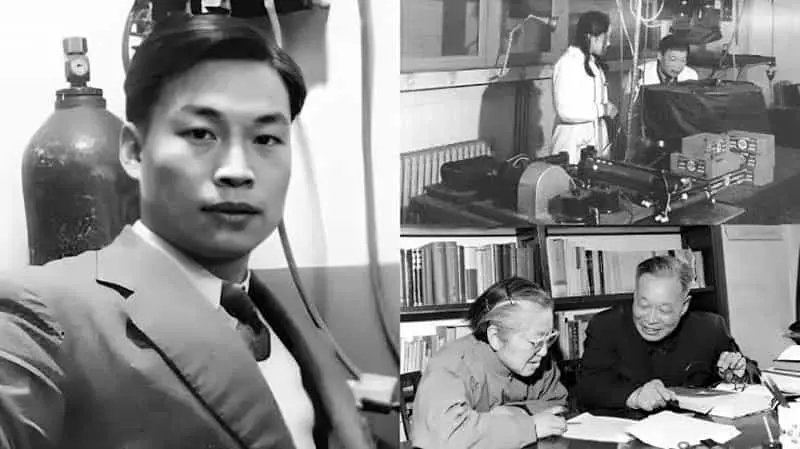
Qian SanqiangKnown as the "Father of China's Atomic Bomb," his profound expertise in nuclear physics and organizational skills laid the foundation for China's nuclear weapons development. His research experience at the Curie Laboratory in France made him a leading figure in China's nuclear science, responsible for coordinating technological breakthroughs and talent cultivation.
4.2 Deng Jiaxian
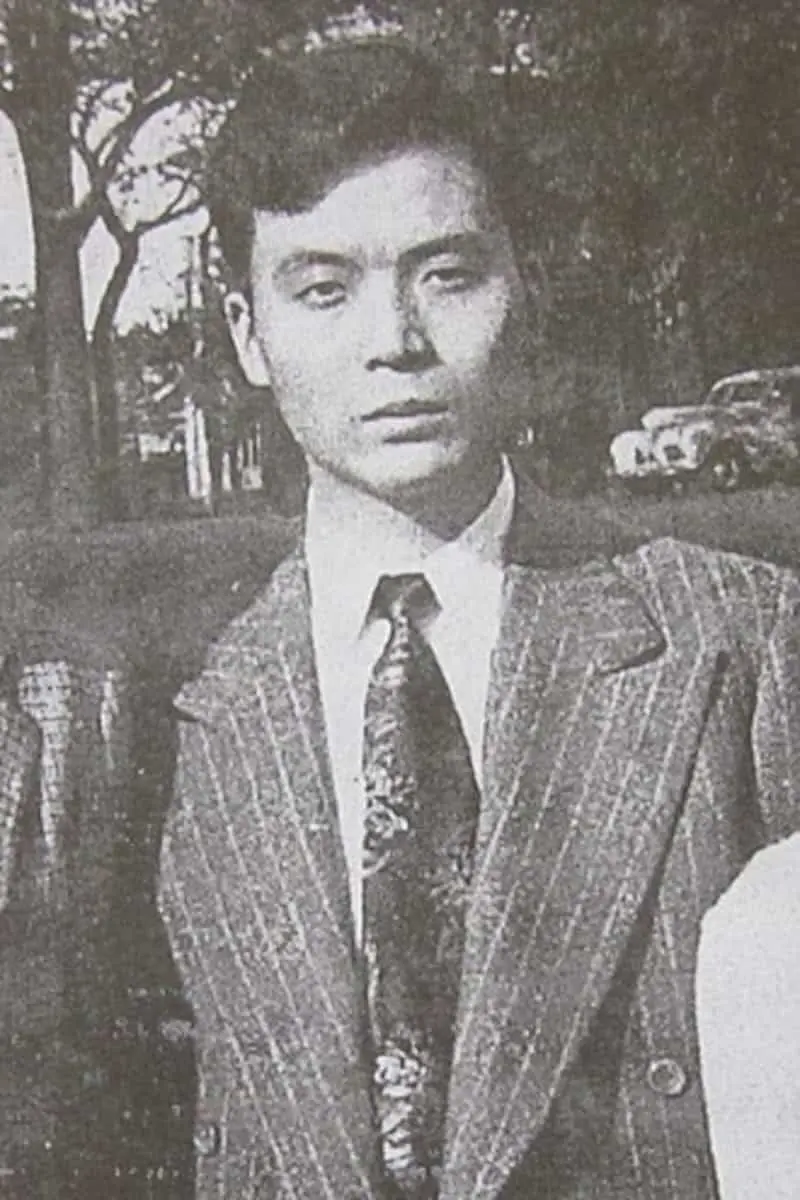
Deng JiaxianHe was the chief designer of the atomic bomb theory, leading his team to complete the structural design and theoretical calculations of the atomic bomb. He lived in anonymity for decades, sacrificing personal honor and dedicating his life to national security.
4.3 Zhou Guangzhao
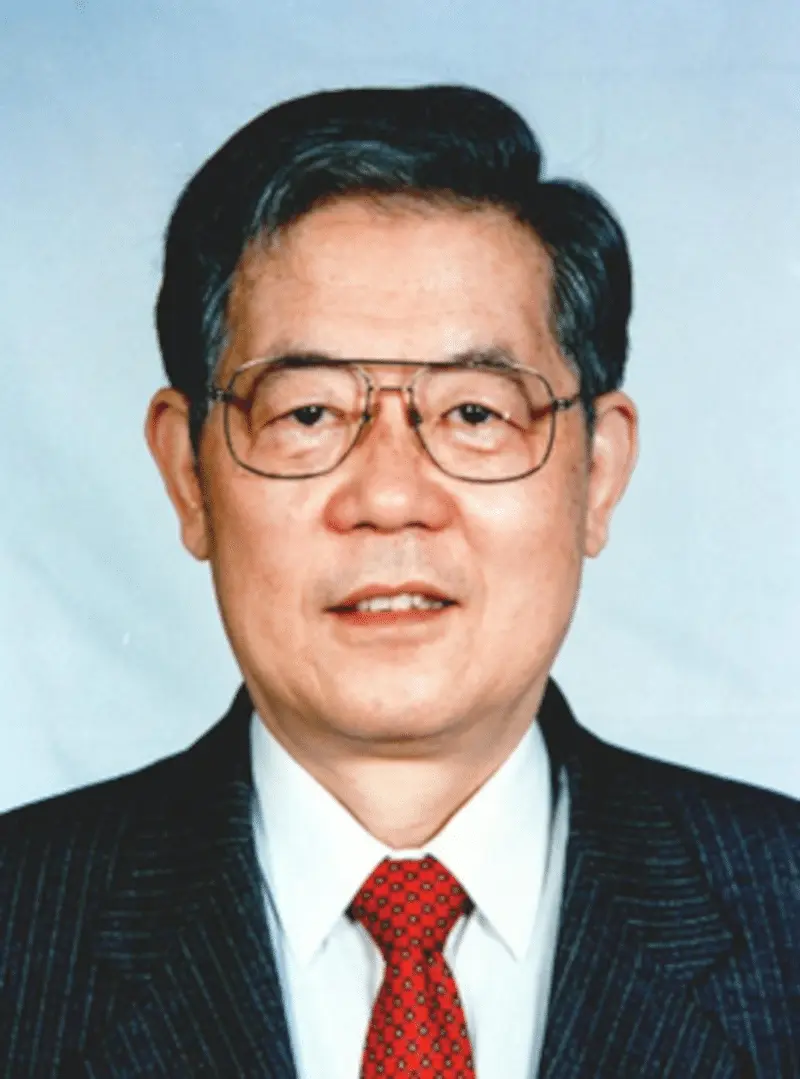
Zhou GuangzhaoHe played a crucial role in the "nine calculations" and the impurity problem on the eve of the test explosion. His theoretical breakthroughs ensured the success of the test explosion, and he was hailed as the youngest scientist among the "Two Bombs, One Satellite" heroes.
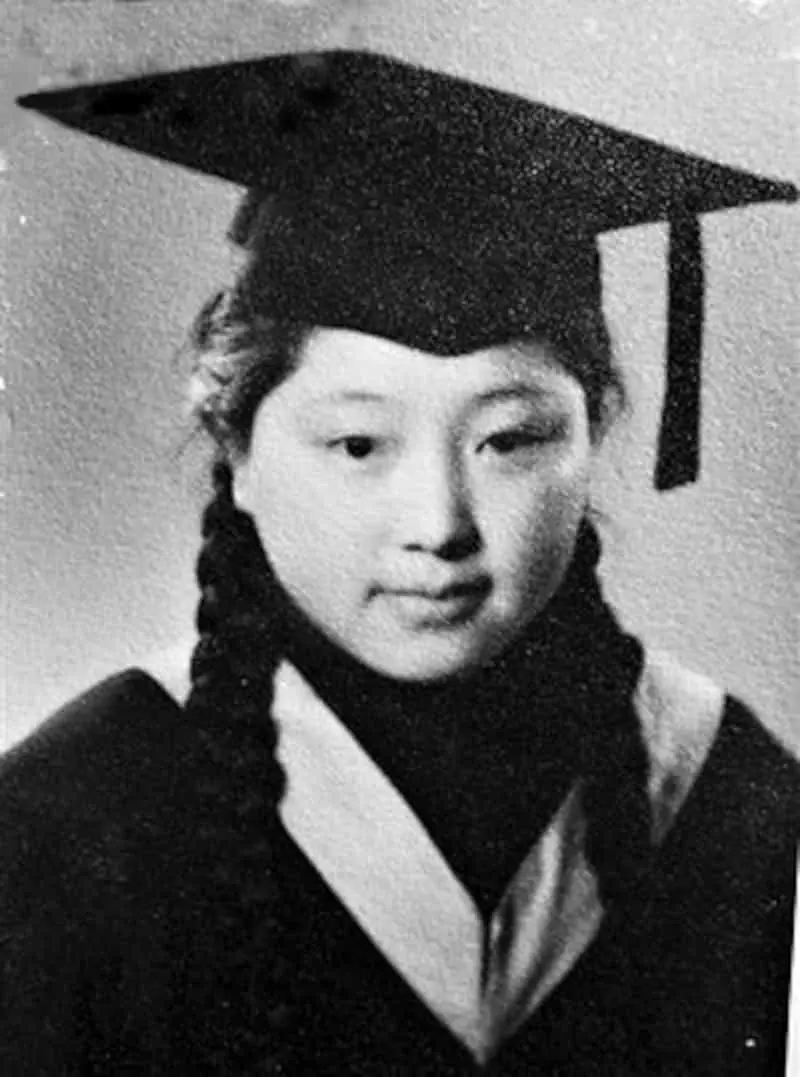
4.4 He Zehui
He ZehuiKnown as the "Chinese Marie Curie," she made significant contributions to nuclear fission research and data analysis, especially in the development of the hydrogen bomb. Her low-key and humble demeanor is admirable.
Part Five: Challenges and Significance
5.1 Challenges
- Technical bottlenecksThe experiment was hampered by a lack of advanced equipment, reliance on abacuses for calculations, and rudimentary experimental conditions.
- economic difficultiesDuring the three years of hardship, researchers faced hunger and resource shortages.
- International isolationAfter the Soviet Union withdrew its aid, China relied almost entirely on its own strength.
- Political interferenceDuring the Cultural Revolution, some scientists, such as Qian Sanqiang and He Zehui, were sent to do manual labor, which affected their research and development progress.
5.2 Independent technological breakthroughs
- Uranium enrichmentA uranium enrichment plant was established in Jinyintan, Qinghai (Factory 221), and geological teams from across the country were mobilized to search for uranium deposits.
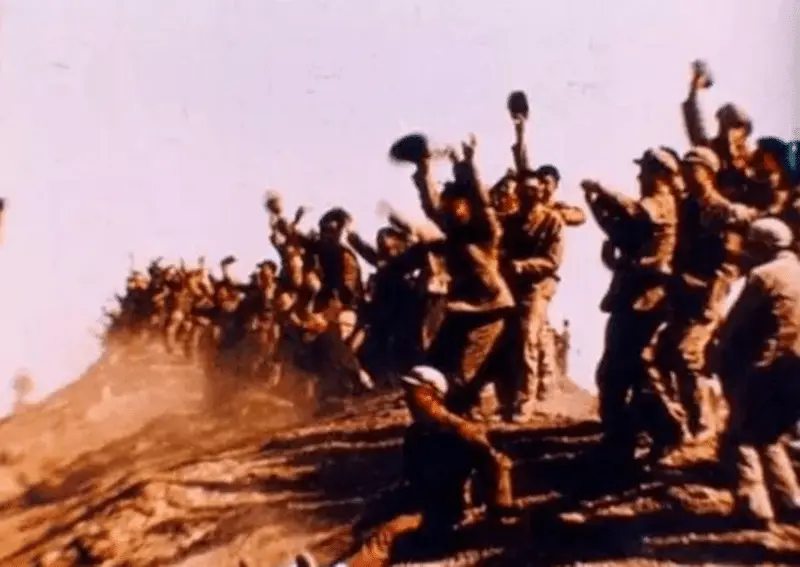
- "Battle of the Grasslands"(1962-1964): Tens of thousands of researchers and civilians worked secretly in the northwestern desert, living under extremely harsh conditions.
5.3 Significance
The successful development of China's atomic bomb has profound significance:
- National securityIt broke the monopoly of nuclear powers and strengthened China's national defense capabilities.
- International statusIt enhanced China's voice in the Cold War, making it a major power with significant influence.
- Technological progressThe development of nuclear weapons has spurred the development of fields such as nuclear industry, materials science, and computing technology.
- National self-confidenceThe successful test explosion inspired national pride and demonstrated the spirit of self-reliance.
5.4 International Response
- The United States was shocked and adjusted its Asia-Pacific strategy; French media called it the "awakening of the red giant of the East".
- In 1967, China successfully tested its hydrogen bomb, placing it among the top tier of nuclear technology nations.
5.5 spiritual heritage
- "The Spirit of Two Bombs and One Satellite": A national scientific model of self-reliance and collaborative research.
Part Six: Subsequent Developments
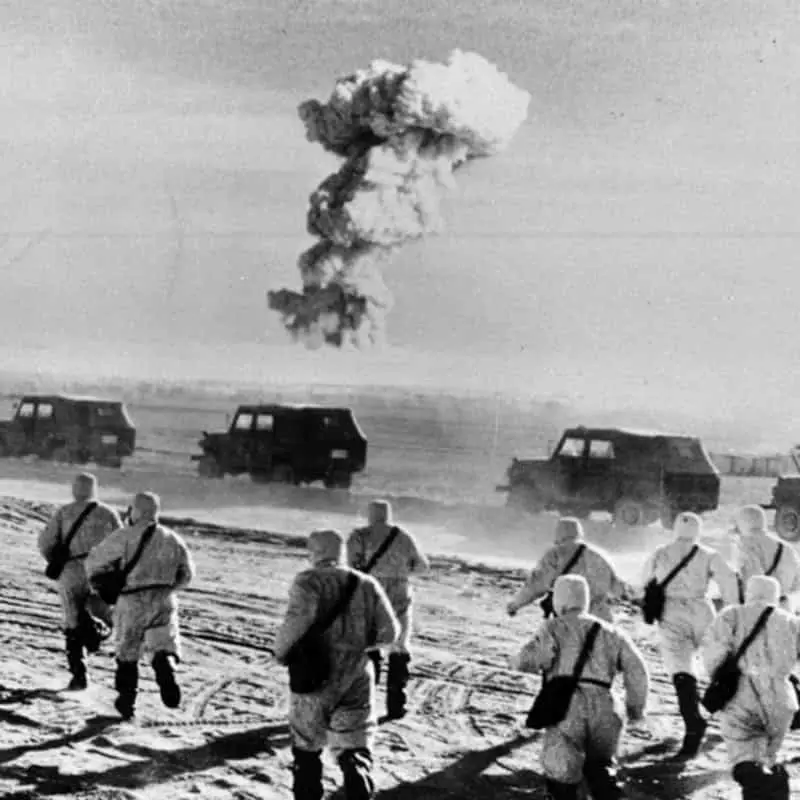
On June 17, 1967, China successfully tested its first hydrogen bomb, achieving the leap from atomic bomb to hydrogen bomb in just 2 years and 8 months, setting a world record for the fastest development. Data analysis by scientists such as He Zehui played a crucial role in this process.
In April 1970, China successfully launched the "Dongfanghong-1" artificial satellite, becoming the fifth country to independently launch a satellite. The success of the "Two Bombs, One Satellite" project laid the foundation for the later "863 Program" and China's space program.
Conclusion
The development of China's atomic bomb is a history of arduous yet glorious struggle. Against the backdrop of international blockade, economic hardship, and technological backwardness, Chinese scientists, with their selfless dedication and extraordinary wisdom, created the miracle of the "national pride bomb." This is not only a victory of science and technology, but also a manifestation of national spirit. As Deng Xiaoping said, these achievements "reflect the capabilities of a nation and are a sign of the prosperity and development of a nation and a country."
Why must China develop an atomic bomb?
Mao Zedong: Without this, we will be bullied by others.

![[有片]銷售的語言煉金術](https://findgirl.org/storage/2025/10/有片銷售的語言煉金術-300x225.webp)