


![[有片]拜祖先會獲得保佑?](https://findgirl.org/storage/2026/01/有片拜祖先會獲得保佑?-300x225.webp)


Eunuchs – eunuchs whose genitals were removed to avoid promiscuity in the palace

Table of contents
What the hell is a eunuch?
In ancient China, eunuchs were people who had been castrated, losing their sexual ability and becoming androgynous. They were a special social class, officials who served the emperor, monarch, and their families. Eunuchs were also known as temple servants, castrated men, eunuch officials, eunuchs, palace officials, inner officials, inner ministers, inner attendants, and inner supervisors.
The main duties of eunuchs included serving the emperor, managing palace affairs, supervising the women in the harem, and serving as close advisors to the emperor. Because they were unable to bear children, they were regarded as loyal and reliable servants.
The origin and history of eunuchs
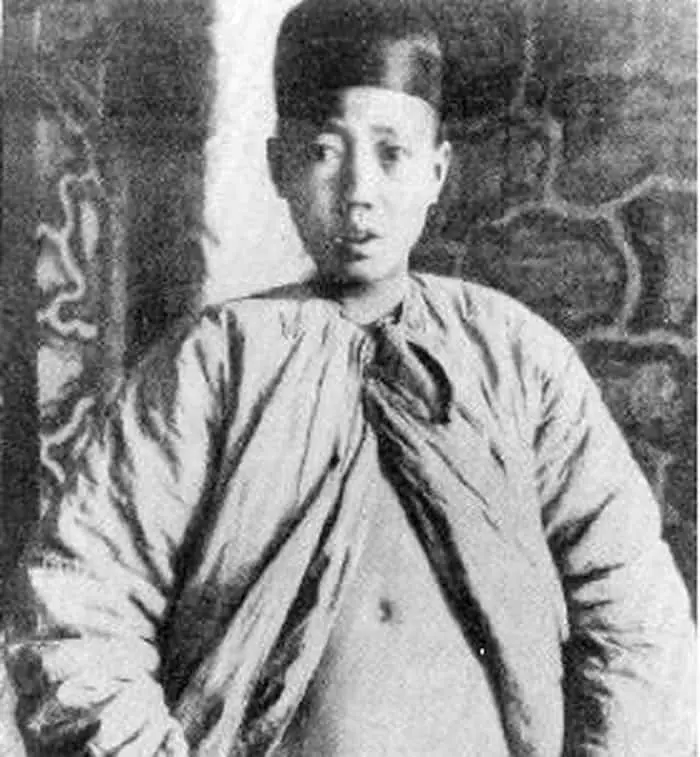
The eunuch system can be traced back to the Qin and Han dynasties. Initially, castration was a form of punishment, but it gradually evolved into a profession, becoming a special position in the imperial court. During the Qin and Han periods, eunuchs began to play important roles in the court, serving the emperor and members of the royal family. With the changing dynasties, the influence of eunuchs continued to expand, reaching its peak during the Ming and Qing dynasties. In the Ming dynasty, eunuchs could even influence politics; for example, the famous Wei Zhongxian's power once surpassed that of other court officials. Li Lianying of the Qing dynasty also wielded significant political influence due to the deep trust of Empress Dowager Cixi. This expansion of power made eunuchs a unique phenomenon in Chinese history.

Why did eunuchs in ancient times have to undergo castration?
The first point was primarily to ensure the purity of the emperor's bloodline. In the past, there were no good methods to distinguish the bloodlines of offspring, so the only option was to castrate all males except the emperor to ensure that every child born in the palace was a descendant of the emperor.
In ancient times, castration did not prevent promiscuity in the imperial harem; in fact, castrated eunuchs were highly sought after by the concubines. However, castration ensured that eunuchs were infertile and would not cause confusion regarding the emperor's offspring.
The second point is to reduce the possibility of eunuchs usurping the throne and ensure the emperor's safety.
Eunuchs were the closest figures to the emperor at the core of power in the entire political structure, giving them a natural advantage over ministers in seizing power. Being by the emperor's side every day, a eunuch could easily seize power himself, making it easier for him than for a minister.
Castration can greatly reduce this risk.
Thirdly, castration reduces male hormones, leading to physical deficiencies. Consider that even hundreds or thousands of strong men fighting each day might not be able to stop the emperor. Therefore, eunuchs in the Eastern Han and Tang dynasties controlled the emperor through the Imperial Guard, rather than forming their own armed forces.
Fourthly, castration meant no offspring. The thought of not being able to pass the throne to one's son, and having to hand over power to outsiders after all that effort, greatly diminished the enthusiasm for rebellion.
Historically, this has indeed proven effective: there were only eunuchs who controlled the emperor's absolute power, not eunuchs who became emperors themselves. At that time, to ensure the safety of the palace and the purity of the harem, emperors chose to castrate men, making them eunuchs to serve the royal family.
What were the methods used for castration in ancient China, and where were the organs cut?
The method of castration in the Qing Dynasty was as follows: First, the lower abdomen and upper thighs of the person to be castrated were tightly bound with white cloth or bandages. The area to be operated on was carefully washed with hot chili water. Then, a small, slightly curved, sickle-shaped knife was used.Cut off along with the scrotum and penisThen, a white wax needle is inserted into the urethra to form a plug, and the wound is covered with paper soaked in cold water and carefully bandaged. After the above procedures are completed, two surgeons will help the person undergoing surgery to walk slowly in the room for two or three hours before allowing them to lie down.

For three days after the surgery, the patient was forbidden from drinking water, reportedly enduring excruciating pain due to thirst and injury. After three days, the white wax needle was removed, and urine gushed out like a fountain, signifying the successful completion of the procedure. If this did not occur, the patient could only await death in anguish, with no one able to offer assistance. However, this brutal method almost never failed; according to years of records, only one 30-year-old man ever failed. After a hundred days of wound healing, a eunuch was thus created.

life and treatment
Although eunuchs were considered castrated and of low social status in society, they enjoyed certain privileges within the palace due to their proximity to the emperor. They typically lived in exclusive residences within the palace and were attended to by servants. Eunuchs also received relatively generous salaries and rewards, especially those who were favored by the emperor or empress dowager. For example, Li Lianying of the Qing Dynasty amassed a vast fortune and even owned a luxurious mansion due to the favor of Empress Dowager Cixi. This privileged lifestyle contrasted sharply with their low social status, reflecting the complexity of the eunuch's identity.

social status
The social status of eunuchs was extremely contradictory. In common society, they were considered castrated and discriminated against, holding a very low social status. However, within the palace, due to their proximity to the emperor, they often wielded considerable power and could even influence state affairs. This duality of status made eunuchs a highly controversial figure throughout history. For example, Wei Zhongxian of the Ming Dynasty used his power to eliminate dissidents and manipulate the court, becoming one of the most controversial figures of his time. This phenomenon demonstrates that the social status of eunuchs depended not only on their official status but also closely on their actual influence within the palace.

Impact and controversy
The eunuch system in Chinese history had both positive and negative effects. On the one hand, the existence of eunuchs ensured the safety and order within the palace, preventing direct contact between the inner palace and the outer court, thus maintaining the stability of imperial power. On the other hand, some eunuchs abused their power, interfering in state affairs, leading to political corruption and social unrest. For example, Wei Zhongxian, during the Ming Dynasty, used the Eastern Depot to persecute loyal officials, triggering a serious political crisis; An Dehai of the Qing Dynasty was executed for abusing his power. These examples show that the influence of eunuchs could be both an aid to imperial power and a scourge to the country, thus remaining a subject of much controversy for a long time.
Abolition and Influence
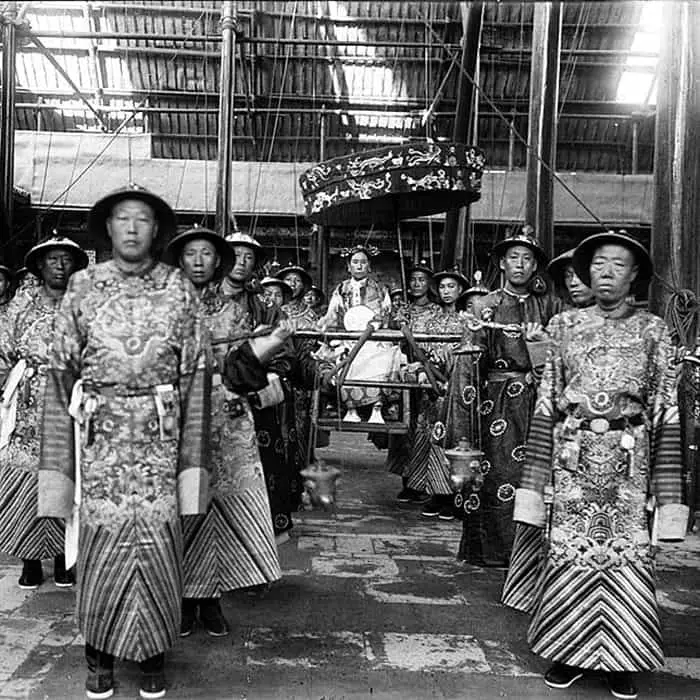
With the fall of the Qing Dynasty in 1912, the eunuch system was officially abolished. With the end of the feudal dynasty, eunuchs, as a unique social group, gradually faded from the historical stage. However, eunuch culture left a profound mark on Chinese literature and art. For example, the vivid depiction of eunuchs in *Dream of the Red Chamber* reflects their role in the court; traditional operas and folk tales also frequently use eunuchs as subject matter, showcasing their legendary nature. These cultural heritages have allowed the historical influence of eunuchs to continue, becoming important materials for later generations to study ancient Chinese court politics.

in conclusion
Eunuchs were a unique group in the ancient Chinese court, with distinct characteristics in their duties, lives, and social status. From its origins in the Shang Dynasty to its abolition in the Qing Dynasty, the eunuch system underwent thousands of years of evolution, experiencing both glorious peaks of power and controversial troughs of corruption. Although the eunuch system no longer exists, its influence on Chinese history and culture remains profound. By studying eunuchs, we can not only understand the complexity of ancient court politics but also glimpse the diverse aspects of Chinese feudal society, providing valuable historical insights for future generations.
Further reading: