

![[有片]把與生俱來的「好色」,用以點燃事業的雄心](https://findgirl.org/storage/2025/11/有片把與生俱來的「好色」,用以點燃事業的雄心-300x225.webp)

The History, Theory and Modern Discussion of the Art of Sex
Table of contents
yin and yangAs ancient ChinaTaoismThe Art of SexThe core concept originates from the profound application of Yin-Yang philosophy. It is not only a method for men and women to achieve Yin-Yang balance and enhance their spiritual cultivation through sexual intercourse, but also encompasses…Yin-nourishing and Yang-tonifyingThe concept of "absorbing yang to replenish yin" aims to replenish one's yin and yang energies through sexual intercourse between men and women. Although it is often depicted in martial arts novels as a secret technique to enhance martial arts skills, its actual effects have not been scientifically proven. It is more of a philosophical and practical system of ancient Taoist cultivation.
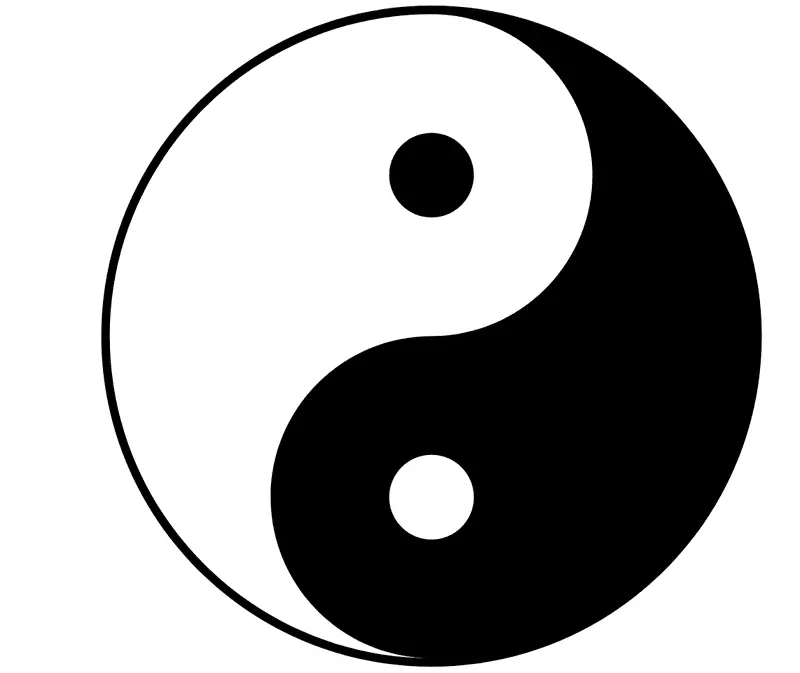
Yin-Yang concept
In ancient Chinese philosophy, Yin and Yang refer to two opposing yet interdependent forces. All things are composed of Yin and Yang, and they are mutually dependent and indispensable. This concept can be traced back to the *I Ching* (circa 11th century BC), where Yin and Yang are regarded as the fundamental laws governing the universe. Yin represents attributes such as softness, darkness, femininity, the moon, and earth; Yang represents attributes such as strength, light, masculinity, the sun, and heaven. The two are not absolutely opposed but rather complementary and mutually generative, as shown in the Tai Chi symbol, where Yin contains Yang, and Yang contains Yin.
The philosophical foundation of Yin-Yang theory comes from the various schools of thought in the pre-Qin period, especially Lao Tzu of Daoism, in his work "The Book of Yin and Yang".Tao Te ChingThe text emphasizes that "the Tao gives birth to One, One gives birth to Two, Two gives birth to Three, Three gives birth to all things," where "Two" refers to Yin and Yang. The balance of Yin and Yang is key to harmony in all things; imbalance can lead to illness, disaster, or even death. At the human level, Traditional Chinese Medicine applies Yin and Yang to the internal organs, meridians, and Qi and blood. For example, the liver is considered Yang, and the kidneys Yin; maintaining Yin-Yang harmony can prolong life.
The evolution of the Yin-Yang concept stems from the ancient Chinese observations of nature: the alternation of day and night, the cycle of the four seasons, and the union of man and woman all embody the cyclical nature of Yin and Yang. This is not only philosophical speculation but also a practical guide. For example, in agrarian societies, the balance of Yin and Yang was used to explain bountiful harvests and famines; in medicine, it guided diagnosis and treatment. The interdependence of Yin and Yang emphasizes "harmony in diversity," which is also the theoretical basis for the application of Yin and Yang to sexual behavior in traditional Chinese sexual practices.
Furthermore, Yin and Yang are not merely binary opposites, but also a dynamic process. The ancients believed that the union of Yin and Yang produces "Qi," the origin of life. In Taoism, this concept was elevated to the path of immortality, achieving the unity of Yin and Yang through techniques such as internal and external alchemy. The philosophical depth of Yin and Yang lies in its inclusiveness: it explains the generation, change, and demise of the universe, providing a solid theoretical foundation for subsequent sexual practices.
Application of sexual techniques
Taoist sexual techniques positrate a concept where men, through sexual intercourse with women, can "absorb yin energy to replenish yang energy," meaning they absorb the woman's yin energy to supplement their own yang energy; conversely, women can "absorb yang energy to replenish yin energy." This application stems from the principle of yin-yang complementarity, aiming to achieve energy exchange through sexual intercourse.
The historical origins of sexual techniques can be found in bamboo slips unearthed from the Mawangdui Han tombs, such as "Harmony of Yin and Yang," "Ten Questions," and "Discourse on the Supreme Dao of the World." These documents describe in detail sexual positions, breathing techniques, and energy guidance. The reason for their application lies in the ancient Taoist belief that the "essence, energy, and spirit" within the human body can be transformed into a higher level of cultivation through the union of Yin and Yang. The male practice of "absorbing Yin to replenish Yang" emphasizes absorbing the female's Yin essence without losing his own Yang essence; the female practice is the opposite. This reflects Taoism's pursuit of longevity, where sexual intercourse is seen as part of cultivation, rather than simply pleasure.

Specific techniques include various postures, such as "Dragon and Tiger Fighting" and "Crane Intertwining Necks," each with a specific yin-yang harmonizing effect. This is because these postures promote the flow of qi and blood, balancing the five internal organs. For example, "Dragon and Tiger Fighting" simulates the confrontation and fusion of the dragon (yang) and the tiger (yin), helping practitioners experience the transformation of yin and yang. Sexual techniques also emphasize timing, such as performing them on a full moon night (yin is dominant) or at sunrise (yang is dominant), to align with the natural order.
In practice, the art of the bedroom is not limited to heterosexual relationships but extends to same-sex relationships or solitary practice, but its core remains the balance of Yin and Yang. Its applications include health preservation, disease treatment, and enhancing mental strength. The ancient text *Su Nu Jing* records that after the Yellow Emperor learned the art of the bedroom from Su Nu, his rule over the world became more successful, symbolizing the wisdom of life brought about by the harmony of Yin and Yang.
The social cause of the art of the bedroom lies in the polygamous system of ancient China, where men needed to maintain sexual satisfaction with multiple partners without harming their health. This spurred the development of the art of the bedroom into a systematic body of knowledge, which became popular from the Warring States period onwards. In short, the application of Yin and Yang in the art of the bedroom is a practical application of Taoist philosophy, emphasizing harmony rather than indulgence.
A detailed explanation of "exchanging but not revealing".
The concept of "yin replenishing yang" emphasizes that men should "intercourse without ejaculation," meaning they should not ejaculate during intercourse, thereby achieving yin-yang balance and enhancing the body's energy. This technique is the core of sexual arts, originating from Taoism's emphasis on "essence." The ancients regarded essence as the foundation of life, and excessive ejaculation would lead to the depletion of yang energy.
The practice of "intercourse without ejaculation" includes breath control, mental guidance, and muscle contraction. For example, the "turtle breathing method" is used to control breathing, combined with techniques to "lock the seminal gate" (such as tightening the perineum) to prevent semen from leaking out. This is because Taoism believes that semen can be transformed into qi, and qi can be sublimated into spirit; ejaculation interrupts this process. The ancient book "Jade Chamber Secrets" records that this method allows men to "intercourse frequently without declining sexual function," while women gain more pleasure, achieving a win-win situation.
Historically, this concept was already well-established in Han Dynasty sexual manuals, such as the *Prescriptions for Nourishing Life* unearthed at Mawangdui, which describes similar techniques. The reasons included the pursuit of longevity and immortality, with Taoist priests using this method to accumulate internal elixir energy. From a modern perspective, this can be compared to sex education, emphasizing control rather than abstinence.
However, "intercourse without leakage" is no easy feat and requires long-term practice. This is because it tests willpower and physical coordination, and failure can lead to frustration. Successful practitioners, however, are said to experience increased vitality, a manifestation of yin and yang harmony. In martial arts novels, it is often exaggerated as a divine skill, but in reality, it is more of a way to maintain health.
Historical development timeline and important milestones
The historical development of sexual intercourse and the art of the bedroom can be divided into several periods, from its origins in the pre-Qin period to its evolution in the Ming and Qing dynasties. The following details each stage.
- Pre-Qin period (11th century BC - 221 BC)The concept of Yin and Yang originated in the *I Ching*, while the art of sexual intercourse first appeared in folk tales. This stemmed from the agricultural society's focus on fertility and health, where sexual behavior was seen as a natural law of Yin-Yang harmony. A significant event was Lao Tzu's discourse on Yin and Yang in the *Tao Te Ching*, which laid the foundation for subsequent developments.
- Qin and Han Dynasties (221 BC - 220 AD)The practice of sexual techniques was prevalent during this period. The *Book of Han, Treatise on Literature* records eight schools of sexual techniques, totaling 186 volumes, such as *Rongcheng Yindao*. Documents unearthed from the Mawangdui Han tombs (168 BC) confirm that this practice had become systematic by this time. This was due to the rise of Taoism, and Emperor Wu of Han's patronage of Taoism facilitated the fusion of sexual techniques with Taoism. The practice of sexual intercourse was used for imperial health preservation.
- Wei, Jin and Northern and Southern Dynasties (220-589 AD)The art of sexual cultivation is deeply integrated with Taoism, and the *Baopuzi* mentions sexual practice. This was due to social unrest, where people sought ways to achieve immortality to escape the chaos of the world.
- Sui and Tang Dynasties (581-907 AD)At its peak, Taoist sexual techniques reached their zenith, and the *Su Nu Jing* (Classic of the Plain Girl) became widely known. This was due to the open-mindedness and flourishing sexual culture of the Tang Dynasty.
- Song and Yuan Dynasties (960-1368 AD)Under the influence of Neo-Confucianism, sexual techniques were suppressed, but they were still passed down within Taoism. Zhu Xi's "preserve heavenly principles and eliminate human desires" led to an ascetic trend, but sexual techniques became more secretive.
- Ming and Qing Dynasties (1368-1912 AD)During this period of tension, abstinence and sexual techniques coexisted. This was because Confucianism was the dominant ideology, but these practices were still observed in folk customs and Taoism.
- Modern period (1912 AD - present)The art of sexual intercourse is being reinterpreted from a scientific perspective, as it is considered a cultural heritage. This is due to globalization and the rise of sex education.
Key milestones include:
- In 206 BC, during the early Western Han Dynasty, Chunyu Yi mentioned "receiving forbidden books on Yin and Yang," which is the earliest reliable record.
- 168 BC: Documents unearthed from a house at Mawangdui confirm its systematization.
- 3rd century: Ge Hong's "Baopuzi" integrated sexual techniques with Taoism.
- 7th century: Sun Simiao's "Essential Prescriptions Worth a Thousand Pieces of Gold" summarizes the health preservation through sexual practices.
- 20th century: Modern scientific research began, and psychological benefits were recognized despite the lack of evidence to support them.
| Time period | Important Milestones | Document/Event Quantity Estimation | Cause Analysis |
|---|---|---|---|
| Pre-Qin period (11th century BC - 221 BC) | The concept of Yin and Yang in the Book of Changes | 5-10 parts | The establishment of philosophical foundations and the observation of natural cycles led to the birth of the Yin-Yang theory. |
| Qin and Han Dynasties (221 BC – 220 AD) | The Mawangdui tombs contain artifacts such as "He Yin Yang" (合阴阳). | 186 volumes (as recorded in the Book of Han) | The rise of Taoism and the emperors' demand for health preservation promoted its systematization. |
| Wei, Jin, Southern and Northern Dynasties (220-589 AD) | The Baopuzi integrates sexual techniques. | 20-30 books | Social unrest and the pursuit of immortality spurred integration. |
| Sui and Tang Dynasties (581-907 AD) | The Classic of Plain Girls (Su Nu Jing) | 50+ | An open atmosphere and a flourishing sexual culture led to a peak. |
| Song and Yuan Dynasties (960-1368 AD) | The suppression of sexual techniques by Confucianism | 10-20 books | Confucian influence led to a shift towards clandestine transmission. |
| Ming and Qing Dynasties (1368-1912 AD) | Asceticism and inheritance coexist | 30-40 books | The Conflict Between Confucianism and Taoism: Evolution Under Tension |
| Modern (1912 AD - present) | Science Reinterprets | 100+ Modern Research | Globalization and Sex Education, Cultural Heritage Protection |

Real-world effects and scientific evidence
Although the concept of "yin and yang intercourse" is often used in martial arts novels to enhance martial arts skills and is linked to the concept of "absorbing yin to replenish yang," there is no clear scientific evidence to prove its efficacy. It is more of an ancient Taoist cultivation concept. From a scientific perspective, some techniques of sexual arts, such as breathing control, can improve sexual health and reduce stress, but there is no biological evidence for the energy exchange of "absorbing yin to replenish yang."
Studies show that sexual activity releases endorphins, improving mood, but there is no evidence that abstaining from ejaculation prolongs life. This is because modern medicine emphasizes hormonal balance, rather than the concept of yin and yang. Harvard University research indicates that moderate sexual activity is beneficial to the cardiovascular system, but excessive restraint may lead to psychological problems. The lack of scientific evidence includes a lack of controlled experiments, and the fact that ancient texts are mostly subjective accounts.
However, psychology acknowledges its placebo effect, believing that yin-yang balance can enhance self-confidence. Modern applications, such as Tantra yoga, which borrows from sexual techniques and emphasizes energy flow, still lack empirical evidence. In short, the practical effects are more at the cultural and psychological level.

Other applications
This concept extends to other fields. For example, Traditional Chinese Medicine (TCM) divides the human body into Yin and Yang categories based on body parts, organs, and meridians, and there are also discussions on the harmony of Yin and Yang in other fields. In TCM, the upper body is considered Yang and the lower body Yin. Treatment requires harmonizing Yin and Yang, such as acupuncture stimulating the meridians to balance Qi and blood. This is because the Yin-Yang theory is universally applicable and suitable for diagnosing conditions such as Yin deficiency with excessive Yang.
In martial arts, Yin and Yang are used in internal styles, such as Tai Chi, which emphasizes the interplay of Yin and Yang. Philosophically, Confucianism uses Yin and Yang to explain ethics, such as the relationship between ruler and subject. In art, Yin and Yang influence calligraphy and painting, such as the contrast between emptiness and fullness in landscape painting. In modern times, the concept of Yin and Yang is applied to psychology to balance inner conflicts.
In environmental science, Yin and Yang can be used as a metaphor for ecological balance. In short, the union of Yin and Yang is not limited to sexual techniques, but is a broad cultural symbol.
Social and cultural influence
The concept of yin and yang in sexual intercourse has had a profound influence on Chinese culture, from imperial courts to folk legends. Han Dynasty emperors like Liu Bang valued the art of sexual intercourse to maintain harmony in the harem. This was because political stability required the emperor's health, and the balance of yin and yang was seen as a wisdom for governance.
In literature, martial arts novels like *The Smiling, Proud Wanderer* use the concept of "yin-yang replenishment" to depict villains, reflecting societal taboos surrounding sex. Reasons include moral education and warnings about the dangers of indulgence.
Social reasons: Polygamy encouraged men to learn sexual techniques, while women passively participated. This reflects gender inequality, but it also contributed to the emergence of female practices such as absorbing yang energy to replenish yin.
Modern influence: Western Tantra borrowed from sexual techniques, emphasizing spiritual sexuality. This is due to globalization and the fusion of Eastern and Western cultures.
It is said that the Yellow Emperor learned the art of sexual techniques from a woman named Su Nu, which made his rule more virtuous. Ge Hong recorded his cultivation experiences in the book *Baopuzi*. Sun Simiao integrated medicine with the art of sexual techniques.
These figures applied the principles of Yin and Yang to their lives, influencing later generations.
In modern times, traditional sexual techniques have been adapted into sex education courses, such as breathing exercises to improve premature ejaculation. Challenges: Lack of scientific evidence and cultural conservatism hinder discussion.
Western Tantra is similar to sexual techniques, emphasizing energy. Differences: Western Tantra places greater emphasis on equality, while Taoism emphasizes cultivating immortality.
Future Outlook
With scientific advancements, neuroscience may be able to explain Yin and Yang energies. Looking ahead: Integrating traditional Chinese and Western medicine to develop new methods of health preservation.
The union of Yin and Yang is the essence of Taoist sexual techniques, encompassing philosophy, history, and practice. Although there is no scientific proof, its concept of Yin-Yang balance is timeless.
Further reading: