


![[有片]拜祖先會獲得保佑?](https://findgirl.org/storage/2026/01/有片拜祖先會獲得保佑?-300x225.webp)


Japanese Porn Game - Yakyūken

Table of contents
wild ball boxing(Yakyūken) is a traditionalStripping and playing rock-paper-scissorsThe game originated in the pleasure quarters of the Edo period, and was formally established in the 1920s, inspired by...JapanA love for baseball. The rules are simple: participants (usually guests and female performers) play rock-paper-scissors (Rock, Paper, Scissors).Scissors, Rock, Paper)janken ponTo determine the winner, the loser must remove one piece of clothing or perform a designated action (such as an erotic performance). The game is usually played in bars, nightclubs, or adult parties, accompanied by music and lighting effects, and costs approximately 5,000-15,000 yen per person (about 35-100 US dollars).
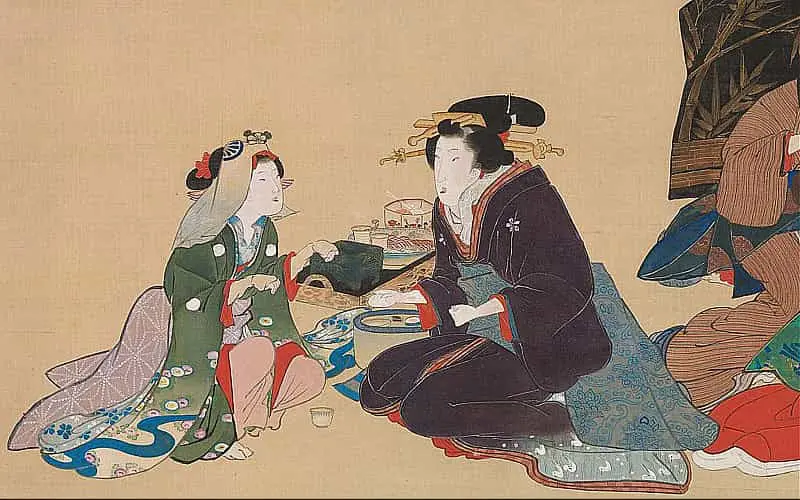
The Birth and Evolution of Traditional Baseball Boxing
Yakyūken, a unique cultural phenomenon in Japan, has its origins in...Double veinsOn one hand, it originated from a traditional group recreational game in Matsuyama City, Ehime Prefecture, Shikoku, Japan. In October 1924, after the Ehime Prefecture Iyo Railway baseball team lost to Kagawa Prefecture Takamatsu High School, coach Goken Maeda composed a song with dance moves to boost morale, which became the team's unique way of cheering. The earliest lyrics of the "Yakyuken" (baseball fist) were closely related to baseball games: "Yakyu suru nara kou iu gu he ni yara sanse / tougetara kou hitte / hittara nara kou ku kete…" (If you play baseball, these are the situations. You have to hit when you throw, and you have to catch when you hit…).
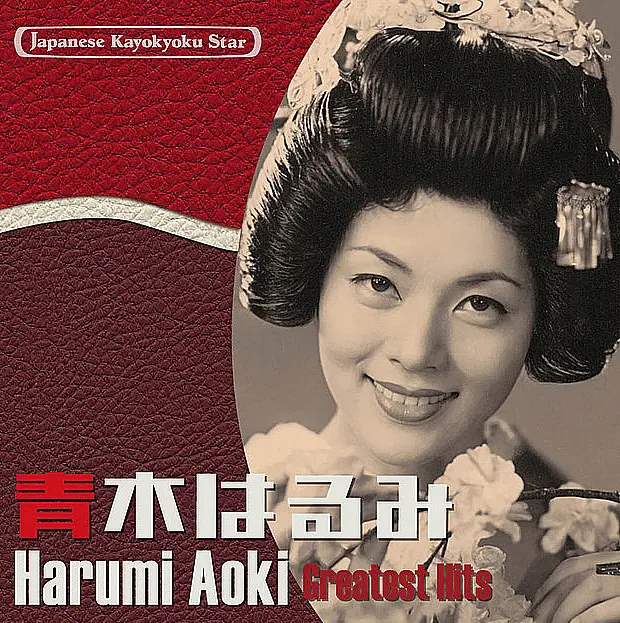
On the other hand, the game of stripping and rock-paper-scissors actually predates the name "baseball rock-paper-scissors." This game originated in...Yokohama, Japan during the Bakumatsu periodThis was an entertainment activity offered by local brothels, initially known as "Yokohama Fist" or "Yokohama Nanjing Fist." The historical document *Kasshiyawa* even mentions the existence of this striptease game as early as 1719.
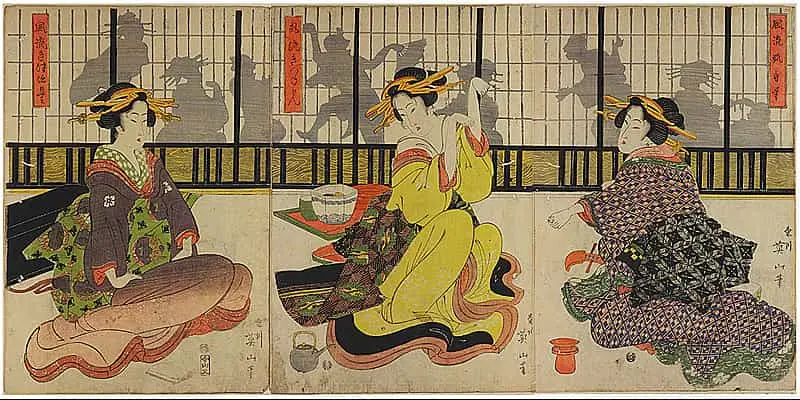
In the 1950s, Baseball Fist became a nationally popular dance game and began to merge with striptease. In 1954, several singers, including Harumi Aoki, recorded Baseball Fist songs, making it popular throughout Japan. In 1966,Ehime PrefectureTo complement the Shikoku region's song and dance festival, Matsuyama City launched the Matsuyama Festival, which features local Taiko drum dances. In 1970, the festival dances were changed to the then-more popular Yakyuken, and this tradition continues to this day.
| years | event | platform | significance |
|---|---|---|---|
| 1975 | The Baseball Boxing Cheer Song is Born | record | Non-pornographic origins |
| 1981 | HUDSON's "Baseball Fist" Released | SHARP MZ-80K/C | The first adult game |
| 1986 | "Burning Baseball Fist" Released | FC Disk Drive | Technological breakthrough |
| 1992 | Baseball Gaiden Released | PC-98 | Narrative Transformation |
| 2001 | Doujinshi featuring baseball fist appear in large numbers | Comiket | Secondary creative peak |
| 2024 | Steam release of "Xiao Meiyu and Teacher" | Steam | Globalization Rebirth |
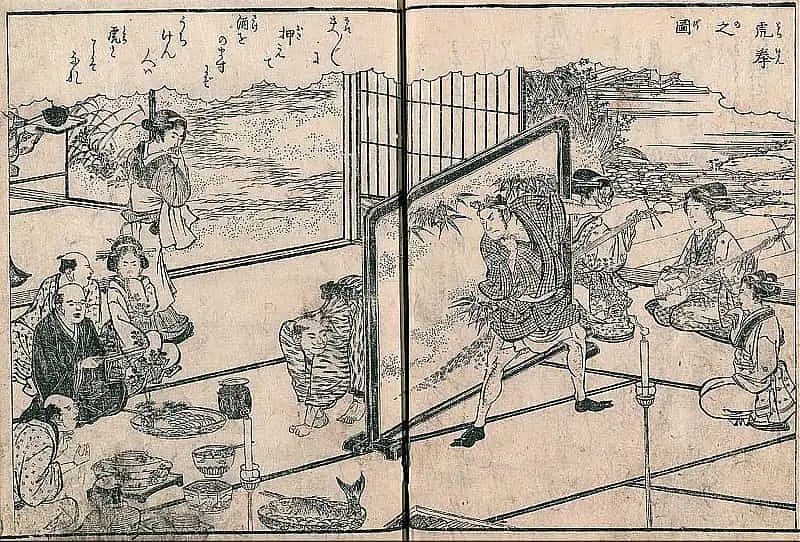
The popularity and media presence of modern baseball boxing
In April 1969,Nippon Television (NTV) The striptease game called "Yeqiuquan" began airing on television, and on November 26th of the same year, it was broadcast as a dedicated program. This marked a crucial turning point in Yeqiuquan's transformation from a traditional performance to mass entertainment. The influence of the television program led to striptease replacing traditional dance as the primary image of Yeqiuquan among the national public.
It is worth noting that this shift has also sparked controversy regarding cultural preservation. In 2005, the program's host, Kinichi Hagimoto, even personally traveled to Matsuyama City to apologize to Taketoshi Sawada, the orthodox successor of local baseball boxing, acknowledging the "distortion" of traditional baseball boxing's image on television.
Table: Historical Stages of the Development of Baseball Boxing
| period | Key Features | social status | Representative events |
|---|---|---|---|
| Late Edo period(Mid-19th century) | Entertainment activities in Yokohama brothels | Underground entertainment | "Yokohama Fist" appears |
| 1920s | Baseball cheering song and dance in Ehime Prefecture | Local cultural performances | Goken Maeda composed a folk song about baseball. |
| 1950s | Nationwide Popularization and Recording | Popular entertainment | Aoki Harumi and other singers recorded albums |
| 1960s-1970s | Combining television media with striptease elements | Commercial Television Entertainment | Japanese TV station launches baseball boxing program |
| Since the 1980s | Gamification and the use of the AV industry | Adult entertainment | Hudson Soft releases its first baseball game. |

Early development of Japanese adult games (1980s)
The Emergence and Technological Limitations of Adult Games
The origins of Japanese adult games can be traced back toearly 1980sIf we disregard the popular baseball games of the 1980s, the earliest video game containing sexual elements can be considered Koei's *Night Life*, released in 1982. However, the game's design purpose differed significantly from modern adult games—players controlled a couple, trying to conceive by calculating the wife's menstrual cycle and choosing different positions; it was more like a practical software to "help couples with their sex life after marriage."
The game that truly established the framework of today's "bishoujo adventure game" is *Tenshitachi no Afternoon*, released by JAST in 1985. This game was influenced by best-selling adventure games in the American game market at the time.The first game to feature a text-based chat option as a game flag.Adult games laid the foundation for the basic framework of the visual novel genre.
Technological limitations were a major challenge in the early development of adult games. Hudson Soft's *Yakyuken*, released in 1981, is considered by some sources to be Japan's first adult game. This game ran on a Sharp MZ-80K computer without graphics capabilities (a resolution of only 80x50 pixels), and the illustrations were entirely hand-drawn.Character Images (ASCII Art) Composition. Game reviewer Yoshitaka Osawa criticized it, saying, "The ASCII art is so poor that I can't even tell the gender of the character."

Gamification of Baseball Boxing
Hudson Soft's *Baseball Fist* game system was relatively simple: at the start of the game, players input the number of their own clothes (up to 999), and then play rock-paper-scissors with the game character Megumi. Each time the player wins, Megumi removes a piece of clothing and gradually becomes shy; if the player loses, their clothing count decreases by one. This simple interactive mode laid the foundation for the basic mechanism of many later adult games.
Despite the game's rudimentary visuals, the creativity of the development team, "Miso Ramen Team," under technological limitations is commendable. In his book, *Our Bishoujo Game Chronicle*, Maeda Hiroyuki praises the team's efforts in creating illustrations using text on computers lacking graphics capabilities.
There is academic debate regarding the attribution of Japan's first adult game. Both "The Complete History of Computer Bishoujo Games 1982-2000" and "Bishoujo Game Fanatics" consider "Night Life," released in 1982, to be Japan's first adult game. However, according to the NHK special "New Electronic Nation" broadcast in January 1996, an advertisement for "Yakyuken" appeared in the computer magazine "Monthly Microcomputer," published in the summer of 1979. Therefore, according to historical records, it is Japan's first adult game.

The Golden Age of Bishoujo Games (1990s)
Technological advancements and the diversification of game genres
The 1990s were a period of rapid development for adult games in Japan.Golden AgeWith the improvement of personal computer performance and the popularization of CD-ROM storage interfaces, game sizes increased significantly, making higher quality graphics and audio possible. During this period, visual novels (gal games) gradually became the mainstream form of adult games.
In 1992, ELF's "Doukyuusei" was considered...A milestone in bishoujo gamesUnlike previous games that directly used sex as a selling point, *Doukyuusei* constructs a complete dating simulation system. Players need to build relationships with different female characters by choosing dialogue options and arranging activity schedules. The game uses "reasonable H" as its slogan, turning the fantasy of picking up girls, dating, and developing deeper relationships into reality.
The success of *Doukyuusei* laid the foundation for the "dating simulation" game genre. *Doukyuusei 2*, released in 1995, further expanded the game's scope, increasing the number of romanceable heroines to 15, ranging in age from 18 to 38, catering to different player preferences. With its top-notch CG quality, high degree of freedom, and innovative gameplay, this game became a significant milestone in the history of Japanese H-games.
The introduction of 3D technology and new game genres
In the late 1990s, with the advancement of 3D graphics technology, Japanese adult games began to trend towards three-dimensionality. Illusion became a pioneer in this field, releasing the *Tail Chaser* series. Unlike the romance-oriented *Doukyuusei* series, the *Tail Chaser* series introduced a more direct...Stealth and Sexual Crime FantasiesIn this game, players need to secretly follow female characters and look for opportunities to commit indecent acts.
Despite developer Illusion's strict prohibition against selling the Tail Chaser series outside of Japan, these games remain a significant part of Chinese players' memories thanks to the "help" of localization groups and hacking studios. This "perverted" gaming experience caters to the tastes of certain players while also sparking ethical controversies.
Table: Comparison of Representative Adult Games from the 1990s
| Game Name | Year of issue | Development Company | Game type | Main features |
|---|---|---|---|---|
| Classmates | 1992 | Elf | Dating Simulation | Pioneering time scheduling and dialogue selection system |
| Classmate 2 | 1995 | Elf | Dating Simulation | The number of romanceable characters has increased significantly, and the storyline is richer. |
| tail row | 1999 | Illusion | 3D Stealth Action | Introducing a third-person trailing perspective and real-time interaction |
| wild ball boxingseries | 1990s | Multiple companies | Casual rock-paper-scissors | Combining live video footage with traditional strip rock-paper-scissors |

The diversification of adult games (2000s)
Further subdivision of game genres
Entering the 21st century, Japan's adult game industry entered...Maturity and DiversityThe development stage. According to 2009 data, hundreds of adult games were released in Japan that year, the vast majority of which (402 out of 419) were still romance adventure games (AVG). The themes of games during this period covered multiple fields such as school life, science fiction and fantasy, and historical legends, satisfying the interests of different players.
Released in January 2009, *We Have No Wings* (俺たちに翼はない), developed by Navel, showcased the evolution of narrative complexity in adult games. The game employed a multi-protagonist, interwoven narrative structure, gradually revealing the overall plot through the storylines of different characters—a complex narrative approach rarely seen in previous adult games.
At the same time, the content of adult games is also showing a clear trend towards genre specialization. It can be roughly divided into…Pure love"(Primarily based on romantic feelings) and"Ghostly and absurdThe game is divided into two main categories: "(including objectification or coercive content)" and "(including objectification or coercive content)". These are further subdivided into subcategories such as action-oriented, healing-oriented, depressing-oriented, touching-oriented, practical-oriented, and grotesque-oriented. Among these, "practical-oriented" games (called "Nukikige") account for the majority of the output. These games are designed with a purpose similar to AV, mainly providing players with a way to release their desires.

Industry scale and business model
In the 2000s, Japan's adult gaming industry took shape.Stable business modelCompared to AAA titles with long development cycles, "short-run games" with low cost, low price, and quick return on investment have surprisingly found a market. This is not only a survival strategy for small studios, but even some large studios release short-run games as filler titles during the gap between their AAA releases to earn temporary income.
Release data from 2009 shows that adult games were released evenly, with dozens of new titles appearing almost every month. Games released in January included "Big-Breasted Maid Paradise," "Absolute Zero," and "Blessing Bell," demonstrating the diversity of themes.
This period also witnessedDiversity of visual stylesFrom traditional anime styles to more realistic art styles, different developers have developed their own unique visual characteristics. For example, "Radiant Tsubasa: Yumina in the Sky," released in January 2009, adopted a fantasy battle style, while "We Don't Have Wings" showcased a more modern character design.

The Performance and Evolution of Baseball Boxing in Adult Games
Technological Evolution of Baseball Boxing
Baseball Fist is a Japanese adult game.Important subtypesIts form of expression has evolved with technological advancements. Starting with Hudson Soft's ASCII art version of "Baseball Fist" in 1981, and continuing into the 1990s with the increase in CD-ROM capacity, Baseball Fist games began to use video footage of live actors.
In the 1990s, Japanese adult video manufacturers began producing many videos with the theme of "baseball fist," and the originally long lyrics of "baseball fist" were shortened to: "野球するならこーゆー具合にしやしゃんせアウトセーフよよいのよい." Among them, Soft On Demand (SOD) was the most well-known, and its "baseball fist" works not only featured women undressing, but also included sexual intercourse as a "punishment" element in "baseball fist."
Since the 2000s, baseball fighting games have further diversified into more diverse forms. For example, "Konsuto☆Yakyuuken-nako-hen," released in February 2009, combines traditional baseball fighting with elements of modern bishoujo games. Meanwhile, "Baseball Fighting Special Edition: Tonight's 12th Battle" allows players to choose their favorite character from a total of 12 real-life girls to play with.

The cultural significance and controversy of baseball boxing
The popularity of baseball-style boxing reflects Japanese society's...Relationship between sex and gamesThe unique attitude of incorporating striptease elements into the traditional rock-paper-scissors game reflects the duality of Japanese culture towards sex—both open and subtle: on the one hand, sexual elements are openly and commercially exploited; on the other hand, through gamification, a certain "safe distance" is provided for this sexual expression.
Modern versions incorporate themed elements, such as cosplaying as anime characters, adding to the fun. The game emphasizes a relaxed social atmosphere but must comply with Japan's Entertainment Business Law, ensuring participants' consent. Cultural Significance: Baseball combines gameplay and eroticism in a simple and direct way, reflecting the casual and open attitude of Japanese nightlife culture. Its widespread popularity has made it a symbol of adult entertainment, but its use in public is gradually decreasing due to its perceived excessive exposure. Modern Development: It is now commonly seen in themed nightclubs or private parties, with some venues offering online live streams to attract international audiences.
Further reading: