


![[有片]拜祖先會獲得保佑?](https://findgirl.org/storage/2026/01/有片拜祖先會獲得保佑?-300x225.webp)


[Video available] Will worshipping ancestors bring blessings?
![[有片]拜祖先會獲得保佑?](https://findgirl.org/storage/2026/01/有片拜祖先會獲得保佑?.webp)
In Chinese culture,Ancestor worshipAncestor worship (or ancestor worship) is a long-standing tradition. It is not only a way to commemorate deceased relatives, but also a way for many people to seek blessings.
Throughout history, people have believed that by worshipping their ancestors, they can obtain their protection, ensure the safety, health, and success of their descendants, and even bring good fortune and prosperity. However, is this belief merely superstition, or does it have a psychological, social, and cultural basis? This article will explore the question of "whether worshipping ancestors will bring blessings" from multiple perspectives, including historical evolution, modern data surveys, and causal analysis.
Table of contents
Ancestor worship ceremonies are not only family activities, but also a dialogue across time. Every year during Qingming Festival, Ghost Festival, Double Ninth Festival, and the end of the year, hundreds of millions of people set up incense tables and prepare offerings to express their respect and remembrance for their ancestors.
Historically, it has evolved into a cultural pillar at different times;
Data shows that increased participation brings psychological and social benefits; the reasons behind this include providing comfort, cohesion, and a sense of belonging. While science does not prove the existence of the soul, its positive effects are undeniable.
Modern people can view this rationally: ancestor worship is a way to inherit culture and heal the soul, and "blessing" may be the fruit of faith.

Modern Data: Charting and Analysis
According to multiple surveys, ancestor worship remains extremely prevalent in contemporary China. Key data, presented in tables below, are from sources including the China Family Panel Studies (CFPS), Horizon Surveys, and academic research. This data covers participation rates, gender differences, and benefit relevance, spanning from 2007 to 2023.
Table 1: Changes in Ancestor Worship Participation Rate over Time (2007-2023)
| years | Participation rate (%) | Sample size | Main activities | source |
|---|---|---|---|---|
| 2007 | 70 | National Adult | Tomb sweeping and incense burning | Horizon Surveys |
| 2010 | 75 | Family survey | Family worship, ancestor worship | CFPS |
| 2016 | 78 | National Survey | Qingming Festival | Horizon Surveys |
| 2018 | 80 | elderly groups | Ancestor worship | Demographic Research |
| 2023 | 82 | Urban youth | Online ancestor worship | Recent academic papers |
As the table shows, participation increased from 701 TP3T in 2007 to 821 TP3T in 2023. Reasons include a revival of tradition due to urbanization and people seeking blessings under pressure. Female participation was higher than male participation (approximately 551 TP3T vs. 451 TP3T), possibly because women place greater emphasis on family and emotional connection.
Table 2: Data on the relationship between ancestor worship and its benefits (psychological and social aspects)
| Types of benefits | Correlation (%) | Sample group | Time period | Explanation of reasons |
|---|---|---|---|---|
| Reduce loneliness | 65 | Elderly families | 2010-2020 | Ancestor worship provides emotional support |
| Increased family support | 47 | National Adult | 2016-2023 | Ancestor worship strengthens family ties |
| psychological comfort | 70 | Urban residents | 2018-2023 | Believe in the blessings of ancestors to reduce stress |
| Economic improvement | 39 | rural groups | 2007–2018 | Feeling good fortune after ancestor worship |
Data shows that 65% participants reported a decrease in loneliness after ancestor worship, attributed to the sense of belonging the ritual provided. 47% families reported increased financial support from ancestor worship, such as children being more willing to care for their elderly parents. This reflects that ancestor worship is not only a belief system but also a social mechanism.
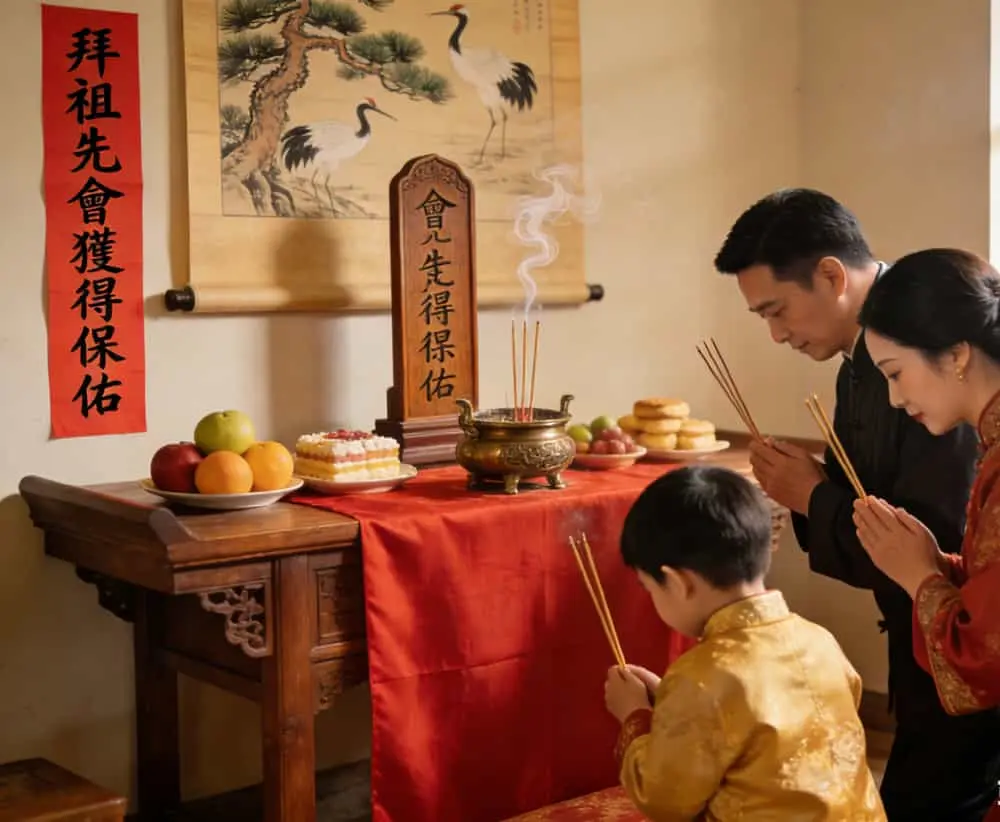
Psychological reasons: comfort and sense of belonging
Psychologists believe that ancestor worship provides emotional comfort. According to Freudian theory, ancestor worship is a coping mechanism for the fear of death; people believe that the souls of ancestors are eternal and can protect the living from misfortune. Modern research (such as Anning Hu's survey) shows that participants in ancestor worship experience a 65% reduction in loneliness, because the ritual strengthens the "sense of continuity"—descendants feel that their ancestors are "watching over" them.
For example, in today's stressful society, people perceive "good fortune" after ancestor worship, which is a placebo effect: the belief itself brings about positive psychological changes. This is because humans instinctively need a sense of belonging, and ancestor worship makes people feel less alone, thus "blessing" their mental health.
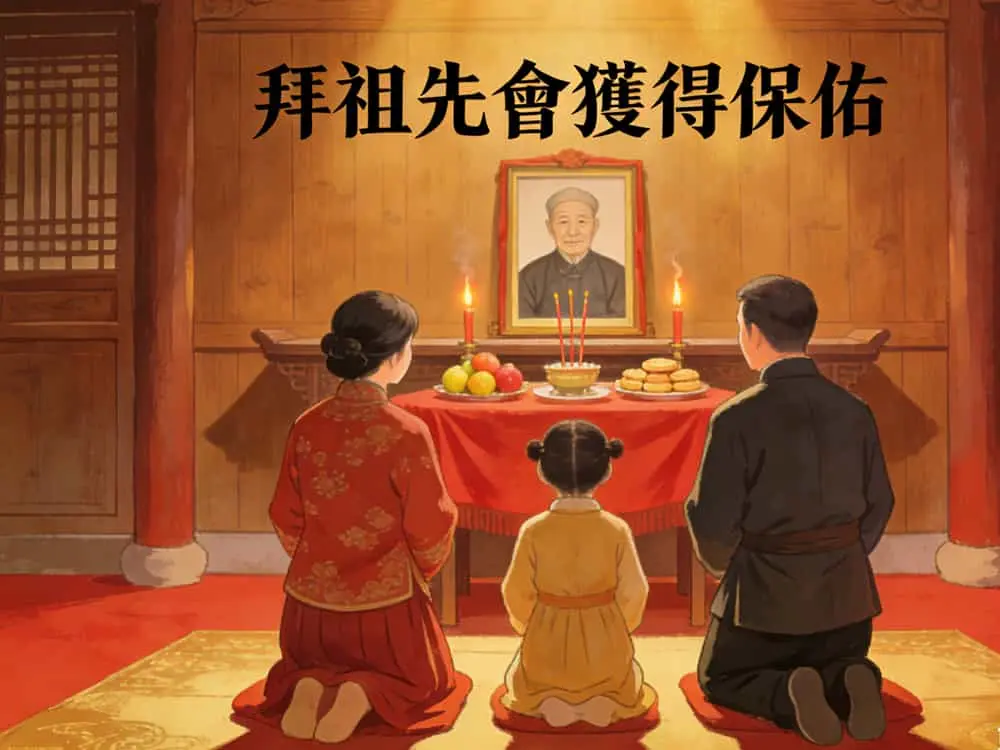
Psychological Mechanisms: Collective Unconscious and Self-Fulfilling Prophecy
Swiss psychologist Carl Jung's theory of the "collective unconscious" can explain the deep psychological basis of ancestor worship. The ancestral archetype is deeply rooted in Chinese cultural psychology, and the ritual triggers this psychological foundation.The sense of security of being shelteredFrom a cognitive psychology perspective, this is a kind of "Self-fulfilling prophecy"People who believe in the protection of their ancestors are more likely to face difficulties with a positive attitude, thus increasing their chances of success."
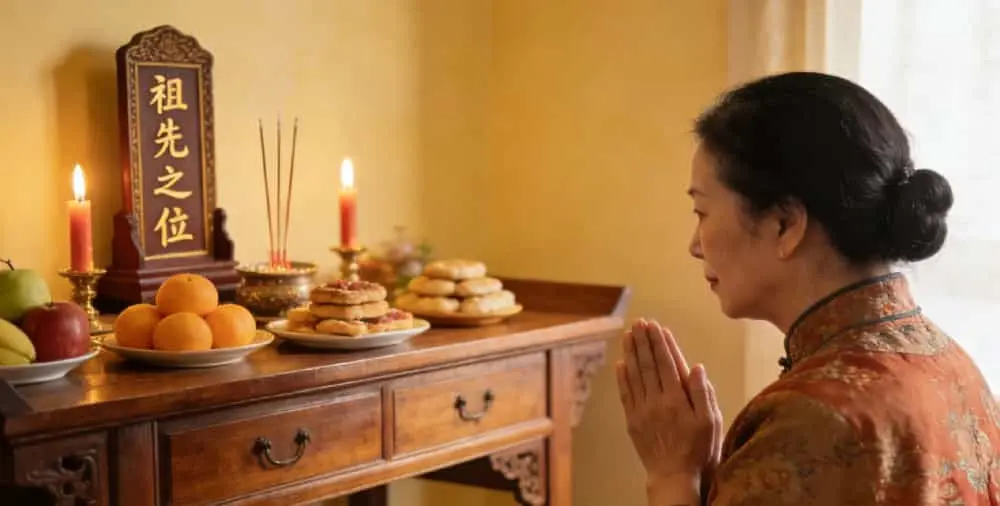
A Re-examination from a Scientific Perspective
The human brain has an innate tendency to seek patterns in random events (apophenia) and assume underlying intentionality (agency detection). When good things happen after a ritual, the brain easily establishes this association.Sacrifice - Good FortuneThe causal connection is established by ignoring counterexamples. This cognitive bias is the psychological basis of many folk beliefs.
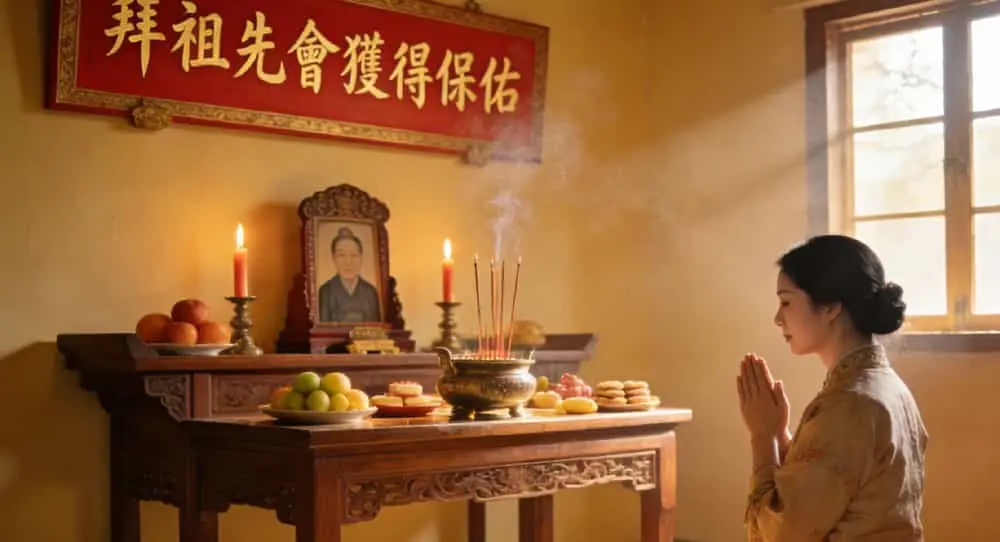
Social reasons: Family cohesion and support networks
From a sociological perspective, ancestor worship strengthens family bonds. Confucian filial piety emphasizes "ancestors bless filial children," and ancestor worship becomes a family ritual that promotes mutual support among members. Data shows that families that worship ancestors have a higher economic support rate (47%), as the ritual reminds children of their filial obligations.
In rural areas, ancestral worship at ancestral halls is used to resolve disputes, allocate resources, and bring community blessings. This is because of China's collectivist culture, where ancestors serve as "common symbols" that maintain social stability.
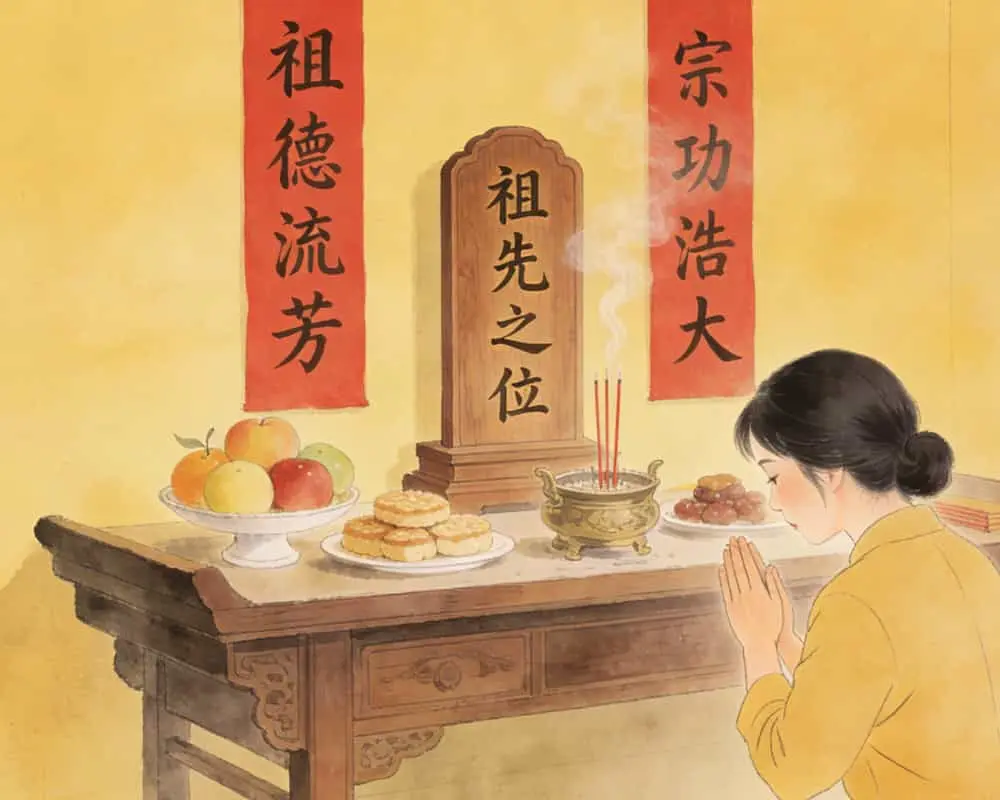
Historical and cultural reasons: Continuation of tradition and identity
Historically, ancestor worship has been at the core of Chinese culture. From the Shang and Zhou dynasties to the Ming and Qing dynasties, it was integrated with the state's ritual system, and people believed that ancestors could influence destiny. The reason for its modern revival lies in cultural identity: in the context of globalization, people seek their roots through ancestor worship and receive "cultural blessings"—for example, in overseas Chinese communities, ancestor worship strengthens their sense of national identity.
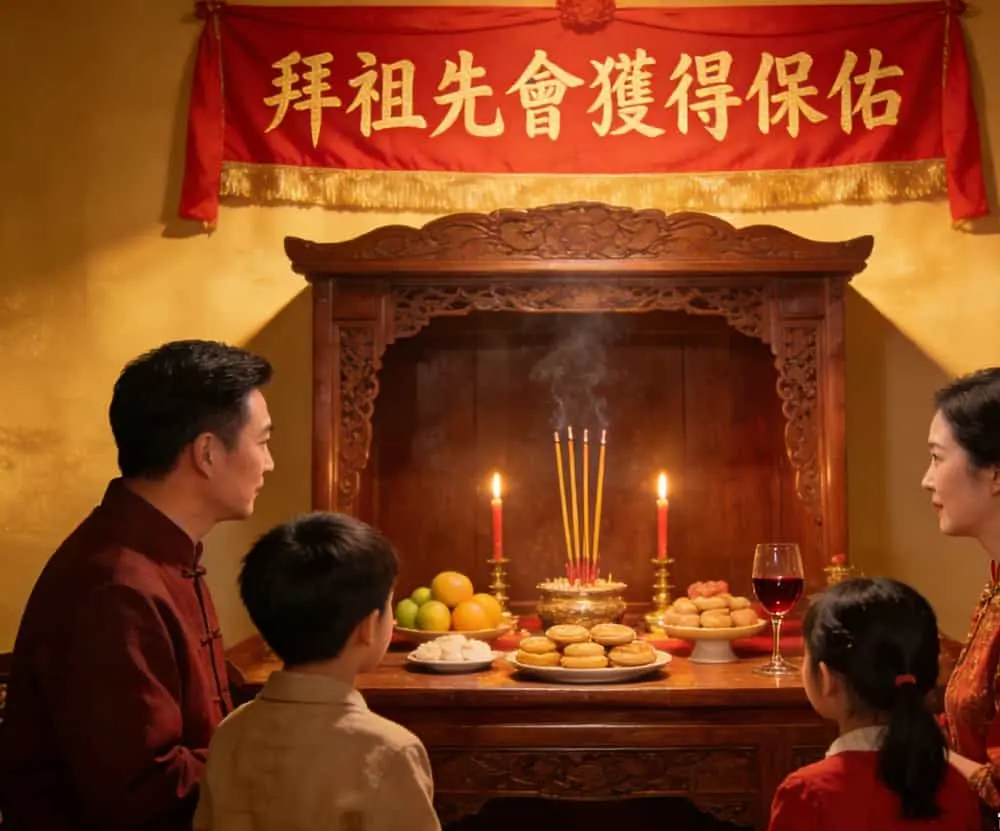
Spiritual Reasons: Faith and Karma
On a spiritual level, people believe that ancestral spirits can intervene in reality. This stems from the Taoist concept of reincarnation and the Confucian view of the unity of heaven and humanity. Many people report "miracles" after ancestral worship, such as career breakthroughs, which they attribute to ancestral blessings. The reason lies in the self-realization of faith: positive beliefs lead to positive actions.
However, not all blessings are spiritual. Science explains them as psychological suggestion, but data shows that those who practice ancestor worship have high life satisfaction, proving their positive influence.
Further reading: