





Why is a woman without pubic hair called a white tiger?

Table of contents
I. Etymology and Basic Meaning of "White Tiger"
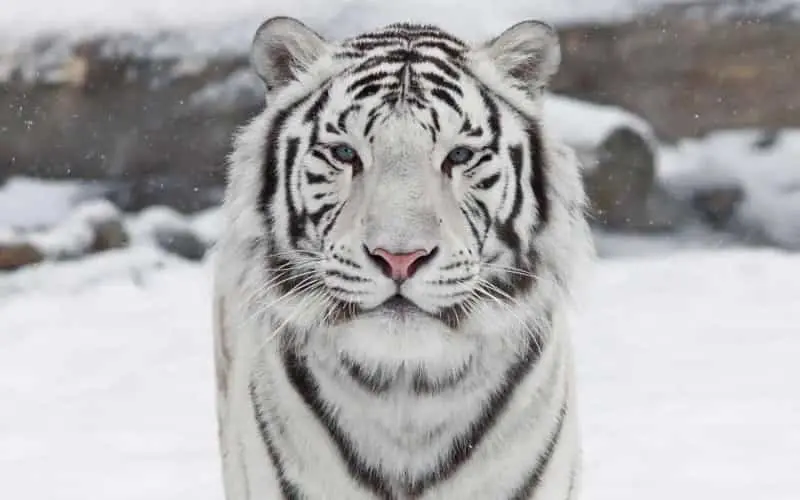
The term "White Tiger" originates from the ancient Chinese mythology of the Four Symbols: Azure Dragon, White Tiger, Vermilion Bird, and Black Tortoise. These four mythical creatures represent the four cardinal directions (east, west, south, and north), as well as the four seasons and the Five Elements. The White Tiger corresponds to the west, autumn, and metal, symbolizing power, majesty, and a chilling aura. In ancient culture, the White Tiger was considered a powerful spiritual beast, associated with courage and mystery.
However, in colloquial language, "white tiger" is used to describe the absence of pubic hair in women. This usage originates from traditional culture but incorporates more folk customs, gender concepts, and metaphors. The reasons for this are analyzed from several aspects below:

2. Why is "white tiger" used to describe a woman without pubic hair?
1. Metaphors in appearance
The association of color with smoothnessIn Chinese, "white" is often associated with images of purity, smoothness, and cleanliness. A woman's pubic area, lacking pubic hair, appears smooth and white, similar to the visual impression conveyed by the word "white" in the Chinese term for a white tiger. This smooth appearance was likened to the fur of a white tiger, thus giving rise to the term.
The symbolism of the tigerIn Chinese culture, the tiger is a symbol of power and ferocity, associated with strength and mystery. Referring to a woman's hairless pubic area as a "white tiger" may be an exaggerated or mystical description, emphasizing its unique characteristics.

2. The Influence of Feng Shui and Destiny
The meaning of the White Tiger in Feng ShuiIn Feng Shui, the White Tiger represents the west and is associated with killing and yin energy. Women are considered yin (as opposed to yang, masculine), and the absence of pubic hair may be seen as an extreme "yin" characteristic, thus connecting with the White Tiger as a symbol of yin energy.
Fortune telling and superstitionIn some folk tales, female physical characteristics (such as the absence of pubic hair) are believed to be related to fate, personality, or fortune. The term "White Tiger" may be imbued with some mysterious or ominous connotation, such as the belief that a "White Tiger woman" may have a negative impact on her husband or family (e.g., the saying "she brings misfortune to her husband"). Such claims mostly stem from feudal society's stereotypes and superstitious beliefs about women and lack scientific basis.

3. Sexual Culture and Folk Slang
The veiled expression of sexual cultureIn traditional Chinese culture, directly discussing sexual topics is often considered taboo. Therefore, people often use metaphors or symbolic language to describe sexual characteristics. "White Tiger" as a euphemism may have gradually formed in folk tradition to describe this special physical feature.
Comparison with "Azure Dragon"In some folk expressions, the male genitalia are referred to as the "Azure Dragon," while the female pubic hairless genitals are called the "White Tiger," forming a parallel structure. This parallelism not only reflects the cultural concept of Yin and Yang correspondence but also reinforces the popularity of the "White Tiger" term.

4. The Influence of Literature and Erotic Culture
Metaphor in ancient literatureIn some ancient literature or erotic novels, female physical characteristics are often described metaphorically or exaggeratedly. "White tiger" may have originated from such literary works, used to describe a rare or attractive physical feature, and was subsequently widely accepted as slang.
Folk tales and legendsIn some local legends, the "White Tiger Woman" is described as a woman with special charm or destiny, which may further reinforce the connection between the "White Tiger" and women without pubic hair.
III. Cultural and Social Background
1. Gender concepts in feudal society
In feudal society, women's bodies were often imbued with excessive symbolic meaning. Women without pubic hair might be seen as abnormal and thus given the mystical or negative term "white tiger." This reflects the objectification of the female body and the exaggerated interpretation of "abnormal" characteristics in society at that time.

2. Exaggeration and superstition surrounding "abnormalities"
In traditional societies, any physical characteristic that deviates from the norm can be magnified and given special meaning. Although the absence of pubic hair is a normal variation in medicine (which may be caused by genetics, hormones, or other factors), in an era lacking scientific knowledge, it was easily interpreted as some kind of "anomaly," thus being associated with the strong symbolism of "white tiger."

3. Regional and linguistic differences
The term "White Tiger" can have different meanings or be more prevalent in different regions. In some places, it may be a neutral description, while in others it may carry derogatory or superstitious connotations. This is related to local culture, language habits, and folklore.

IV. Medical and Scientific Perspectives
From a modern medical perspective, the absence (or sparseness) of pubic hair in women is a normal physiological variation, which may be related to the following factors:
Genetic factorsIndividual hair distribution is influenced by genes; some people are born with less or no pubic hair.
Hormone levelsPubic hair growth is related to sex hormones (such as androgens), and low hormone levels may lead to sparse pubic hair.
Racial differencesThe distribution of body hair varies greatly among different races. For example, pubic hair is usually sparser in East Asian populations than in Western populations.
Acquired factorsHair removal habits, medical treatments (such as chemotherapy), or skin conditions can also lead to the absence of pubic hair.
These scientific explanations show that the absence of pubic hair is not abnormal, but rather part of human diversity. However, in traditional culture, this characteristic has been given excessive symbolic meaning, leading to the term "white tiger."

V. The Modern Evolution of the "White Tiger" Theory
In modern society, the use of the term "white tiger" has gradually decreased, especially in public, due to its connotations of sexism and superstition. However, in certain subcultures, internet slang, or pornography, this term may still be used to describe specific physical characteristics, often with a teasing or morbid connotation.
With the popularization of sex education and the emphasis on gender equality, many people have begun to question such superstitious or objectifying claims. Modern people are more inclined to view the diversity of the body with a scientific and respectful attitude, rather than defining it with traditional metaphors or superstitions.

VI. Conclusion
The term "White Tiger" originates from the Four Symbols mythology in traditional Chinese culture, combining metaphorical representations of appearance, feng shui, folk slang, and sexual culture. Its emergence reflects ancient society's unique interpretation of the female body and the exaggeration and mystification of "abnormal" characteristics. From a scientific perspective, the absence of pubic hair is a normal physiological variation and does not require excessive symbolic meaning. In modern society, such expressions have gradually faded from mainstream discourse and are more often seen as part of historical culture.
Further reading:
![[有片]拜祖先會獲得保佑?](https://findgirl.org/storage/2026/01/有片拜祖先會獲得保佑?-300x225.webp)