





Heterosexuality

heterosexualHeterosexuality refers to a sexual orientation that is primarily or entirely directed toward romantic, emotional, and sexual attraction to the opposite sex, and is the most common sexual orientation in humans. Approximately 90–951 million people worldwide identify as heterosexual, and it remains the dominant orientation in most societies.
Table of contents
Basic Definitions and Classifications
- Core Definition:rightopposite sexproduceromantic/Sexual attractionThey have little or no attraction to the same sex.
- spectral position:Kinsey Scale(Kinsey ScaleLevels range from 0 (completely heterosexual) to 6 (completely homosexual), with most heterosexuals at levels 0–1.
- Common subtypes:
- Straight men/straight women: They only have sexual fantasies about the opposite sex.
- Heterosexual + occasional curiosity: Has a slight attraction to the same sex, but still behaves in a heterosexual manner.
- Heterosexual + Romantic Asexual: Only wants to date the opposite sex, not want to have sex (heterosexual asexual).

Historical and cultural context
- In ancient times, heterosexuality was never considered "special," but rather a matter of course. Confucianism, with its saying "Of the three unfilial acts, the greatest is to have no offspring," reinforced the idea of heterosexual marriage.
- Modern timesBefore 1949, heterosexuality was the dominant sex in both urban and rural areas of China; from 1949 to 1978, sexual topics were forbidden in mainland China; after the 1980s, sexual openness increased, but heterosexuality remained the mainstream.
- contemporaryAfter same-sex marriage was legalized in Taiwan in 2019, heterosexuals still make up the vast majority, but the percentage of young people (Generation Z) who identify as purely heterosexual has dropped to 85%.
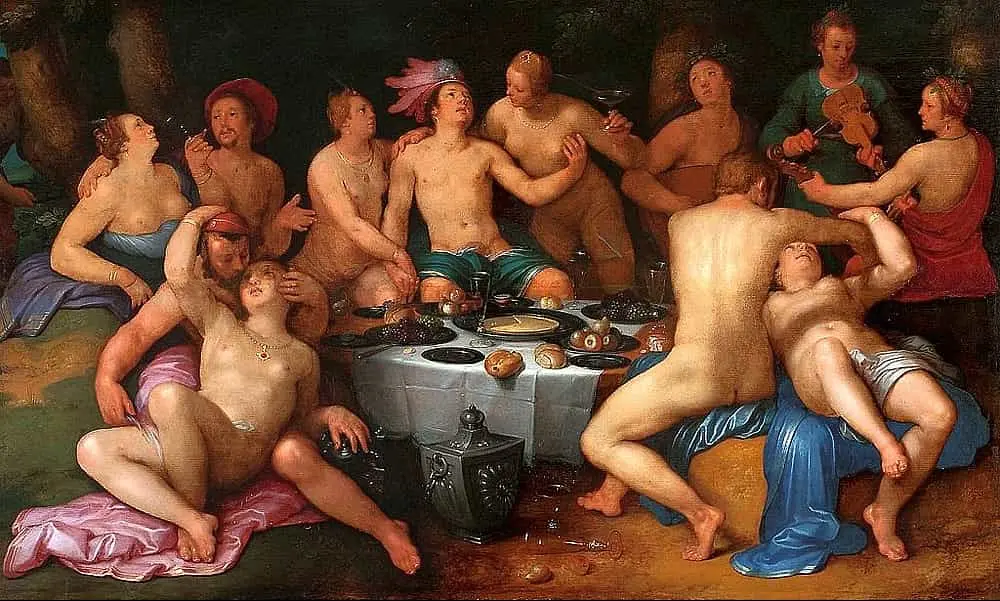
The real ecology of heterosexuality
Age distribution
- Among those born after 2000: approximately 821% are purely heterosexual, while 101% of those born after 2000 identify as "primarily heterosexual but not rejecting same-sex relationships".
- Post-90s: Purely heterosexual, approximately 92%.
- Before 1980: Purely heterosexual 98% or above.

Regional differences
- Taiwan: The most open-minded, with a heterosexual acceptance rate of LGBT reaching 78%.
- Hong Kong: Middle-class heterosexuals are prevalent, but conservative families still strongly demand "carrying on the family line".
- Mainland China: Heterosexuality is more tolerant in first-tier cities, but still viewed negatively in third- and fourth-tier cities.homosexualityfor"sick。
- In Europe and America: Heterosexuals have a high acceptance of diverse sexual orientations (80% to 30% of heterosexuals).
- Asia/Latin America: Heterosexuality remains the absolute mainstream, but urban youth are more tolerant.
- Global trend: Heterosexuality is more open in first-tier cities, while it is more conservative in rural areas.
mainstream dating platforms
- Heterosexual users primarily use: Tantan, Soul, Jiayuan.com, Tinder, Bumble, Hinge, OkCupid, and Tantan.

heterosexual sex culture
| Ranking | name | Participation rate | Essential props | One sentence is the key point |
|---|---|---|---|---|
| 1 | Missionary Position | 95% | none | The most classic, the most intimate |
| 2 | woman on top, man on bottom | 88% | none | It's most satisfying when girls take the initiative. |
| 3 | Doggy style | 82% | Lubricating fluid | The deepest, the most primitive |
| 4 | 69 Interchange Port | 75% | none | The fairest and most exciting |
| 5 | Bathroom play | 68% | Shower Gel | Water flow + standing is the most convenient |
| 6 | Role play(uniform) | 55% | School uniform/nurse uniform | The strongest visual stimulation |
| 7 | Bondage/Light SM | 42% | Silk scarf/handcuffs | The most satisfying thing is the power reversal. |
| 8 | Outdoor/Car Sex | 35% | Car/Outdoor | Extremely exciting |

Three types in reality
- Traditional heterosexual(60%): Dating in college → getting married after graduation → having children, with sexual activity mainly involving missionaries.
- Open heterosexuality(30%): Accepts one-night stands, casual sex, and multiple partners, but ultimately wants a stable heterosexual marriage.
- Heterosexuality + Exploration(10%): Primarily heterosexual, but has tried 3P or had sex with the same sex, which is considered "a change of pace".

Common Questions and Myths
- Will heterosexuality change?Very few individuals have stable sexual orientations, but their sexual behavior is open to exploration.
- Why are there so many heterosexuals?Evolutionary theory suggests that this is conducive to reproduction; social norms are strengthened.
- "Do heterosexuals feel pressured?"Yes! Especially for men, "must be hard" and "must last," and for women, "must have an orgasm to save face."

10 Common FAQs for Heterosexuals
-
Is heterosexuality innate or acquired?
Most studies suggest an interaction between innate and nurture. Genetic factors account for 30–50% (%), fetal hormones influence brain structure, while environment and upbringing reinforce the tendency. The Kinsey scale shows that the vast majority of heterosexuals are at level 0–1 (completely or almost completely heterosexual), which is very stable.
-
Are all heterosexuals bound to get married and have children?
Not necessarily. Global data from 2025 shows that 15–251 heterosexuals will choose to remain single or childless. Heterosexuality is merely a sexual orientation and does not equate to having to follow traditional family models.
-
Can heterosexuals be attracted to the same sex?
Yes, and it's quite normal. Around 30–40% of heterosexuals experience curiosity or mild attraction to the same sex at some point (known as "heterosexual predominance"), but this doesn't change their primary inclination. Occasionally, "straight men/straight women watching gay pornography" is also common.
-
Why is heterosexuality the mainstream?
Evolutionary perspective: It is beneficial for species reproduction. Social norms reinforce this: Most cultures consider heterosexuality a "preset value." In 2025, the global heterosexual ratio will still be approximately 90–951 TP3T, but younger generations are more accepting of diversity.
-
Do heterosexuals experience sexual stress?
Yes, and quite a lot. Men often worry about "stamina" and "size," while women worry about "orgasmic performance" and "body shape." A 2025 survey showed that 40% of heterosexual couples experience relationship problems due to sexual stress.
-
Can heterosexuals try 3P or group sex?
Yes, as long as both parties agree. Around 20-30 heterosexual couples have tried threesomes (usually with a same-sex or opposite-sex third party), mostly to increase excitement, but boundaries need to be communicated beforehand.
-
Can heterosexuals turn into bisexuals or homosexuals?
Very few. Sexual orientation is usually stable throughout life, but sexual behavior can be explored. A small number of people (approximately 2–51 TP3T) discover they are bisexual in middle age, but this is mostly "pre-existing" rather than "a change".
-
Are heterosexuals always happier?
Not necessarily. Happiness is not related to sexual orientation, but to relationship quality, communication, and self-esteem. A 2025 study showed that heterosexuals and LGBTQ+ individuals have similar average levels of happiness; the key factors are social acceptance and self-identity.
-
How can heterosexuals improve the quality of their sex life?
Communicate more, try new positions/toys, and engage in more foreplay. The most effective methods in 2025: watch sex education videos together, attend couples workshops, and use an app to record preferences.
-
Do heterosexuals need to "come out"?
No, because heterosexuality is a societal assumption. However, in highly inclusive environments, some heterosexuals will proactively say "I support diversity," as a sign of respect for their LGBTQ+ friends.

The current state of heterosexuality
"Heterosexuality remains the absolute mainstream, but the younger generation no longer takes 'liking only the opposite sex' for granted. Instead, they think, 'I like the opposite sex now, but not necessarily in the future.' Heterosexuality has become more free and more realistic." Everyone's experience is unique. The key point is always: respect yourself and respect others.
Further reading:
![[有片]拜祖先會獲得保佑?](https://findgirl.org/storage/2026/01/有片拜祖先會獲得保佑?-300x225.webp)