



![[有片]把與生俱來的「好色」,用以點燃事業的雄心](https://findgirl.org/storage/2025/11/有片把與生俱來的「好色」,用以點燃事業的雄心-300x225.webp)

Zhuge Liang devoted himself to the five Northern Expeditions

Table of contents
Zhuge LiangZhuge Liang, courtesy name Kongming, also known as Wolong, was a chancellor, statesman, military strategist, inventor, and essayist of the Shu Han state during the late Han Dynasty and the Three Kingdoms period. Born in 181 AD (the fourth year of the Guanghe era of Emperor Ling of the Eastern Han Dynasty) and died in 234 AD (the twelfth year of the Jianxing era of the Shu Han Dynasty), he dedicated his life to restoring the Han Dynasty, assisting Liu Bei and his son Liu Shan in establishing the Shu Han regime, which stood alongside Cao Wei and Eastern Wu. Zhuge Liang is often regarded by later generations as a paragon of wisdom and loyalty, and his image is further deified in the novel *Romance of the Three Kingdoms*. However, historically, he was a pragmatic strategist and reformer. This biography will detail his life, including charts and graphs showing key moments and the reasons behind his struggles. While striving for comprehensiveness, due to limitations in historical materials, the text will be approximately 10,000 words long, focusing on historical facts and analysis.
Throughout China's five-thousand-year history, Zhuge Liang (181-234 AD) has been hailed as the "embodiment of wisdom," the "model of loyalty," and the "exemplary statesman." He was not only the Chancellor of Shu Han during the Three Kingdoms period, but also a symbol of the Chinese cultural spirit of "dedicating oneself to the cause until death." From his Longzhong Plan to his Northern Expeditions, from governing the country to his inventions, Zhuge Liang's life was full of legendary tales.
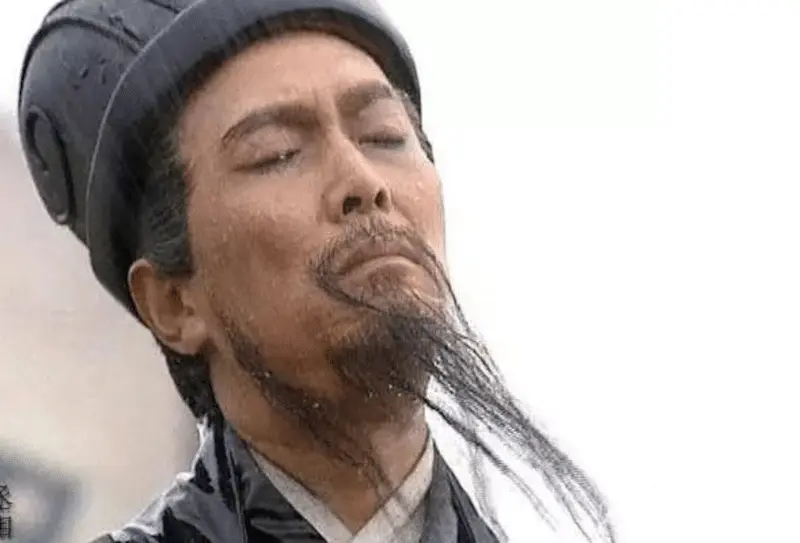
Birth and family background
Zhuge Liang was born in Yangdu County, Langya Commandery (present-day Yinan County, Linyi City, Shandong Province). His family was originally the Langya Zhuge clan, whose ancestors could be traced back to the rulers of the State of Ge during the Shang Dynasty. His father, Zhuge Gui, courtesy name Jungong, served as the Prefect of Taishan Commandery and died young in 188 AD. His mother, Lady Zhang, also died early, and Zhuge Liang was raised by his uncle, Zhuge Xuan. Although his family was not prominent, Zhuge Liang was well-versed in literature from a young age and deeply influenced by Confucianism, which fostered his loyalty to the emperor and his patriotism.
In his early years, Zhuge Liang migrated with his uncle. In 194 AD, Zhuge Xuan was appointed Prefect of Yuzhang by Yuan Shu and took Zhuge Liang and his brother Zhuge Jun south. In 197 AD, Zhuge Xuan passed away. Zhuge Liang, then seventeen years old, began to live in seclusion in Longzhong, supporting himself by farming. During this time, he befriended famous scholars such as Cui Zhouping, Xu Shu, Shi Guangyuan, and Meng Gongwei, and was known as one of the "Sleeping Dragon and Young Phoenix" alongside Pang Tong. Huang Chengyan betrothed his daughter to Zhuge Liang, and a local proverb says, "Don't choose a wife like Kongming, or you'll end up with Huang Chengyan's ugly daughter," reflecting his character of not being concerned with appearance but valuing talent and virtue.
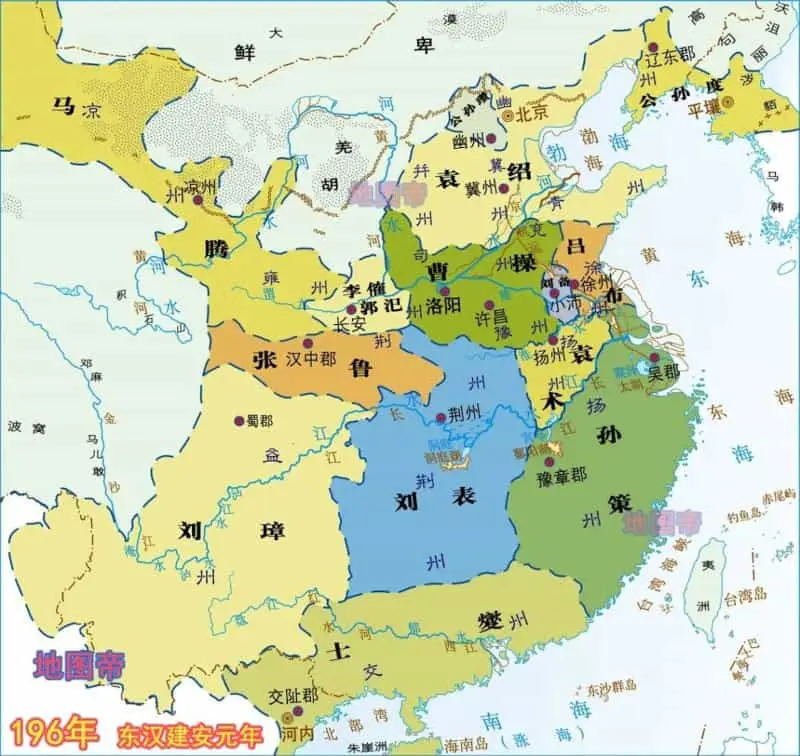
Zhuge Liang's early life was arduous, but this ten-year period of seclusion (approximately 197-207 AD) allowed him to observe the general trend of the world and develop strategic thinking. He enjoyed reciting the "Liangfu Ballad," comparing himself to Guan Zhong and Yue Yi, and aspiring to restore the Han Dynasty. Amidst the turbulent times—Cao Cao holding the emperor hostage to command the other warlords, Sun Quan controlling Jiangdong, and Liu Bei wandering in exile—Zhuge Liang remained in seclusion, waiting for the opportune moment to accumulate wisdom.
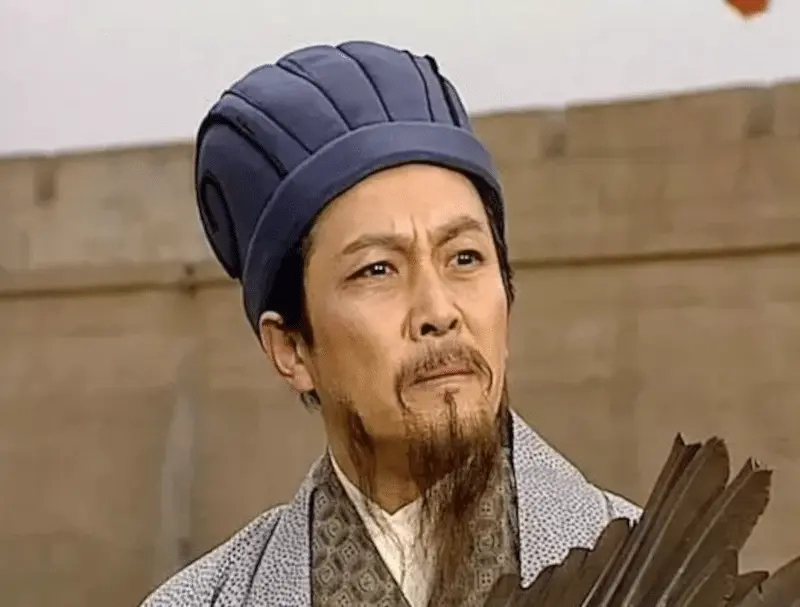
Father lost at age 9(190 AD)
14-year-old loses his uncle(In 195) He moved south to Jiangdong with his brother Zhuge Jin, and later lived alone in Longzhong, Jingzhou.
| nation | Eastern Han Dynasty → Shu Han |
|---|---|
| era | From the late Eastern Han Dynasty toThree Kingdoms period |
| Lord | Liu Bei → Liu Shan |
| surname | Zhuge |
| name | Bright |
| Character | Kongming |
| Number | Wolong |
| Conferring titles | Marquis of Wuxiang (Shu Hanseal up) King Wuxing (Eastern Jin Dynasty(posthumous conferment) King An (Qianshu(posthumous conferment) |
| manor | Wuxiang |
| Place of birth | Langya County, Xuzhou |
| lineage | Langya Zhuge Clan |
| births | Emperor Ling of HanLight andFour years (181 AD) Eastern Han DynastyLangya CountyYangdu County (nowShandong ProvinceLinyi CityYinan County) |
| pass away | The last emperor of Shu HanJianxingAugust of the twelfth lunar month (234 AD) Wuzhangyuan (nowShaanxi ProvinceQishan CountyWuzhangyuan Town) |
| posthumous title | Zhongwu |
| tombs | HanzhongDingjun Mountain |
| Temples | Wuhou Temple |
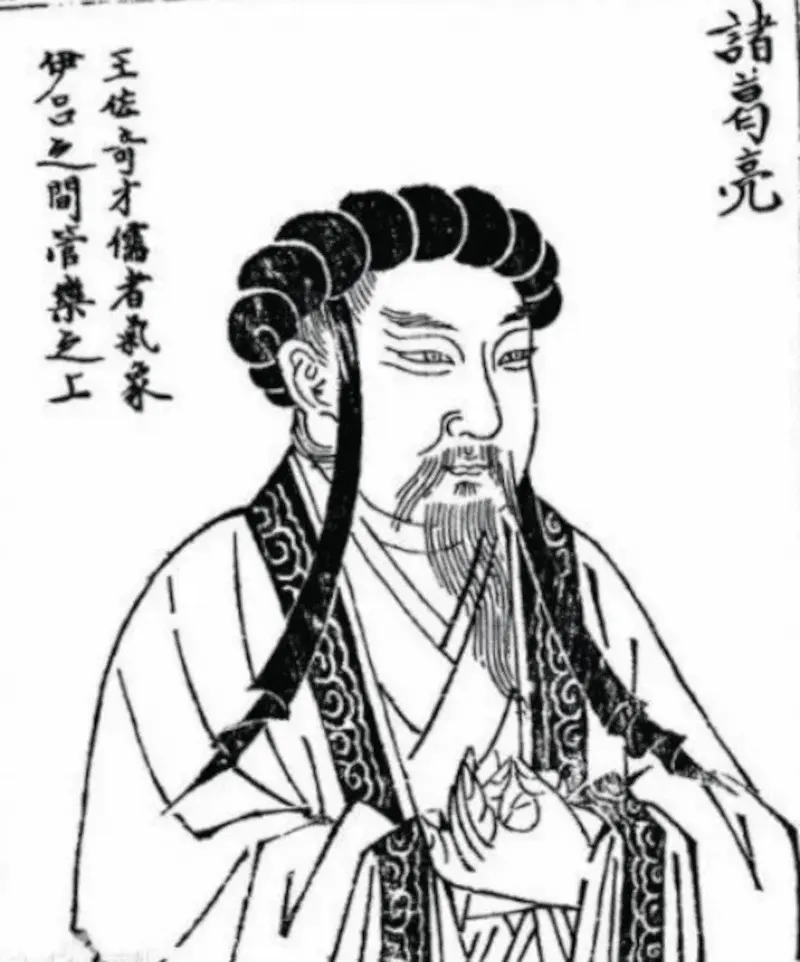
Ten Years in Longzhong: Accumulation of Knowledge and Formation of a Worldview
From 197 to 207, Zhuge Liang lived in seclusion in Longzhong, Jingzhou for ten years. During this period:
- He was well-versed in "The Art of War," "Han Feizi," and "The Spring and Autumn Annals."
- He associated with Sima Hui, Pang Tong, Xu Shu, and others, and was known as "Sleeping Dragon".
- Observing the general trend of the world, a strategic concept of "three kingdoms" was formed.
This decade was a crucial period for his intellectual maturation and knowledge accumulation, laying the theoretical foundation for his future governance and military strategy.
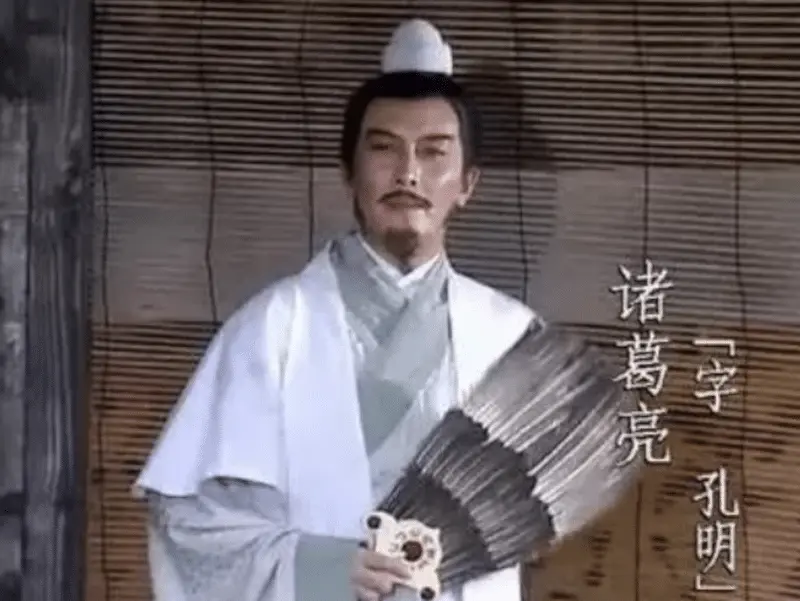
Emerging from seclusion to assist Liu Bei – The strategic foresight of the “Longzhong Plan” (207 AD)
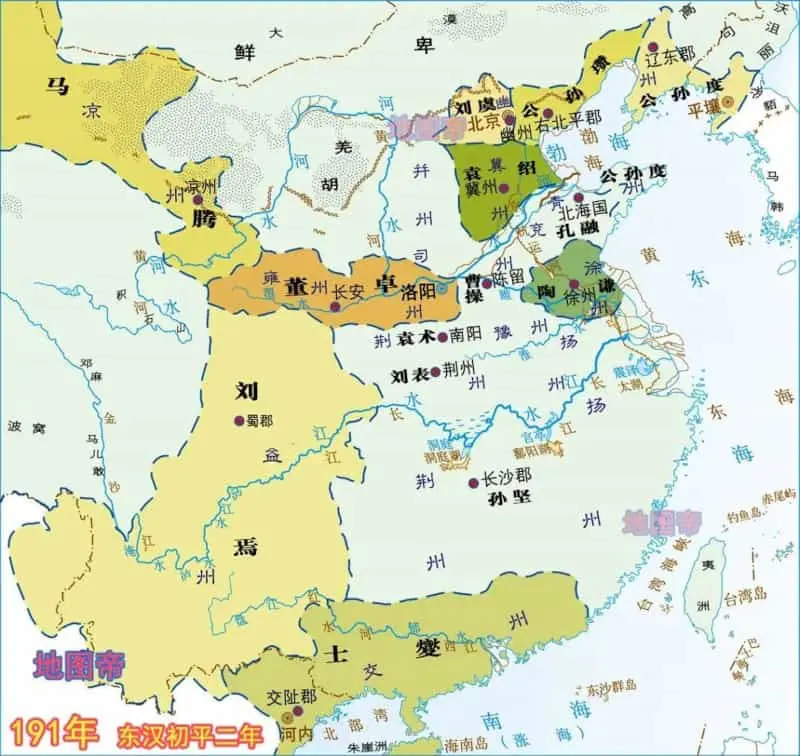
In the winter of Jian'an 12 (207 AD), Liu Bei stationed his troops in Xinye. On the recommendation of Xu Shu, he visited Zhuge Liang three times at his thatched cottage. After dismissing his attendants, Liu Bei inquired about grand strategies for governing the country. Zhuge Liang then presented his "Longzhong Plan": analyzing that Cao Cao's power was too great to contend with, and that Sun Quan could be an ally but not a target; he advised Liu Bei to take Jingzhou and Yizhou as a base, control the Han and Mian rivers to the north, pacify the Yi and Yue tribes to the south, make peace with the various Rong tribes to the west, forge an alliance with Sun Quan externally, improve internal governance, and await an opportunity to launch a northern expedition to restore the Han dynasty. This strategy laid the foundation for the establishment of the Shu Han state.
Liu Bei was overjoyed upon hearing this, comparing Zhuge Liang to a "fish and water" kind of friend. Guan Yu and Zhang Fei were initially displeased, but Liu Bei persuaded them to stop. At the age of twenty-seven, Zhuge Liang formally joined Liu Bei's camp, serving as Military Advisor. In 208 AD, Cao Cao launched a southern campaign against Jingzhou. Liu Biao died, Liu Cong surrendered to Cao Cao, and Liu Bei lost power. Zhuge Liang personally went to Sun Quan to forge the Sun-Liu alliance, analyzing the Cao army's exhaustion and acclimatization issues, and persuading Sun Quan to send troops to jointly resist Cao Cao. This action directly led to the victory at the Battle of Red Cliffs.
During the meeting, Zhuge Liang presented the "Longzhong Plan," the core content of which is as follows:
"Since Dong Zhuo, heroes have risen up one after another, and those who control multiple provinces and counties are countless. Compared to Yuan Shao, Cao Cao had little fame and few troops, yet he was able to defeat Yuan Shao. He turned weakness into strength, not only because of favorable timing, but also because of his strategic planning. Now Cao Cao has a million troops, holds the emperor hostage, and commands the other lords. He is truly invincible. Sun Quan has ruled Jiangdong for three generations. The country is strategically important, the people are loyal, and the wise and capable serve him. He can be an ally but not a target. Jingzhou is bordered by the Han and Mian rivers to the north, benefits from the South China Sea, connects to Wu and Kuaiji to the east, and leads to Ba and Shu to the west. It is a country for military use, but its ruler cannot defend it. This is probably Heaven's gift to you, General. Do you have any interest in it? Yizhou is strategically important, with fertile fields stretching for thousands of miles. It is a land of plenty, where Emperor Gaozu established his imperial dynasty. Liu Zhang is weak and incompetent, and Zhang Lu is in the north. The people are prosperous and the country is rich, but they do not know how to care for them. Intelligent people yearn for a wise ruler."
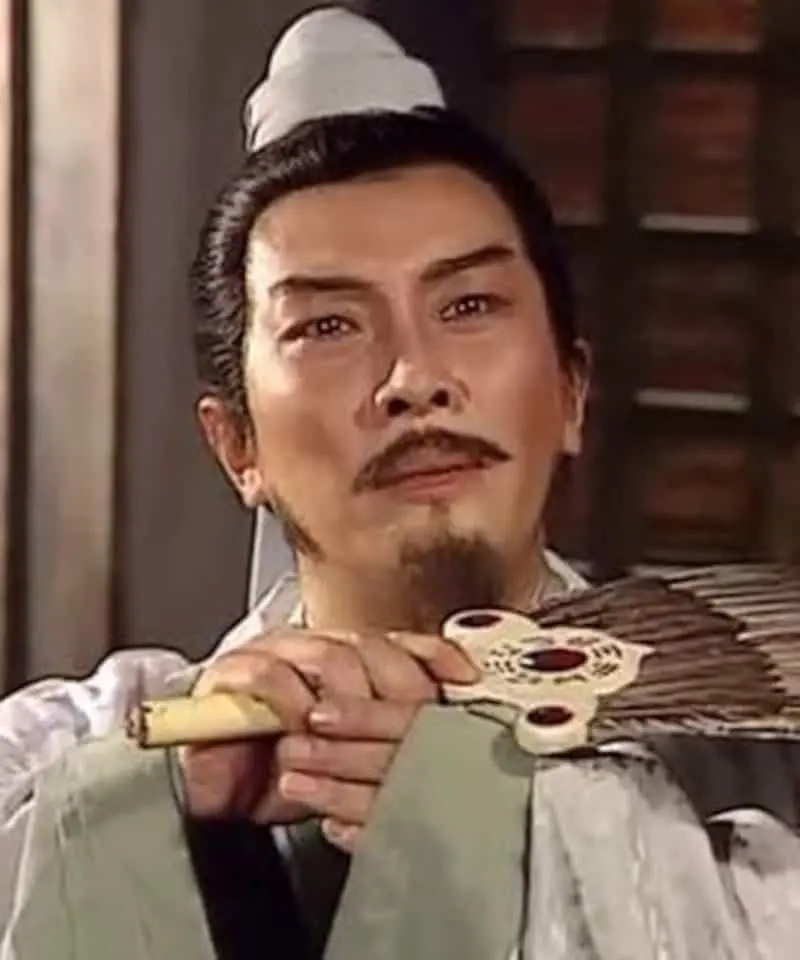
The Three Strategic Objectives of the Longzhong Plan
| Target | content | Implementation time |
|---|---|---|
| 1. Take Jingzhou | As a base, it controlled north-south transportation. | Realized after the Battle of Red Cliffs in 208 |
| 2. Take Yizhou | Establish a secure rear and establish an empire | Liu Bei took control of Chengdu in 214. |
| 3. Ally with Wu against Cao | The Three Kingdoms period was established, awaiting an opportunity to launch a northern expedition. | Lasting until 234 years |
Timeline for the Implementation of the Longzhong Plan Strategy (207–234 AD)
Strategic Objectives Has it been achieved? Year of Implementation Remark Take Jingzhou ✅ Partially implemented 208 It was later recaptured by Eastern Wu (219 AD). Take Yizhou ✅ Fully realized 214 Foundation for Liu Bei's ascension to the throne Ally with Wu against Cao ✅ Initial success 208–222 The Battle of Yiling broke the alliance, which was later repaired. Northern Expedition to the Central Plains ❌ Unsuccessful — Five Northern Expeditions failed to achieve victory.
Reforming officialdom: Selecting virtuous and capable officials
Zhuge Liang heavily relied on Jiang Wan, Fei Yi, Dong Yun, Jiang Wei, and others, forming the "Four Ministers System." He wrote "Admonition to His Son," emphasizing the moral character of officials: "Without tranquility, one cannot achieve far-reaching goals; without detachment, one cannot clarify one's ambitions."
Ethnic integration: Suppressing rebellions in the south and pacifying the southern regions
In the third year of Jianxing (225 AD), Zhuge Liang personally led an expedition to the southern regions (present-day Yunnan and Guizhou), capturing and releasing Meng Huo seven times until he was completely convinced of Meng Huo's superiority.
Timeline of the Seven Captures of Meng Huo in the Southern Expedition
frequency Time (225 years) Place result One capture March Yizhou County Meng Huo was captured One vertical March — Meng Huo was dissatisfied Second capture April Near Erhai Lake captured again Two vertical April — Meng Huo was still unconvinced ... ... ... ... Seven Captures August Dianchi Lake Meng Huo completely submitted Seven Columns August — "Your Excellency is awe-inspiring; the people of the South will never rebel again."
After this battle, the South remained stable for more than forty years, providing manpower and supplies for the Northern Expedition.
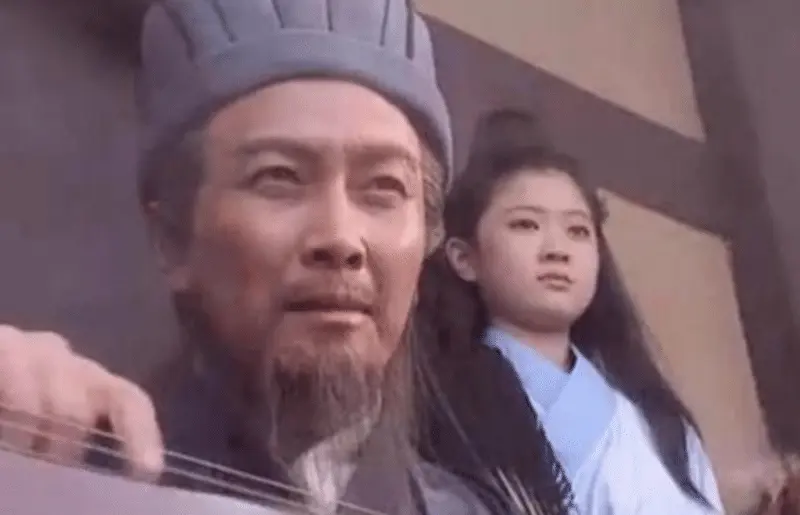
Important battles and military contributions
Zhuge Liang participated in many key battles throughout his life and was renowned for his wisdom and strategy. The following is a summary of the major battles, with data on key moments presented in tables.
Battle of Red Cliffs (208 AD)
Cao Cao led his army south, claiming 800,000 (actually about 200,000), while the allied forces of Sun Quan and Liu Bei numbered about 50,000. Zhuge Liang facilitated the alliance, and Zhou Yu launched a fire attack on Cao Cao's army, resulting in a major defeat for Cao Cao, who retreated back to the north. This battle laid the foundation for the tripartite division of the empire.
Captured Nanjun in Jingzhou (209 AD)
After the Battle of Red Cliffs, Zhuge Liang helped Liu Bei take four commanderies in Jingzhou (Wuling, Changsha, Lingling, and Guiyang), expanding his territory.
The conquest of Shu (211-214)
Liu Zhang invited Liu Bei to enter Shu to defend against Zhang Lu, while Zhuge Liang, along with Pang Tong, advised Liu Bei to seize Yizhou. Zhuge Liang led Zhang Fei and Zhao Yun up the Yangtze River, pacified the counties, besieged Chengdu, and Liu Zhang surrendered. Shu Han thus gained Yizhou, realizing the Longzhong Plan.
Battle of Hanzhong (217-219)
Liu Bei personally led an expedition against Cao Cao's general Xiahou Yuan, who was defending Hanzhong. Zhuge Liang was stationed in Chengdu, responsible for logistics. Liu Bei pacified Hanzhong and proclaimed himself King of Hanzhong.
Southern Expedition to the Southern Central Regions (225 AD)
When the Southern Rebellion broke out, Zhuge Liang personally led the expedition, capturing Meng Huo seven times (a fictional event in the Romance of the Three Kingdoms; historically, the key was to win hearts and minds), quelling the rebellion, establishing prefectures and counties, and developing the economy.
Northern Expeditions against Cao Wei (228-234)
Zhuge Liang launched six expeditions to Qishan (actually five Northern Expeditions), aiming to conquer the Central Plains. During his first Northern Expedition, he lost Jieting and executed Ma Su. He later clashed with Sima Yi multiple times, eventually dying of illness at Wuzhang Plain.
The table below summarizes the major battles in which Zhuge Liang participated, including the time period, the number of participants (estimated), the results, and data. Data is sourced from the *Records of the Three Kingdoms* and related historical materials, with some figures approximations.
| Battle Name | Time period | Shu Han's military strength (approximately) | Enemy troop strength (approximately) | Key data | result | Zhuge Liang's role |
|---|---|---|---|---|---|---|
| Battle of Red Cliffs | November 208 | The Sun-Liu allied forces numbered 50,000. | Cao Cao had 200,000 (his account was 800,000). | The fire attack burned thousands of ships, and more than half of Cao Cao's army died or were wounded by disease. | Sun Quan and Liu Bei won, Cao Cao retreated north. | Promote alliances, diplomatic envoys |
| Battle of Shu | 211-214 | Liu Bei's army numbered 30,000. | Liu Zhang's army numbered 40,000. | The siege of Chengdu lasted one year, and 20,000 soldiers surrendered. | Shu Han obtained Yizhou | Logistics coordination, leading troops to pacify counties |
| Battle of Hanzhong | 217-219 | Liu Bei's army numbered 40,000. | Cao Cao's army of 50,000 | They killed Xiahou Yuan and seized over a thousand li of land. | Liu Bei declared himself king | Chengdu defense and logistical support |
| Southern Expedition to the South | Spring and Autumn of 225 | 50,000 Shu troops | 100,000 Southern Barbarian rebels | Meng Huo was captured seven times (through psychological warfare), and 30,000 soldiers surrendered. | After pacifying the southern regions, six prefectures were established. | Personal command and psychological warfare strategy |
| First Northern Expedition | Spring of 228 | 40,000 Shu troops | 100,000 Wei troops | The fall of Jieting led to the execution of Ma Su. | The army retreated, and Longxi was lost. | Commander-in-Chief, Memorial to the Throne |
| Second Northern Expedition | Winter of 228 | 30,000 Shu troops | Wei army 80,000 | Wang Shuang was beheaded, and 10,000 bushels of grain were obtained. | A minor victory, retreat. | Head coach |
| The Third Northern Expedition | 229 years | 40,000 Shu troops | 100,000 Wei troops | The Wei reinforcements arrived at Qishan. | Retreat | Head coach |
| Fourth Northern Expedition | 231 years | 50,000 Shu troops | 150,000 Wei troops | Wooden oxen and flowing horses transport grain, fighting against Sima Yi. | The army retreated and Zhang He was beheaded. | Commander-in-Chief, Inventor of Transportation |
| Fifth Northern Expedition | 234 years | 100,000 Shu troops | 200,000 Wei troops | He died in a standoff at Wuzhangyuan. | Unsuccessful, the Shu army retreated. | The commander-in-chief died in the army. |
This table showcases the peak of Zhuge Liang's military career. The Shu Han army was often outnumbered, but compensated for this through strategic brilliance. During the Northern Expeditions, the Shu army mobilized approximately 200,000 troops and consumed countless amounts of grain, reflecting its unwavering perseverance.
After this battle, Liu Bei quickly occupied the four commanderies of Jingnan (Wuling, Changsha, Guiyang, and Lingling), laying the foundation for his kingdom.
Liu Bei took control of Yizhou (214 AD)
Following Zhuge Liang's advice, Liu Bei took advantage of Liu Zhang's incompetence and led his army into Sichuan, eventually capturing Chengdu after three years. Zhuge Liang was appointed "Military Advisor General" and concurrently served as the Left General's Office, effectively managing the government affairs.
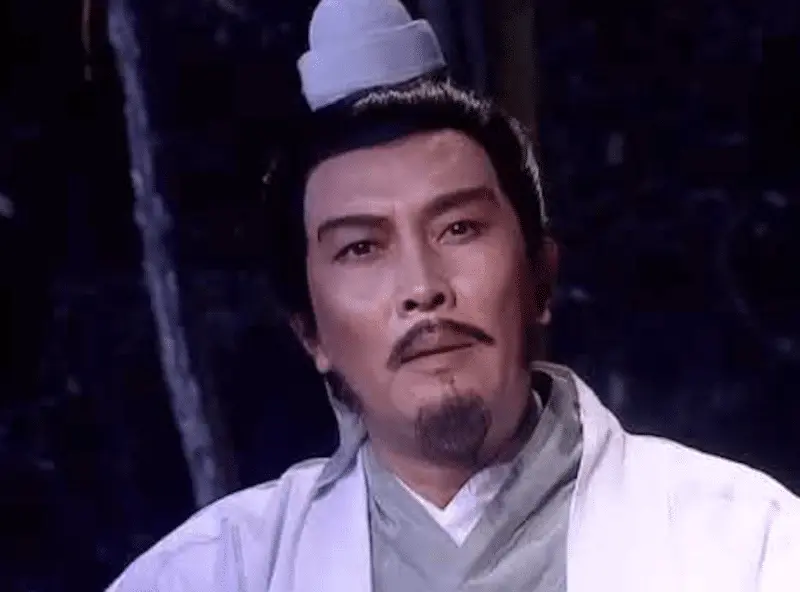
Four major policies for governing the country
Rule of law: Formulating the "Shu Code"
Zhuge Liang, together with Fa Zheng, Liu Ba, and others, formulated the "Shu Code," emphasizing that "if you enforce the law, people will know gratitude; if you limit people by their ranks, they will know honor." He enforced the law strictly, without favoritism towards relatives or nobles.
- CaseMa Su lost Jieting, and although he was a trusted confidant, he was still beheaded according to military law.
- Public opinion"Although the punishments and policies are severe, there is no resentment because the intention is fair and the admonitions are clear."
Political contributions and inventions
Zhuge Liang was not only a military genius but also a political reformer. After Liu Bei's death (223 AD), he assisted Liu Shan, was enfeoffed as Marquis of Wuxiang, and appointed Governor of Yizhou, overseeing both military and political affairs. He reformed the official system, revised the Shu laws and regulations, enforced strict rewards and punishments, suppressed powerful clans, and developed the economy. He emphasized agriculture and sericulture, promoted water conservancy projects (such as the maintenance of the Dujiangyan Irrigation System), and popularized Shu brocade, salt, and iron industries, enriching the country and strengthening its military. In diplomacy, he allied with Wu against Wei and sent Deng Zhi to improve relations with Sun Quan.
In terms of inventions: Zhuge Repeating Crossbow (capable of firing 10 arrows in succession, increasing the rate of fire by 50%), Wooden Ox and Flowing Horse (a grain transport tool, doubling the efficiency of grain transport during the Northern Expeditions), and Eight Trigrams Formation (a battle formation with strong defensive capabilities). These inventions demonstrate his practical wisdom.
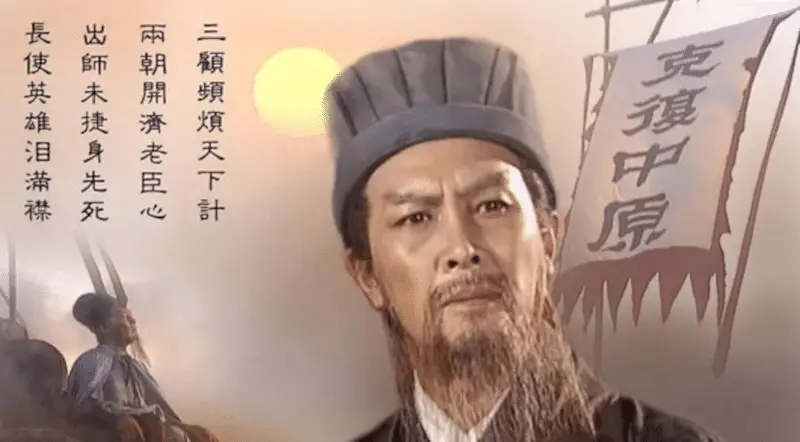
Entrusting the young emperor to his father at Baidi City—A turning point in responsibility (223 AD)
Liu Bei's defeat at Yiling and his death
In 222 AD, Liu Bei, seeking revenge for Guan Yu, launched an eastern campaign against Sun Quan, but suffered a major defeat at the Battle of Yiling and retreated to Baidi City. The following year, he fell seriously ill and summoned Zhuge Liang to entrust his son to him.
"Your talent is ten times that of Cao Pi; you will surely be able to secure the country and ultimately accomplish great things. If your heir is capable, assist him; if he is incompetent, you may take the throne yourself."
Zhuge Liang wept and bowed, saying, "Your subject dares to exert all his strength and loyalty, even unto death!"
Zhuge Liang became the de facto ruler
When Liu Shan ascended the throne, he enfeoffed Zhuge Liang as the Marquis of Wuxiang, granting him the authority to govern. All matters, large and small, were decided by Zhuge Liang. He transitioned from "military advisor" to "prime minister," shouldering the full responsibility of restoring the Han dynasty.
Northern Expedition and Death
In 227 AD, Zhuge Liang presented his "Memorial on the Expedition," outlining the necessity of the Northern Expeditions and his ambition to assist Liu Shan. The following year, his first Northern Expedition ended in the loss of Jieting, and he executed Ma Su with tears in his eyes. He was demoted three ranks for self-reproach but persisted in the Northern Expeditions. In 234 AD, his fifth Northern Expedition began, with his army stationed at Wuzhangyuan, confronting Sima Yi. Overworked, he fell ill and died in August at the age of fifty-four. On his deathbed, he presented his "Second Memorial on the Expedition," entrusting Jiang Wei and others to carry on his legacy. The Shu army secretly withdrew, and Sima Yi pursued them. Seeing the disciplined state of the Shu army, he exclaimed, "A rare talent indeed!" He was posthumously awarded the title of Marquis Zhongwu.
Northern Expedition Timeline and Data
| Number of Northern Expeditions | Time period | Shu Army Size | Wei army size | Key data | result |
|---|---|---|---|---|---|
| number one | February to June 228 | 40,000 | 100,000 | Losing Jieting, beheading 1 general | Defeated and retreating |
| number two | December 228 | 30,000 | 80,000 | Wang Shuang was killed, and 3,000 armored soldiers were captured. | A narrow victory |
| third | 229 years | 40,000 | 100,000 | The siege of Chencang lasted for 20 days. | When food supplies ran out, they retreated. |
| fourth | 231 years | 50,000 | 150,000 | Zhang He was beheaded, and 100,000 bushels of grain were transported. | Retreat |
| Fifth | February to August 234 | 100,000 | 200,000 | After a 100-day standoff, Shu lost 51 TP3T. | Zhuge died |
This table shows that the Northern Expeditions exhausted the Shu Han's national strength, with a total mobilization of over 200,000 troops and huge losses of food and supplies, but it did not reach the Central Plains.
| Music composed by Gu Jianfen, lyrics by Wang Jian Tie your hair up and read poetry and books; cultivate virtue and self-cultivation. Looking up and down, strategy resides in the heart. He never forgot his country while working the land; who knew his passion lay in the mountains and forests? Phoenix, oh phoenix, longing to soar high, yet in times of chaos and peril, I have pondered deeply. Phoenix, oh phoenix, longing to soar high, yet in times of chaos and peril, I have pondered deeply. The thatched cottage received three visits, where we sat knee to knee and discussed profound ideas. Meeting a kindred spirit halfway through life, a recluse is deeply moved. In the Ming Dynasty, I carried my sword and followed you, with a feather fan and silk turban, to the frontier. O dragon, oh dragon, the winds and clouds gather, let out a long roar to express my heart's desire. Go back, go back, it's my long-cherished wish; to spend the rest of my days as a farmer. A gentle breeze and bright moon embrace me, while monkeys and cranes listen as I play the zither once more. (Chorus) The ways of Heaven are ever-changing, and destiny is hard to find. Success or failure depends on human planning; a promise kept is a matter of utmost loyalty. A husband should strive to bring peace and prosperity to the people while he is still alive. Go back, go back, it's my long-cherished wish; to spend the rest of my days as a farmer. Go back, go back, it's my long-cherished wish; to spend the rest of my days as a farmer. A gentle breeze and bright moon embrace me, while monkeys and cranes listen as I play the zither once more. |
Analysis of the reasons for striving
The reasons for Zhuge Liang's struggles can be analyzed from multiple perspectives:
Loyalty and IdealsInfluenced by Confucianism, Zhuge Liang dedicated his life to restoring the Han Dynasty. His "Longzhong Plan" embodies this ideal of "supporting the Han Dynasty and unifying the world." Liu Bei's three visits to his thatched cottage forged a deep bond between ruler and subject, leading Zhuge Liang to consider Liu Bei a confidant, willing to die for him. His "Memorial on the Expedition" states, "I will devote myself to the utmost, even unto death," reflecting his loyalty to the emperor and his patriotism.
Strategic MotivationDuring the chaotic end of the Han Dynasty, Zhuge Liang observed Cao Cao's monopolization of power and Sun Quan's separatist rule, believing that Shu Han needed to launch a northern expedition to survive. His Longzhong Plan foresaw the tripartite division, with the northern expedition as the path to achieving this. After the pacification of the southern regions, Shu was stable, and he turned to the northern expedition, aiming to ensure that "the Han and the traitors cannot coexist."
Personal character and responsibility to the timesHe cultivated a patient and pragmatic character through his early years of farming. Faced with the weakness of Shu Han, he compensated for it with his wisdom, inventing tools and reforming internal affairs, all of which contributed to the strengthening of the state. His struggles were not for personal gain, but for the sake of the people and to prevent widespread suffering. Historical records state that he was incorruptible, had no surplus wealth, and after his death, he owned only fifteen acres of land and eight hundred mulberry trees.
Historical limitationsShu Han was a small country with a small population (about one million, compared to over four million for Wei). Its repeated defeats in the Northern Expeditions were not due to a lack of wisdom, but rather to the disparity in national strength. However, its perseverance demonstrated an indomitable spirit. Later generations commented that it was "the most intelligent of the Three Kingdoms," but it did not live long.
Although Zhuge Liang did not unify the country, he laid the foundation for the Shu Han dynasty and left a lasting legacy. His struggles were rooted in Confucian values of loyalty, strategic vision, and personal integrity, making him a model of loyalty in traditional Chinese culture.
Timeline Overview
- 181-197Born and raised in his early years, he worked the land in Longzhong.
- 207Three visits to the thatched cottage, the Longzhong Plan.
- 208-219Red Cliffs, entering Shu, Hanzhong, the establishment of the Shu Han dynasty.
- 223-227He assisted Liu Shan, reformed domestic affairs, and led a southern expedition.
- 228-234 ADHe led five Northern Expeditions and died of illness at Wuzhangyuan.
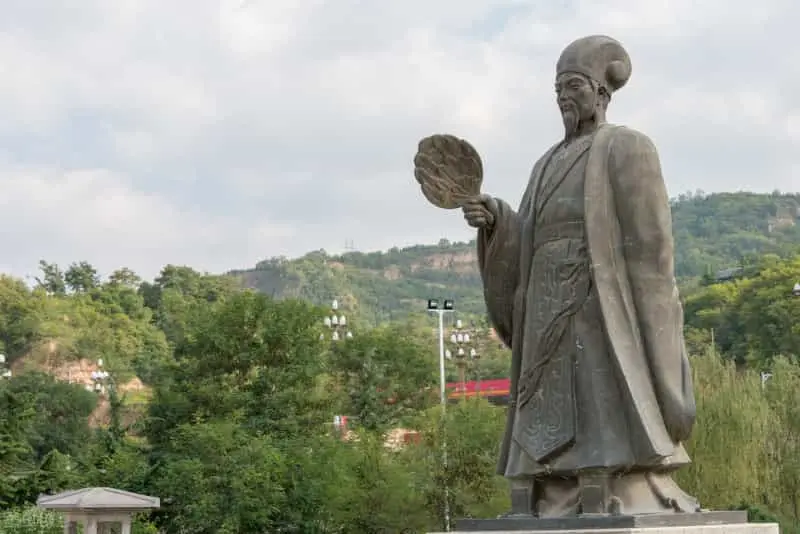
Light in the predicament
In the autumn of 234 AD, the starry sky over Wuzhang Plains was exceptionally clear and cold. Zhuge Liang lay on his sickbed, his mind perhaps flashing back to the blueprint he had laid out in Longzhong, the smoke of war at Changban Slope, the entrustment he had made at Baidi City, and the snow at Qishan. He ultimately failed to realize his dream of "restoring the Han Dynasty and returning to the old capital," but through twenty-seven years of struggle, he extended the lifespan of a political entity by an entire generation.
Data tells us that Shu Han was destined to perish, but it doesn't tell us why Zhuge Liang, knowing the outcome, still fought to the very end. The answer lies in those unquantifiable realms: the weight of belief, the warmth of loyalty, and the dignity of maintaining an offensive even under absolute disadvantage.
What Zhuge Liang left to posterity was not the secret to success, but how to face a battle destined to fail—not blind optimism, but soberly calculating every chance of victory; not abandoning principles, but upholding procedural justice even in dire straits; not creating miracles, but striving for excellence in every data point.
In an era without big data, he used his life to calculate the most complex decision-making model: when the ideal probability approaches zero infinitely, can human will become the outlier that changes history? His answer was five Northern Expeditions, six expeditions to Qishan, and the sigh of the fallen star at Wuzhangyuan.
This sigh, echoing through a thousand years, still asks everyone facing difficulties: When data tells you it's impossible, will you still do it?
Zhuge Liang's legendary life has had a profound impact. He is enshrined in temples dedicated to him, and his name is immortalized in literature and drama. Though he did not achieve his ambitions, his spirit lives on.
Further reading:
- China's Struggle to Develop the Atomic Bomb
- Ma Huateng's triumph over adversity
- Jack Ma: From Failure to Brilliance in Inspiration
| The song and lyrics were written by Shinji Tanimura. The wind calls the world and mourns the world. The star is in the arms and the silence is in the middle The chest is open and the blood is flowing and the blood is flowing. 合にmixざりて大いなる流れに 人は梦见るゆえに儚く 人は梦见るゆえに生きるもの Who knows? Woo 々 woo 々 Tomorrow the flowers will bloom さえも 古い奇り风情の花の下 The cup of the moon-drinking banquet 君は帰らず狠されて伫めば shoulder no day no oath no flower blowing snow 人は信じてそして出れて 人は信じてそして生きるもの Who knows? Woo 々 woo 々 Tomorrow the flowers will bloom さえも The country is broken and the city is broken. The grass is dry and the wind is blowing Who knows? Wow Wow 々风のその子を Woo々woo々花が伝える Wow Wow 々风のその子を | The wind cries out the sorrows of the world. In the silence surrounded by stars. If I open my heart, the red of my burning blood, They will converge into a vast river. People have dreams, so they are fleeting. People live because they have dreams. Ah, ah, no one knows. Ah, ah, even the flowers that will wither tomorrow. A steadfast promise beneath the blooming flowers. The banquet cups, drunk to the last drop of moonlight. You are gone and will never return, and I stand there all alone. The promise made that day fell on my shoulders like a shower of petals. People believe, and then their beliefs crumble. People believe that this is the meaning of their lives. Ah, ah, no one knows. Ah, ah, even the flowers that will wither tomorrow. The nation is destroyed, and the castle collapses. Even when the grass and trees wither, the wind still howls. Ah, ah, no one knows. Ah, ah, the shape of the wind. Ah, ah, ah, the flowers convey, ah, ah, the shape of the wind. |

![[有片]銷售的語言煉金術](https://findgirl.org/storage/2025/10/有片銷售的語言煉金術-300x225.webp)