





Penile fracture

I. Overview of Penile Fractures
Penile fracture(Penile Fracture) isUrologyThis is a relatively rare but extremely urgent injury condition in emergency medicine, medically termed "rupture of the tunica albuginea of the corpora cavernosa." Despite the word "fracture" in the name, the penis does not actually have a true skeletal structure; this term vividly describes the severity of the fracture of the internal structure of the penis.
1.1 Anatomical Basis
To understand the nature of penile fractures, it's essential to first understand the anatomy of the penis. The penis is primarily composed of three columnar corpora cavernosa:
- Two corpora cavernosa of the penis.Located on the dorsal side of the penis, it is the main tissue for erection.
- One corpus spongiosum (urethral sponge)Located on the ventral side, containing the urethra.
These sponges are encased in a tough fibrous membrane, called...White membrane (Tunica albuginea)The tunica albuginea becomes thin and taut during an erection, with a thickness of only about 2mm. When the penis is erect, the corpora cavernosa fill with blood, and the tunica albuginea is under tremendous pressure. If subjected to external force at this time, it is very easy to rupture.
1.2 Epidemiological characteristics
The incidence of penile fractures varies with region and culture:
- Globally, 10-20% of urogenital system injuries are caused by TP3T.
- The higher reported incidence in the Middle East may be related to certain traditional sexual behaviors.
- It is most common in sexually active men aged 20-40.
- The incidence is higher at night (approximately 601 TP3T), which may be related to nighttime sexual activity and alcohol consumption.
- The left corpora cavernosa of the penis is more prone to injury (approximately 701 TP3T), which may be related to the fact that most people are right-handed.
1.3 Pathogenesis
Penile fractures typically occur during an erection, and the main mechanisms include:
Sexual intercourse-related injuries(Most common, accounting for approximately 60%)
- During intercourse, the penis slips out of the vagina and hits the pubic bone or perineum.
- Unconventional postures lead to abnormal bending
- When sexual partners suddenly change position while on top

Masturbation-related injuries(Approximately 20%)
- Bending an erect penis with excessive force
- Using improper masturbation techniques or tools
Traumatic injury(Approximately 10%)
- Direct impact (such as sports injuries, car accidents)
- Impact on the erect penis during the fall
- Intentional injury (such as bites or injuries caused by sharp objects)
Non-traumatic causes(rare)
- Spontaneous rupture (very rare case reports)
- Certain connective tissue diseases lead to fragility of the tunica albuginea.
It is worth noting that in approximately 30% cases, patients described hearing a "crack" sound at the time of injury, which is considered a characteristic manifestation of tunica albuginea rupture.

II. Clinical Manifestations and Diagnosis
2.1 Typical symptoms
The clinical manifestations of penile fractures are usually very obvious, and patients can often accurately recall the moment of injury:
Acute pain:
- The pain is intense and sudden upon injury, often described as "tearing" or "bursting".
- The pain was severe enough to cause an immediate cessation of sexual activity.
- The pain is usually localized to the rupture site.
Swelling and Deformation:
- Local swelling appears rapidly, usually becoming noticeable within 30 minutes.
- The penis may exhibit abnormal curvature or an "eggplant-like" deformity.
- If treatment is delayed, widespread edema and ecchymosis may appear within 24 hours.
Auditory characteristics:
- About one-third of patients reported hearing a clear "pop" or "crack" sound at the time of their injury.
- This sound is considered a specific manifestation of cataract tearing.
Decreased erection:
- Erections usually subside quickly after injury.
- Some patients may experience persistent partial erections due to pain and anxiety.

urination symptoms:
- Approximately 20-30 patients with TP3T experience difficulty urinating or hematuria.
- This suggests possible urethral injury.
Skin changes:
- Initially, localized dents (cracks) may appear.
- It then develops into an "eggplant-like" appearance (swelling, bluish-purple).
- Skin bruising may extend to the scrotum and perineum.
2.2 Accompanying injuries
Penile fractures may be accompanied by other structural injuries and require careful evaluation:
Urethral injury:
- Incidence rate approximately 10-20 %
- Symptoms include hematuria, difficulty urinating, or urinary retention.
- In severe cases, urinary extravasation may occur.
Vascular injury:
- A tear in the cavernous artery can lead to persistent bleeding.
- Venous injury worsens swelling

nerve injury:
- May cause localized sensory abnormalities
- Long-term effects may affect erectile function
2.3 Diagnostic methods
The diagnosis of penile fractures is primarily based on medical history and physical examination, while imaging studies are used to confirm the diagnosis and assess the extent of the injury.
Medical history taking:
- A clear history of trauma (in an erect state).
- Characteristic symptoms (popping sound, severe pain, rapid swelling)
Physical examination:
- Visual examination: Penile swelling, deformity, ecchymosis
- Palpation: tenderness, local depression, crepitus (rare).
- Perineal and scrotal examination: assess the extent of the hematoma.
- Examination of the urethral opening: Observe for any bloody discharge.
Imaging examination:
- Ultrasound examination:
- The preferred testing method, with a sensitivity of 80-90 %
- It can display the interruption of the white membrane and the extent of the hematoma.
- Doppler ultrasound can assess vascular condition
- MRI:
- Gold standard, sensitivity close to 100%
- Clearly shows the location and extent of the white film rupture.
- Assess any accompanying injuries (urethra, blood vessels).
- However, it is expensive and time-consuming, and is usually used for complex cases.
- Retrograde urethrography:
- When urethral injury is suspected,
- Observe for extravasation by injecting contrast agent through a catheter.

Urine analysis:
- A blood test in the urine suggests possible urethral injury.
- Urine culture may be necessary.
2.4 Differential Diagnosis
Penile fractures need to be distinguished from the following situations:
rupture of the dorsal vein of the penis:
- Symptoms are mild, with no rupture of the white membrane.
- No characteristic cracking sound
- Imaging examinations can differentiate
Penile lymphangitis:
- No clear history of external injury
- The swelling progresses slowly.
- The pain was relatively mild.
Idiopathic penile edema:
- No history of external injury
- Usually painless
- Bilateral symmetrical swelling
acute exacerbation of Peyronie's disease:
- No history of acute trauma
- There may be a history of penile curvature.
- The pain was relatively mild.
penile subcutaneous hematoma:
- Damage to skin and subcutaneous tissue only
- White membrane intact
- No penile deformity

III. Treatment Methods
Penile fractures are a urological emergency requiring timely intervention to achieve optimal functional recovery. The choice of treatment depends on the severity of the injury, the presence of any accompanying injuries, and the time of medical attention.
3.1 Emergency Handling
The following measures can be taken before transferring the patient to a medical facility:
- Stop sexual activity immediatelyTo prevent further damage
- Local cold compressWrap an ice pack in a clean towel and apply it to the affected area for 15-20 minutes each time, with an interval of 1 hour.
- Reduce swelling and pain
- Avoid direct skin contact with ice.
- Simple fixationGently bandage with a soft dressing, and fix the penis towards the abdomen.
- Pain reliefOral nonsteroidal anti-inflammatory drugs (such as ibuprofen) can be used.
- Avoid urinationIf urethral injury is suspected, urination should be temporarily suspended.

3.2 Conservative treatment
Conservative treatment is only applicable to a very small number of special cases:
Indications:
- Minimal white membrane lacerations (<0.5cm)
- No urethral or vascular injury
- The patient refused surgery
- Medical conditions prevent surgery
Treatment measures:
- Strict bed rest
- Local pressure bandaging
- After applying ice for 48 hours, switch to applying heat.
- Analgesics
- Prophylactic antibiotics
- Avoid erections (estrogen can be used for one week).
limitations:
- Healing time is long (4-6 weeks).
- High risk of complications (30-50 ITP3T)
- Erectile dysfunction
- penile curvature
- painful erection
- fibrosis
- arteriovenous fistula
- A second surgery may be required.

Due to the poor efficacy of conservative treatment, the current mainstream view recommends early surgical repair.
3.3 Surgical treatment
Surgical repair is the standard treatment for penile fractures, and the ideal time for surgery is within 24-48 hours after injury.
Surgical indications:
- Confirmed rupture of the white membrane
- Combined urethral injury
- Persistent bleeding
- Progressive hematoma enlargement
- Difficulty urinating
Surgical goals:
- Remove hematoma
- Repairing white membrane defects
- Stop bleeding
- Repair the urethra if necessary
- Retain functionality to the maximum extent
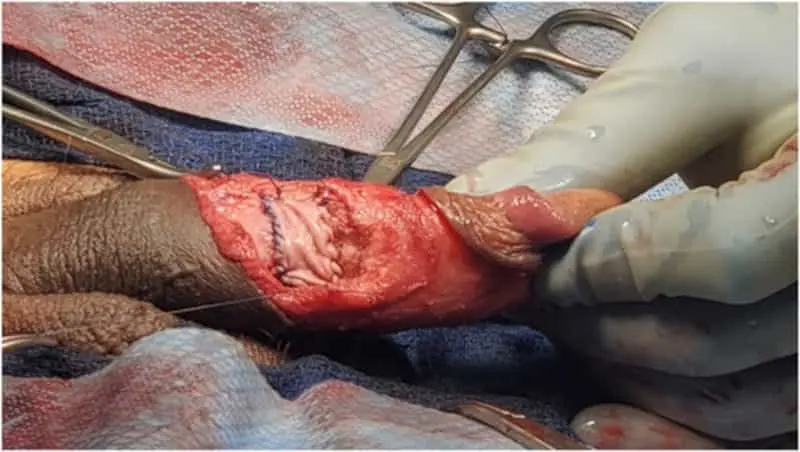
Surgical steps:
- anaesthetizationSpinal anesthesia or general anesthesia is usually used.
- Cutting selection:
- Circumferential incision in the coronal sulcus (most commonly used)
- direct laceration incision
- Longitudinal incision along the midline of the penis

Exposed injury site:
- Turn the penis skin inside out
- Remove hematoma
- Identify the rupture of the white membrane
Repair white film:
- Interrupted sutures were performed using absorbable sutures (such as 3-0 or 4-0 PDS).
- Edge eversion to reduce inversion stimulation
- Large defects can be treated with fascia patches.
Urethral repair(If needed):
- Placement of urinary catheter stent
- Layered suturing of the urethra
Hemostasis and drainage:
- Electrocoagulation hemostasis
- Place a thin drainage tube if necessary.
Close the incision:
- Layered suture
- Pressure bandage

Postoperative management:
- Indwelling catheter for 2-7 days (depending on urethral injury).
- Pressure bandage maintained for 48-72 hours
- Prophylactic antibiotics for 5-7 days
- Erectile dysfunction treatment (estrogen or benzodiazepines) for 1-2 weeks
- Pain relief treatment
- Regular wound care
Surgical complications:
- Early stage:
- Infection (2-5%)
- Bleeding/Hematoma
- wound reopened
- Urinary retention
- Late stage:
- Erectile dysfunction (5-10%)
- Penile curvature (3-8%)
- Urethral stricture (10-15% when combined with urethral injury)
- abnormal sensation
- painful nodules

3.4 Management of concurrent urethral injury
Penile fractures with urethral injury, typically 10-20%, require special treatment:
Diagnostic clues:
- Blood dripping from the urethra
- Difficulty urinating or urinary retention
- Retrograde urethrography confirmed
Handling principles:
- Immediately place a suprapubic cystostomy (avoid transurethral procedures).
- Primary urethral repair (if conditions permit)
- Complete fracture: end-to-end anastomosis
- Partial laceration: Interrupted sutures
- Indwelling urinary stent for 2-3 weeks
- Postoperative urethral dilation to prevent stricture
3.5 Management of Delayed Medical Visits
Some patients may delay seeking medical attention (>48 hours) due to shame or misdiagnosis:
Processing strategy:
- Within 72 hours: Surgical repair can still be considered.
- More than 72 hours:
- Controlling infection
- Secondary repair after acute inflammation subsides (4-6 weeks)
- More complex reconstructive surgery may be required.
Risks of delayed treatment:
- Increased risk of infection
- Severe fibrosis
- Poor functional recovery
- Aesthetic issues are more obvious

IV. Prognosis and Complications
4.1 Prognostic factors
The prognosis of penile fractures depends on a number of factors:
Consultation and treatment time:
- Patients who undergo surgery within 24 hours have the best prognosis.
- Delayed treatment increases the risk of complications.
Degree of damage:
- Simple rupture of the white membrane has a relatively good prognosis.
- The prognosis is poor if there is urethral or vascular injury.
Treatment methods:
- Surgical repair significantly improves functional recovery compared to conservative treatment.
- Technical proficiency affects surgical outcomes
Patient factors:
- Age (younger patients recover better)
- Are there any underlying medical conditions (such as diabetes affecting healing)?
- Postoperative compliance (avoiding early mobilization)
4.2 Common Complications
Even with proper treatment, penile fractures can still lead to the following complications:
- Early complications(Within 1 month post-surgery):
- Wound infection (2-5%)
- Bleeding/hematoma (3-8%)
- Urinary retention (5-10%)
- Skin necrosis (rare)
Late complications:
- Erectile dysfunction(5-15%):
- Psychological factors (painful memories, anxiety)
- Organic (neurovascular injury, fibrosis)
- penile curvature(10-20%):
- White film repair of unevenness
- Scar contracture
- In severe cases, it can affect sexual intercourse.
- painful erection(5-10%):
- Local pain during erection
- It may last for several months
- Urethral stricture(10-20% when combined with urethral injury):
- Regular expansion is required.
- Severe cases require surgical reconstruction
- abnormal sensation(10-15%):
- Local numbness or allergy
- Improvement typically occurs in 6-12 months.
- Aesthetic issues:
- skin scars
- Penile deformity
- pigmentation
Psychological impact:
- Sexual anxiety or fear
- Damaged self-esteem
- Tension in the relationship

4.3 Long-term follow-up
All patients with penile fractures should undergo long-term follow-up:
Follow-up schedule:
- One week post-surgery: Wound examination
- One month post-surgery: Functional assessment
- 3 months post-surgery: Comprehensive evaluation (including erectile function)
- 6 months to 1 year post-surgery: Final outcome assessment
Follow-up content:
- wound healing status
- urination status
- Erectile function assessment (IIEF questionnaire may be used)
- Penile morphological examination
- Ultrasound or MRI examination if necessary
Function recovery statistics:
- Immediate surgical repair:
- 85-90% fully restored to normal function
- 95% is satisfied with the results.
- Conservative treatment patients:
- Only 50-60% recovered satisfactorily.
- Complication rate as high as 40-50% %

4.4 Sexual function recovery
Sexual function recovery is the patient's biggest concern.
Recovery time:
- It is generally recommended to begin gradual activity 6-8 weeks after surgery.
- Full recovery takes 3-6 months
FAQ:
- Initial erectile pain (usually subsides within 2-3 months).
- Changes in erection angle
- Changes in ejaculation sensation
Measures to promote recovery:
- Gradual sexual experimentation
- Psychological support (consulting a therapist if necessary)
- PDE5 inhibitors (such as sildenafil) may help improve erectile function.
- Avoid strenuous activities too early

V. Preventive Measures
The key to preventing penile fractures lies in raising risk awareness and taking appropriate protective measures:
5.1 High-risk situation cognition
Understand the situations that most commonly lead to penile fractures:
Sexual behavior related:
- Woman-on-top position (especially when suddenly changing positions)
- Forcefully reinsert the penis after it slips out.
- Non-traditional sexual positions (such as extreme bending)
- Sexual activity while intoxicated (impaired sensation, poor control of intensity)
Masturbation related:
- Bending an erect penis with excessive force
- Using tools not designed for this purpose
- "Masturbation fractures" often occur when teenagers try to suppress erections.
Other scenarios:
- Excessive force when retracting the foreskin
- Nocturnal erection compresses the body when turning over.
- Accidental impact during sports (such as cycling or gym workouts)

5.2 Practical Prevention Strategies
Sexual safety:
- Avoid rough intercourse during a high erection.
- Change position gently
- If the penis slips out, soften it before reinserting.
- Use sufficient lubrication to reduce friction.
Masturbation safety:
- Avoid excessive bending of the erect penis
- Do not use tools that may cause damage.
- Do not try dangerous methods of "suppressing erections".
Life Adjustment:
- Avoid sexual activity after drinking alcohol
- Men who experience frequent nocturnal erections should consult a doctor.
- Take precautions when exercising (such as wearing groin protectors when cycling).
Health Education:
- Raising men's awareness of the vulnerability of penile structure
- Dispel the misconception that "the penis has bones".
- Understanding the specific risks of erection
5.3 Special Recommendations for High-Risk Groups

The following groups should take extra precautions:
Peyronie's disease patients:
- The white membrane has become fibrotic.
- Irregular erections are more prone to injury.
Patients with connective tissue diseases:
- such as Ehlers-Danlos syndrome
- The strength of the white film may be affected.
elderly:
- The elasticity of the white film decreases.
- Reduced healing ability
Those with a history of penile trauma:
- Previous damage may lead to structural weakness.
5.4 Emergency Recognition
Educate men to recognize signs that require immediate medical attention:
When the penis is erect and subjected to external force:
- Hearing a "crack" sound
- immediate and intense pain
- Rapid swelling and deformation
Special caution is advised in the following situations:
- Urethral bleeding
- Difficulty urinating
- Erections lasting more than 4 hours
emphasize:Penile fracture is an emergency, and delaying treatment will seriously affect the prognosis.You should overcome your shame and seek medical attention immediately.

VI. Special Considerations
6.1 Cultural and Psychological Factors
The treatment of penile fractures requires consideration of unique psychosocial aspects:
Barriers to accessing medical care:
- Shame and embarrassment lead to delays in seeking medical attention (average delay of 12-24 hours).
- Some patients attempt self-treatment.
- Cultural taboos affect the accuracy of medical history reporting
Doctor-patient communication skills:
- Create a safe, non-judgmental medical environment
- Explain the illness using professional yet easy-to-understand language.
- Respect patient privacy (private consultations, appropriate covering).
Psychological support:
- Treatment of acute stress response
- Prevention of post-traumatic sexual dysfunction
- Referral to psychological counseling if necessary
Partner participation:
- Many cases occur during sexual intercourse.
- The partner may also have experienced psychological trauma.
- Joint consultation helps restore the relationship
6.2 Legal and Ethical Issues
Penile fractures may involve special legal considerations:
Medical records:
- Accurately and objectively record the injury mechanism
- Protect patient privacy.
- Medical photos may be taken if necessary (with consent required).
Domestic violence and sexual assault:
- Be alert to the possibility of non-accidental injury
- Report suspicious cases in accordance with the law

Medical dispute risk:
- Fully inform about treatment options and risks
- Detailed documentation of the informed consent process
- A thorough discussion of aesthetic and functional outcomes is necessary before surgery.
6.3 Research Progress and New Therapies
Recent developments in the treatment of penile fractures:
Surgical technique improvement:
- Minimally invasive technology application
- New suture material (finer absorbable sutures)
- Anatomical study of tunica albuginea repair

Tissue engineering applications:
- White film substitute material in the experimental stage
- Growth factors promote healing
Functional evaluation standardization:
- Validated questionnaire tools (such as IIEF)
- Ultrasound blood flow parameter standards
Prevention Research:
- High-risk sexual behavior pattern identification
- Public Education Effectiveness Evaluation
6.4 Clarification of Common Misconceptions
"The penis can only fracture if it has bones."
Incorrect. A penile fracture is a figurative way of describing a ruptured tunica albuginea; the penis itself has no bones.
"If it doesn't hurt, it's not a fracture.":
Incorrect. A very small number of patients with nerve damage may not experience significant pain, but these are exceptions.
"It can heal on its own and does not require medical attention.":
Dangerous. High risk of complications and spontaneous remission; professional evaluation is required.
"Surgery can affect sexual function":
On the contrary, timely surgery best protects function, while delay is more dangerous.
"Only sexual intercourse can cause fractures.":
Error. Multiple mechanisms could cause this, including masturbation and external injury.
"It won't happen again after one fracture.":
Incorrect. Even after healing, the wound may re-injure, requiring continued prevention.

Conclusion
Penile fractures, though uncommon, are a serious emergency of the male reproductive system. The key point is:
- Raise awarenessUnderstanding risk factors and preventative measures
- Eliminate shameSeek professional medical attention immediately if symptoms appear.
- First-line surgeryEarly repair yields the best prognosis
- Full recoveryFocus on both physical and psychological recovery
With proper prevention, timely diagnosis, and appropriate treatment, the vast majority of patients can fully recover their normal function. Healthcare professionals should provide professional and empathetic care to help patients through this challenging experience.
Further reading: