


The origin of the meaning of Malan
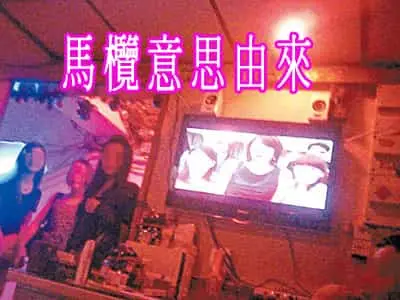
Table of contents
Definition and meaning of "Malan"
In Hong Kong, "Ma Lan" primarily refers to an illegal sex trade venue, typically located in tenement buildings (old-style residential buildings) or apartment units. The interior is divided into several small rooms for sex workers and clients to conduct transactions. These venues are generally operated jointly by "massage brokers" and "timekeepers." The "massage brokers" act as intermediaries connecting sex workers and clients, similar to brokers, while the "timekeepers" manage the venue, receive clients, and arrange transactions. Once a client enters the "Ma Lan," they usually select a sex worker under the arrangement of the "timekeeper," and the transaction is considered "entering the gate." If a client is not satisfied with the sex worker on site, they can request the "massage broker" to bring more options from other places; this flexible operating model is one of the characteristics of "Ma Lan."
Furthermore, "Ma Lam" was not limited to providing sexual services. Some "Ma Lam" also offered short-term or hourly rentals for couples, lovers having affairs, or married couples, as living conditions in Hong Kong at the time were cramped and many people lacked privacy. This "pure rental" model was particularly popular in Causeway Bay, as the area attracted a large number of tourists from Taiwan who flocked to Hong Kong for tourism and shopping after the lifting of military rule.

A study on the etymology of the word "Malan"
The exact origin of the word "马蘭" remains inconclusive, but scholars and folklore offer several possible explanations. Firstly, from a phonetic perspective, "马蘭" may be related to a homonym in Cantonese or a loanword. Some speculate that "马蘭" may originate from the transliteration of the English word "madam" (landlady or brothel owner), as "madam" in Cantonese might be simplified to a pronunciation similar to "馬" (horse), combined with "蘭" (an uncommon character, possibly used as a supplementary syllable) to form "马蘭". This kind of phonetic transformation is not uncommon in Hong Kong Cantonese; for example, "jetso" (a good deal) is an example of a Cantonese transliteration.
Another theory is that "Malan" may be related to "Horseman" is related to the word ". 「Horseman"Lan" in Cantonese refers to the middleman of sex transactions, who is responsible for "soliciting customers" or making connections, and "Lan" may be added for phonetic harmony or as some kind of obscure synonym. This naming method is quite common in Hong Kong's slang culture, using homophones or metaphors to cover up sensitive content to avoid directly mentioning illegal activities.
In addition, there are folk legends that link "Ma Lan" to the geography or history of Hong Kong. For example, some believe that "Ma Lan" may be related to a specific area (such as Ma Lan Shan or a similar place name), but this claim lacks conclusive evidence. A more likely explanation is that "Ma Lan," as a slang term, gradually became popular with the rise of Hong Kong's sex industry in the 1970s and 80s and was given specific cultural connotations.

The operation mode and social background of "Malan"
Malan's operating model is highly dependent on its secrecy and flexibility. These places are usually located in areas such as Yau Tsim Mong, Kwun Tong, Yuen Long, Wan Chai and North Point because these places are densely populated, have convenient transportation and relatively low rents, making them suitable for illegal operations. Generally speaking, "Ma Lan" is located on the upper floors or hidden units of tenement buildings. The entrance is inconspicuous, and the interior is converted into multiple compartments. Each room is equipped with simple furniture such as beds and basic sanitary facilities. After the customer enters, he/she will be received by the "clock room" and sex workers or rooms will be arranged for rental according to the customer's needs.
In the 1970s and 80s, living conditions in Hong Kong were generally cramped, with many families residing in small public housing or tenement buildings, lacking private space. Therefore, "malan" (a euphemism for prostitution) not only served as a place for sex workers but also became a haven for couples seeking privacy. This phenomenon reflected the housing pressures and economic conditions of Hong Kong society at the time. Simultaneously, with Hong Kong's rapid economic development and the rise of tourism, especially the influx of Taiwanese tourists, "malan" in areas like Causeway Bay became places specifically catering to foreign visitors, further fueling its popularity.
As an illegal venue, "Malan" has received high attention from the police. At that time, uniformed patrol teams of the Hong Kong Police would regularly patrol "Ma Lam", especially during the morning and evening shifts, because these places were not only involved in sex transactions, but could also become hiding places for fugitives. When the police conduct inspections, they will check the occupancy records to confirm the number of people in the room and their identities in order to detect suspicious circumstances, such as the presence of underage girls or crimes such as drug possession. This high-risk business environment forces "Malan" operators to adopt various hidden means, such as using the telephone system to quickly notify tenants of the police's arrival to avoid being caught.

The cultural significance and decline of "Malan"
As a product of Hong Kong subculture, "Ma Lam" is not only an economic phenomenon, but also reflects the diverse aspects of society at that time. It is not only part of the sex industry, but also reveals the living conditions of the lower-class people and marginalized groups in Hong Kong during its rapid urbanization. Many sex workers enter this industry due to economic pressure or family background, and the existence of "Malan" provides them with a relatively secretive working environment. At the same time, "Ma Lan" has also become a part of street culture, giving rise to slang such as "flying chicken", reflecting Hong Kong people's humorous and mocking attitude towards these phenomena.
With Hong Kong's economic transformation and stricter legal regulations, "Ma Lam" gradually declined after the turn of the millennium. The rise of modern hotels, legal entertainment venues, and online platforms made traditional "Ma Lam" uncompetitive. Furthermore, increased police crackdowns on illegal sex work forced these establishments to adopt more clandestine operations or disappear entirely. Today, "Ma Lam" is more of a historical term, appearing in the memories of older generations of Hong Kong residents or in popular culture, such as in movies, books, or street legends.

The connection between "Fei Ji" and "Ma Lan"
It is worth mentioning thatFlying ChickenIt is closely related to "Malan".Flying Chicken"Flying Chicken" is a nickname for the Nissan Silvia S13, originating from the story of street racer "Fast Hand Wah." He drove the S13 to transport sex workers to various "Ma Lam" (traditional Hong Kong brothels). Because of its high speed (although legend has it he never won a race), his friends jokingly called it the "Chicken Car," which eventually evolved into the nickname "Flying Chicken." This nickname not only reflects the humor of Hong Kong's car culture but also echoes the background of "Ma Lam" as a place of prostitution, showcasing the unique features of the street culture at that time.

Conclusion
"Ma Lam" is a microcosm of Hong Kong society in the 1970s and 80s, embodying the economic, housing, and cultural characteristics of the time. As a synonym for illegal sex work venues, it was not only an economic phenomenon but also a cultural symbol, reflecting the living conditions and subcultural characteristics of Hong Kong's lower classes. Although "Ma Lam" has faded with the changing times, its place in Hong Kong slang, street culture, and historical memory remains prominent. By understanding the meaning and background of "Ma Lam," we can glimpse the social changes and cultural diversity of Hong Kong over the past few decades.
Further reading: