


What is "supine lower limb cross traction" in Thai massage?
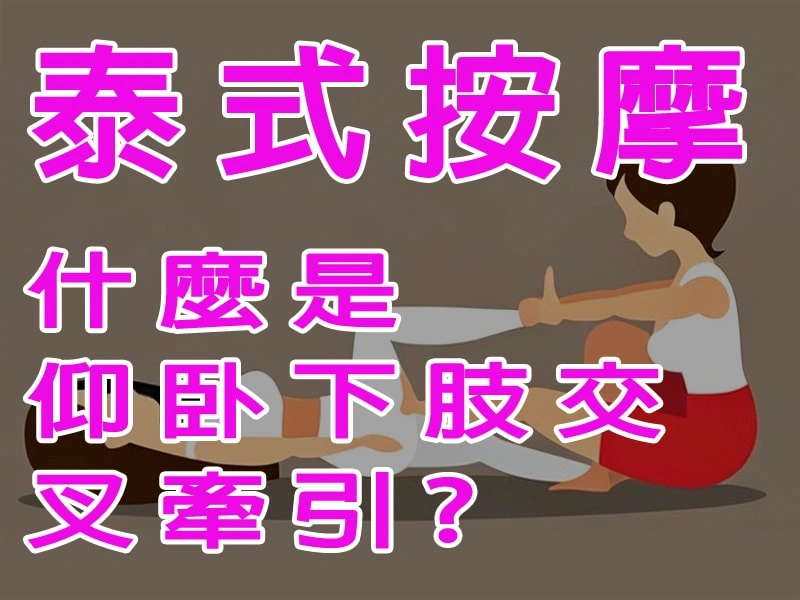
Thai Massageinside"Supine lower limb cross tractionThis movement (also known as supine spinal twist or passive lower back stretch) is a classic passive stretching (or joint mobilization) technique for relaxing the lower back, pelvis, and improving spinal mobility.
Table of contents
Action characteristics
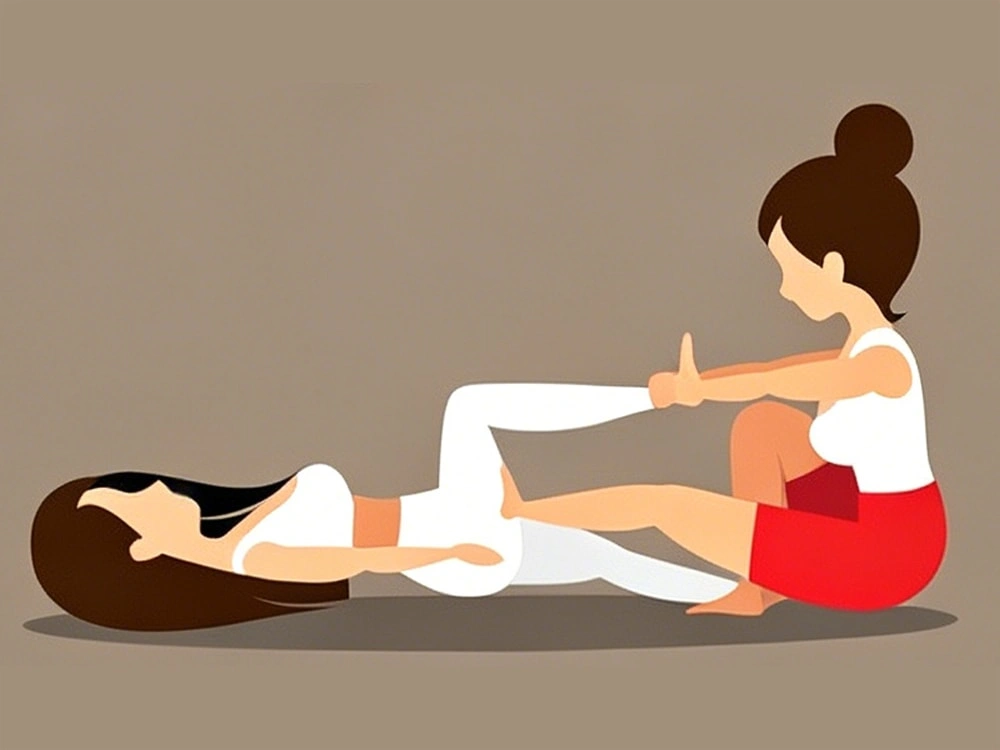
- Subject postureLie flat on your back with your legs straight and your body relaxed.
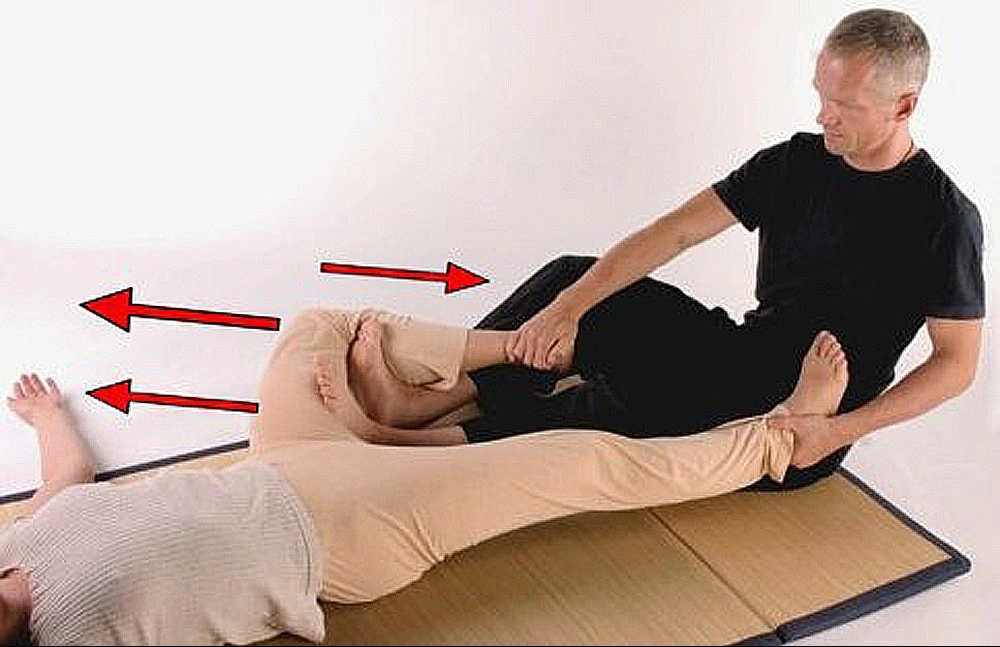
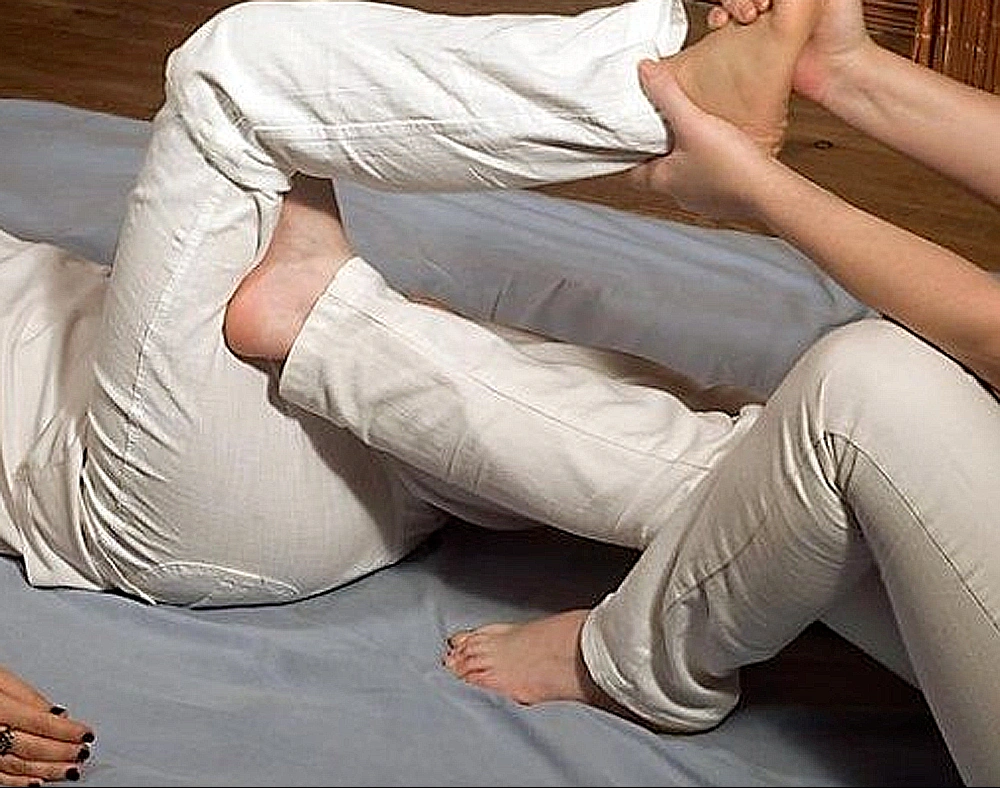
- Operating techniquesThe massage therapist holds the patient's leg (right leg in the picture), bends the knee, and crosses it to the opposite side (left side of the body).
- Key detailsThe massage therapist uses one leg or hand to hold the patient's opposite shoulder (or hip) in place, while one hand stabilizes the bent knee and the other hand applies gentle traction along the leg or ankle (as shown in the image, holding the opposite ankle and pulling it outwards). This causes rotation of the pelvis and lumbar spine.
Main functions and benefits
- Twisting the spine increases flexibilityEffectively activates the rotational function of the thoracic and lumbar vertebrae.
- Deeply relax the lower backThis action isquadratus lumborumIt is one of the best ways to stretch the deep lumbar fascia, and is especially suitable for people who sit for long periods of time, have stiff lower backs, or suffer from lower back pain.
- Stretch your hips and outer thighsCrossing your thighs will have a stretching effect on the gluteus maximus and the lateral hip (tensor fasciae latae).
- Adjusting pelvic asymmetryFor mild pelvic tilt or sacroiliac joint dysfunction, this movement can play an auxiliary role in self-correction or passive correction.
Operating Precautions
- Shoulders should be on the groundTo ensure the twisting effect is concentrated in the lower back, the massage therapist needs to ensure the client...The opposite shoulder should not lift off the ground along with the leg..
- Avoid excessive twistingThis movement can easily put pressure on the lumbar spine if too much force is applied. The rotation should be stopped at a comfortable limit, usually until you can feel a stretch in your waist and hips.
- Neck relaxationRemind the patient to keep their head naturally flat on the ground or slightly turned in the opposite direction of the leg rotation to avoid using the neck muscles to resist the force.
- Individual differencesIf you have severe lumbar disc herniation, disc slippage, or acute low back pain, you should avoid using this technique to prevent aggravating the compression.
Further reading:
- What is "seated shoulder and neck lateral flexion traction" in Thai massage?
- What exactly is the "side-lying hip abduction stretch" in Thai massage?
- What is the "prone unilateral knee flexion and extension hip extension" in Thai massage?
- What exactly is a "seated head and neck massage" in Thai massage?
-copy-300x225.webp)