


What does Volcano Filial Son mean?

Table of contents
The term "volcano filial son" is particularly popular in the Chinese-speaking world.Hong Kong, Macao and Taiwan"Region" is a sarcastic slang term. It originates from the Cantonese dialect and is a combination of the words "volcano" and "filial son." On the surface, "volcano"Symbols of things with strong explosive power,"Filial son"This is tradition"Confucian cultureIn Chinese culture, "filial son" is a term of praise. However, when these two terms are combined, they transform into a negative, derogatory description: referring to men who frequently visit brothels and squander money on dancers or entertainment industry workers. These men seemingly "filially" "dedicate" their wealth to...fire pit"(A metaphor for brothels), in reality, it is a blind and bottomless pit of consumption that often leads to financial ruin."
Why does such a term exist? It not only reflects the social landscape of a specific era, but also reveals the distorted relationship between the human psyche's pursuit of emotional comfort and money.
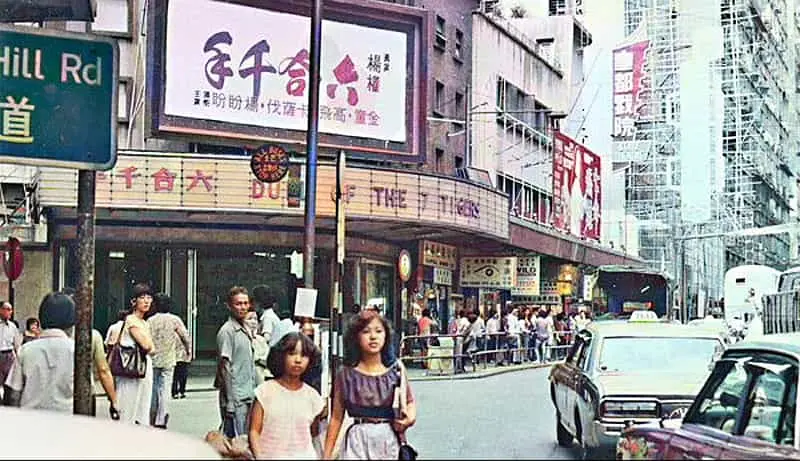
(Photo: Street scene of "Little Shanghai" in North Point, Hong Kong in the 1920s, with dance halls and theaters lining the streets and crowds bustling around. This is a typical scene of the rise of the "Filial Piety" culture.)
"Filial piety" in a "fire pit"
Vocabulary Decomposition
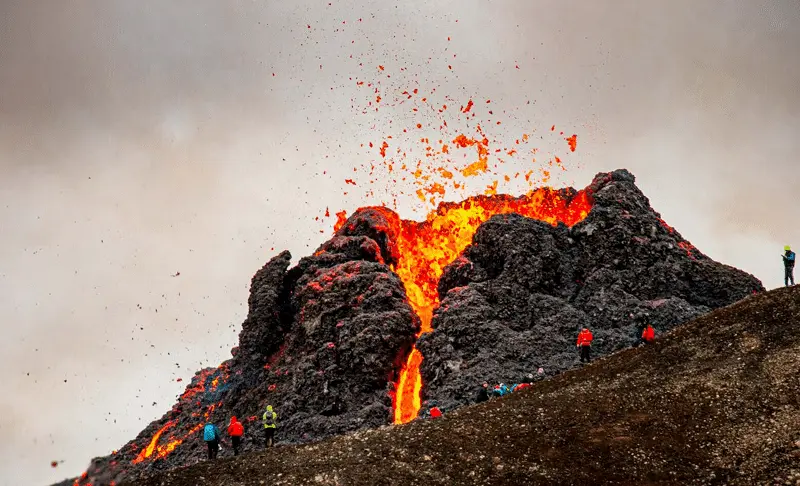
The core of "Volcano Filial Son" lies in its double satire. "Volcano" originates from the Cantonese word "fire pit," referring to high-end entertainment venues such as brothels or dance halls. These places devour money like volcanoes, and a slight misstep can lead to an "eruption" that burns away one's fortune. "Filial Son" borrows from the traditional concept of filial piety, comparing a man's extravagance in these places to a "filial" devotion to his parents, while actually mocking his ignorance and foolishness.
According to the revised edition of the Mandarin Dictionary compiled by the Ministry of Education, "volcano filial son" refers to "a man who spends money to support women in brothels. For example: 'This volcano filial son squandered money like water, eventually leading to his bankruptcy.'" This definition directly points to its negative nature: outwardly glamorous, but inwardly empty.
Historical Background
This term can be traced back to novels from the late Qing Dynasty and early Republic of China, such as Wu Jianren's "Twenty Years' Eyewitness Account of Strange Events," which describes the extravagance of brothels in the Shanghai Concessions, indirectly influencing the formation of Hong Kong and Macau slang. It truly became popular in Hong Kong in the early 20th century. In the 1920s, as a British colony, Hong Kong experienced economic takeoff, and the Tangxi (Shek Tong Tsui) area became known as "Little Shanghai," with numerous dance halls like the Golden Leopard Hotel attracting countless middle-class men for "entertainment."
Hong Kong's dance hall culture from the 1930s to the 1970s was characterized by two main types of dance halls: ordinary entertainment venues and high-end establishments focused on alcohol, sex, and wealth. The latter attracted a group of regulars known as "volcano sons" (a term implying male chauvinism). During this period, Hong Kong society was undergoing a transformation: industrialization brought wealth, but it was also accompanied by a loosening of moral constraints and a growing demand for male release from pressure.
Historical Evolution
1920s-1940s: The Golden Age of Romance
The 1920s marked the peak of the "volcano-like filial piety" culture. Hong Kong's Tangxi red-light district was a hub of nightly revelry, with dance halls gushing gold like volcanoes. Historical documents indicate that a single night's spending could reach several hundred Hong Kong dollars, equivalent to a worker's monthly salary. These "filial sons" were mostly businessmen or civil servants, who viewed extravagance as a symbol of status.
Characteristics of the time period:
- 1920-1930The economy was booming, and the number of dance halls surged. At its peak in the 1920s, Tangxi had more than 50 dance halls.
- 1930-1940Due to the impact of the Japanese invasion of China, Hong Kong became a refuge, leading to a surge in the sex industry. The pressures of war prompted men to seek solace, exacerbating the phenomenon of "filial sons."
1950s-1970s: Extravagance at the End of Colonialism
In the post-war reconstruction of Hong Kong, the influx of immigrants in the 1950s brought the working class, who sought "motherly" warmth in dance halls. In the 1970s, with the economic boom and the infiltration of Western culture, the term "volcano filial son" moved from street slang into literature. For example, "Floating Life Notes" mentions "pseudo-filial sons" in funeral culture, drawing parallels to erotic devotion.
Characteristics of the time period:
- 1950-1960The movie "Volcano Son" became popular, and satirical themes became fashionable.
- 1960-1970The wave of sexual liberation transformed dance halls into nightclubs, but their "hotbed" nature remained unchanged.
- late 1970s With the ban on prostitution, "Volcano Filial Son" began to go underground.

1980s-2010s: Decline and Transformation
In the 1980s, with Hong Kong's return to China imminent, moral conservatism resurfaced, and the "filial son" gradually faded from the mainstream. However, in Taiwan and mainland China, the term spread through Hong Kong dramas. In the 1990s, the economic bubble burst, and news of several "filial sons" going bankrupt appeared in the newspapers, reinforcing their negative image.
Characteristics of the time period:
- 1980-1990The financial crisis caused many "filial sons" to lose their entire fortunes.
- 2000-2010With the rise of the internet, vocabulary has entered forums, and the word of the day is: "Volcano Filial Son".
2020s to present
With the explosion of online entertainment, "filial sons" have moved to live streaming platforms. This has become a new "hotbed," with men donating money to female streamers, a phenomenon reminiscent of the dance halls of yesteryear.
The following table summarizes the historical time periods:
| Time period | Key Features | Social background | Representative events/data |
|---|---|---|---|
| 1920s-1940s | The peak of the dance hall era saw extravagant spending. | Colonial economic prosperity | There are over 50 dance halls in Tangxi. |
| 1950s-1970s | Transformation into nightclubs, moral loosening | Post-war reconstruction, wave of immigration | The movie "Volcano Filial Son" is released. |
| 1980s-2010s | Fading out of the mainstream and going underground | Economic Bubble and Conservative Resurgence | The 1997 Asian financial crisis led to numerous bankruptcies. |
| 2020s to present | Online Douyin (TikTok) users, virtual donations | Digital entertainment boom | Super Chat totals exceeded 100 million NTD in 2022. |

Cause Analysis
Social reasons
The phenomenon of "volcano-like filial piety" is rooted in the pressure release inherent in patriarchal society. Traditional Chinese culture emphasizes men as the pillars of the family; when faced with work pressure, they turn to brothels for "unconditional acceptance." In 1920s Hong Kong, industrialization led to intensive male labor, and dance halls became a "second home." In modern times, with fierce workplace competition, live streamers provide instant interaction, satisfying feelings of loneliness.
Furthermore, the culture of flaunting wealth is a driving force. In the past, "filial sons" boasted about treating others to meals; today, the rankings on Douyin (TikTok) are publicly displayed, stimulating competition. The "Volcano Filial Son" phenomenon reflects consumerism under capitalism, where men use money to buy vanity.

Psychological reasons
From a psychological perspective, the "volcano-like filial piety" involves "maternal projection" and "attachment disorder." Freud's theory suggests that men seek "motherly" warmth in entertainment venues, and the flattery of dancers reinforces this dependence. Modern research shows that many donors experienced childhood deprivation and seek validation through giving.
Another reason is the "sunk cost fallacy": after the initial purchase, people become increasingly trapped and find it difficult to extricate themselves. A 2024 psychology journal analysis showed that "filial sons" (those who are overly devoted to their parents) have a compulsive consumption tendency.

Economic reasons
High-end venues are designed as "bottomless pits": markups on drinks, private room fees, etc. Historically, a single night could burn through several months' salary; today, live streaming platforms take a 30% cut, but donors see it as an "investment" in emotional returns.

in conclusion
Originating in Hong Kong dance halls in the 1920s, the "volcano filial piety" phenomenon has evolved over a century to become a symbol of blind devotion. Its origins are intertwined with social pressures, psychological needs, and economic incentives, and data shows its resurgence in the digital age. Through time periods and charts, we witness its trajectory: from the physical "fire pit" to virtual entertainment, the core remains unchanged—human beings' yearning for emotional connection.
This phrase reminds us not to forget reason when seeking solace. Perhaps true filial piety lies in protecting wealth, not in burning it away in vain.
Further reading: