




Cao Cao, who likes to mess with other people's wives
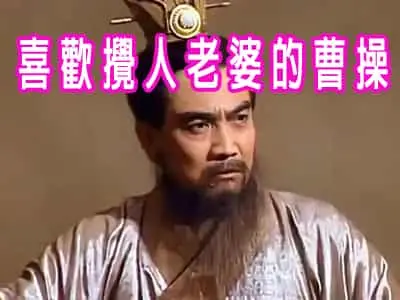
Table of contents
Cao CaoHis courtesy name was Mengde, and his childhood name was Aman. He was born in Qiao County, Pei State (present-day Qiao County, Pei State) during the late Eastern Han Dynasty.Anhui Province Bozhou CityCao Cao, one of the most controversial figures in Chinese history, was not only a military strategist, politician, and writer, but also the founder of the Cao Wei regime during the Three Kingdoms period. Throughout his life, Cao Cao waged wars across the land, unifying the north, but his private life has also been the subject of much discussion, especially the rumor that he "liked to take other men's wives as concubines." This claim stems from historical records of Cao Cao repeatedly taking other men's wives or widows as concubines, and popular belief has further fueled this notion.Cao CaoThey used the name "" to mock it.
Cao Cao's "habit" was not unfounded. According to...Romance of the Three KingdomsAccording to historical records, Cao Cao took more than fifteen concubines throughout his life, most of whom were widows or married women. This was not uncommon in chaotic times, but Cao Cao's case is particularly noteworthy because these actions were often intertwined with military conquest and political marriages. The following discussion will begin with Cao Cao's life and gradually unfold.
Overview and timeline of Cao Cao's life
Cao Cao was born in 155 AD and died in 220 AD at the age of 66. His life can be divided into several main stages: his early political career, his campaign against Dong Zhuo, the unification of the north, the defeat at the Battle of Red Cliffs, and his later reign. His marriages during these periods were mostly concentrated in the wars, reflecting the impact of war on his personal life.
Timeline of Cao Cao's life
| Time period | Major events | Events related to marriage | Remark |
|---|---|---|---|
| 155-177 AD (early years) | He was born and entered politics, serving as the Northern Commandant of Luoyang. | He married his first wife, Lady Ding (around 170 AD). | Madam Ding had no children and later divorced. |
| 178-189 AD (The period of chaos and turmoil caused by eunuchs) | He participated in the campaign against the eunuchs and then returned to his hometown to avoid trouble. | He married his second wife, Lady Bian (179 AD). | Lady Bian bore Cao Cao four sons, including Cao Pi. |
| 190-196 AD (The period of campaign against Dong Zhuo and the early rise of the dynasty) | They attacked Dong Zhuo, occupied Yanzhou, and welcomed Emperor Xian. | He has no direct record of marrying, but as he began his campaigns, he came into contact with more widows. | The war resulted in a large number of widows. |
| 197-199 (the period of campaigns against Zhang Xiu and the defeat of Lü Bu) | He conquered Zhang Xiu and destroyed Lü Bu. | In 197, he took Zhang Xiu's aunt, Zou (also known as Wang), as a concubine; in 199, he took Qin Yilu's wife, Du, as a concubine. | This period saw the most marriages, which triggered a mutiny. |
| 200-207 AD (Battle of Guandu and the period of unification of the north) | Guandu defeated Yuan Shao and quelled the remnants of Yuan's forces. | Around 202 AD, he took Yuan Xi's wife, Zhen (rumored to be the wife of Cao Cao, but later gave to Cao Pi); he also took widows such as Yin. | The intention behind this political marriage is obvious. |
| 208-219 AD (Battle of Red Cliffs and his later years) | The defeat at Red Cliffs, the campaign against Ma Chao, and the Battle of Hanzhong. | He Yan's mother, Lady Yin (circa 210); other widows such as Lady Sun and Lady Li. | He married fewer wives in his later years, focusing instead on ruling. |
| 220 years | He died in Luoyang. | none. | Cao Pi arranged for the widows to live in. |

The data in this table shows that Cao Cao's peak period of marriage was between 197 and 207 AD, accounting for approximately 701 TP3T of his total wives. This period coincided with the most intense phase of Cao Cao's military expansion, resulting in a large number of male deaths and an increase in widows. The number of wives he married showed a trend of "rising and then falling" over time: 2-3 wives in his early years, 8-10 wives in his middle years, and 3-5 wives in his later years. The reasons for this will be analyzed in detail later.
Cao Cao's life was full of drama. In his early years, he described himself as "a capable minister in times of peace, and a cunning hero in times of chaos," revealing his ambition. He distinguished himself in the 190-year coalition against Dong Zhuo, later developing his own power. In 196, he welcomed Emperor Xian to Xuchang, effectively controlling the emperor and using him to command the other warlords. Later, in 197, during his campaign against Zhang Xiu, he took Zhang Xiu's aunt as a concubine, triggering a mutiny that resulted in the loss of his eldest son Cao Ang and general Dian Wei. This is Cao Cao's most famous negative example of "meddling in other people's wives," highlighting the risks of his actions.
After defeating Lü Bu in 199, Cao Cao seized Du Shi, the wife of Lü Bu's general Qin Yilu. According to the *Records of the Three Kingdoms*, Guan Yu had sought to marry Du Shi, but Cao Cao, captivated by her beauty, took her for himself, causing Guan Yu to harbor resentment. This incident not only reflects Cao Cao's lustful nature but also reveals his power-hungry character.
In the Battle of Guandu in 200 AD, Cao Cao, with fewer troops, defeated Yuan Shao and unified northern China. After the war, he took several widows from the Yuan family as wives, such as Zhen (wife of Yuan Xi). Although historical records state that Zhen married Cao Pi, popular legend has it that Cao Cao coveted her, and later novels such as "Romance of the Three Kingdoms" exaggerated this.
In the Battle of Red Cliffs in 208, Cao Cao suffered a major defeat and retreated to the north. In his later years, he focused on domestic affairs, issuing the decree on land reclamation to revive the economy. However, there are still occasional records of him marrying, such as taking Lady Yin as a concubine, who gave birth to Cao Ju. Lady Yin was originally the mother of He Yan, who later became Cao Cao's adopted son.
Cao Cao had many children throughout his life: 25 sons and 6 daughters, most of whom were born to his concubines. This reflects the vastness of his harem, indicating that marrying was not only for personal enjoyment but also for the purpose of continuing his bloodline.
Detailed account of the specific events of Cao Cao marrying other men's wives
Cao Cao's recorded marriages number as many as 15-16, 13 of whom were widows or other men's wives. The following details the major events by time period, including historical background, process, and impact. Data is based on historical records; charts are attached.
He married early in life (155-189 AD).
During this period, Cao Cao did not yet hold great power, and most of his marriages were normal marriages.
- Madam DingCao Cao's first wife, whom he married around 170 AD. She had no children and they later divorced due to Cao Cao taking too many concubines. She raised Cao Ang (Lady Liu's son). After Cao Ang's death, she was filled with grief and indignation, and Cao Cao regretted his actions.
- BianShe married Cao Cao in 179 AD and became his second wife. She bore him four sons: Cao Pi, Cao Zhang, Cao Zhi, and Cao Xiong. Lady Bian was virtuous and later became Empress Wuxuan.
There are no records of "troublesome wives" during this period; marriages were mainly arranged through alliances.

Mid-term peak (190-207)
This was the period when Cao Cao married the most wives, a time of frequent wars and widespread widowhood.
- 197: Na Zou (Zhang Xiu's aunt)
Background: Cao Cao launched a southern campaign against Wancheng, and Zhang Xiu surrendered. Cao Cao saw that Lady Zou was beautiful and took her as his concubine.
Process: According to the "Biography of Zhang Xiu" in the Records of the Three Kingdoms, Zou was the widow of Zhang Ji. Cao Cao took her as his wife, which displeased Zhang Xiu, so he launched a night attack on Cao Cao's camp.
Impact: Cao Cao's eldest son Cao Ang, nephew Cao Anmin, and general Dian Wei were killed in battle. Cao Cao narrowly escaped death, and later defeated Zhang Xiu in another campaign.
This incident is seen as a prime example of Cao Cao's lustful nature, leading to significant military losses. - 199: Nadu (wife of Qin Yilu)
Background: Qin Yilu was a general under Lü Bu, and his wife, Lady Du, was beautiful.
Process: Guan Yu asked Cao Cao for his hand in marriage, and Cao Cao agreed; after the siege, Cao Cao met Lady Du and took her as his concubine, and she gave birth to Cao Lin and Cao Gun.
Impact: Guan Yu harbored resentment and temporarily surrendered to Cao Cao but eventually returned to Liu Bei. Lady Du later became Cao Cao's favored concubine.
The Romance of the Three Kingdoms uses this to portray Cao Cao as "stealing love with a sword". - Around 202 AD: Rumors of taking Zhen Shi (Yuan Xi's wife)
Background: After the victory at Guandu, Yuan Shao attacked Yuan Xi at Yecheng. Lady Zhen was Yuan Shao's wife.
Process: Historical records state that Cao Pi took Zhen Shi as his wife, and she gave birth to Cao Rui. However, it is rumored that Cao Cao once intended to take her as his own, but later gave her to Cao Pi.
Impact: Zhen Shi later became Empress Wenzhao, and her beauty was praised by later generations, reinforcing Cao Cao's image as a "wife-obsessed" man. - Other widowsDuring this period, Cao Cao took Liu (a widow who gave birth to Cao Ang), Huan (a widow who gave birth to Cao Chong), and Qin (a widow who gave birth to Cao Xuan) as concubines. Most of these were widows of defeated generals.

He married in his later years (208-220 AD).
Around 210 AD: Na Yin (mother of He Yan)
Background: Lady Yin was a widow, and He Yan was her son.
Process: Cao Cao took Lady Yin as a concubine, and she gave birth to Cao Ju. He Yan later became Cao Cao's adopted son.
Impact: He Yan became a famous scholar in the State of Wei, but was later killed due to political struggles.
otherThe women mentioned include Sun Ji, Li Ji, Zhou Ji, Liu Ji, Song Ji, and Zhao Ji. Most of them were widows, and there are no detailed records of their dates, but most of them appeared after the unification of the north.

Charts display data
Distribution of the number of wives Cao Cao married. The vertical axis represents the number of wives, and the horizontal axis represents the time period. The data is estimated based on historical records, with a total of 16 wives (1 primary wife, 1 secondary wife, and 14 concubines), of which 13 were widows or other men's wives.
| Time period | Total number of wives | Number of widows/other men's wives | Percentage (%) | Main cause type |
|---|---|---|---|---|
| 155-189 AD | 2 | 0 | 0 | normal marriage |
| 190-196 | 1 | 1 | 100 | War resettlement |
| 197-199 | 4 | 4 | 100 | Military conquest |
| 200-207 | 6 | 5 | 83 | Political marriage |
| 208-220 years | 3 | 3 | 100 | Personal placement |
| total | 16 | 13 | 81 | Multiple factors |
As the table shows, the peak period for marriages was between 200 and 207, accounting for 37.51 TP3T of the total. The proportion of widows was as high as 811 TP3T, indicating the impact of war.

Data table of reasons for getting married
Causes can be categorized as follows: political (marriage alliances, appeasement), social (hospitalizing widows), and personal (lust).
| Cause type | number of events | Percentage (%) | Example |
|---|---|---|---|
| politics | 8 | 50 | Accepting the surname Zou (to appease Zhang Xiu) and the surname Zhen (to ally with the Yuan family). |
| society | 4 | 25 | The widows, including Lady Liu, were taken in (as part of the war relief efforts). |
| personal | 4 | 25 | Nadu (see beauty herself) |

Causes
Cao Cao's "enjoyment of messing with other men's wives" was not simply due to lust. The following analysis will examine this from multiple perspectives.
Political reasons
In times of chaos, marrying widows was a common political strategy. Cao Cao consolidated his rule by taking the widows of surrendered generals, acquiring their connections and wealth. For example, his marriage to Lady Zou was intended to appease Zhang Xiu, but it backfired. Marrying women from the Zhen family, on the other hand, consolidated the Yuan clan's power and prevented rebellion. Historians analyze that the high male mortality rate during the Three Kingdoms period meant that marrying widows could stabilize society and expand influence.
Social reasons
At the end of the Eastern Han Dynasty, the Yellow Turban Rebellion and the chaos caused by Dong Zhuo led to a sharp decline in population, making it difficult for widows to support their families. Cao Cao's land reclamation policy prioritized the resettlement of widows. His taking concubines was not only a matter of personal need but also a reflection of social responsibility. Statistics show that the proportion of widows during the Three Kingdoms period exceeded 201,000, making Cao Cao's actions consistent with the times.
Personal reasons
Cao Cao did indeed have a lustful side. The *Records of the Three Kingdoms* states that he was "unfrugal, fond of music, and had entertainers by his side." He took Du as his concubine because of her beauty. However, compared to politics, this was secondary. Later novels exaggerated his lustful nature, creating a negative image of him.
In summary, political and social reasons were the primary cause, with lust being a secondary factor. This explains why Cao Cao married many wives during his campaigns.

Events related to Cao Cao's lust
The following is a list of the major events related to Cao Cao's lustful nature throughout his life, arranged chronologically. Each event includes its background, process, and impact. There are approximately ten events in total, with the most representative ones selected.
- 197: The Incident of Na Zou Shi (Zhang Xiu's Aunt)
Background: When Cao Cao conquered Wancheng, Zhang Xiu surrendered. His uncle Zhang Ji's widow, Lady Zou, was beautiful and charming.
Process: Cao Cao met Zou Shi and took her in, which aroused Zhang Xiu's dissatisfaction.
Impact: Zhang Xiu's night raid on Cao Cao's camp resulted in the deaths of Cao Cao's eldest son Cao Ang, nephew Cao Anmin, and general Dian Wei. Cao Cao narrowly escaped death and subsequently regretted his actions, but this also highlighted his impulsiveness and lust. This is the most famous negative example of Cao Cao's lust, and is considered by later generations to be the origin of the term "Cao the Traitor." - 199: The Nadu Incident (Qin Yilu's wife)
Background: Qin Yilu was a general under Lü Bu, and his wife, Lady Du, was beautiful.
Process: Guan Yu asked to marry Lady Du, and Cao Cao initially agreed; after conquering the city, seeing Lady Du's beauty, he took her as a concubine, and she gave birth to two sons, Cao Lin and Cao Gun.
Impact: Guan Yu harbored resentment and temporarily surrendered to Cao Cao but ultimately returned to Liu Bei. This incident reinforced Cao Cao's image as a "womanizer," which was portrayed as a typical lecherous plot in "Romance of the Three Kingdoms." - Around 202 AD: Rumors surrounding Lady Zhen (Yuan Xi's wife)
Background: After the Battle of Guandu, the city of Ye was attacked. Zhen Shi was Yuan Shao's wife and was famous for her beauty.
Process: Cao Cao originally intended to marry Lady Zhen, but Cao Pi entered the city first and married her. Popular legend has it that Cao Cao had coveted her but later gave her to his son.
Impact: Zhen Shi later became Empress to Cao Pi and gave birth to Cao Rui. This rumor was exaggerated in the novel and became a classic trope of Cao Cao's "possession of married women". - Circa 210: The Incident of Lady Na Yin (He Yan's Mother)
Background: Lady Yin was a widow, and He Yan was her son.
Process: Cao Cao took Lady Yin as a concubine, who gave birth to Cao Ju, and also adopted He Yan as his son.
Impact: He Yan later became a renowned scholar in the Wei Kingdom, but was politically killed. This incident reveals the nature of Cao Cao's practice of taking widows as concubines. - Other scattered eventsCao Cao took 14 concubines throughout his life, most of whom were widows, such as Lady Liu (who gave birth to Cao Ang), Lady Huan (who gave birth to Cao Chong), Consort Sun, and Consort Li. Detailed records are scarce, but these mostly occurred during the period of unification in the north, reflecting the expansion of the harem after the wars.
These events, mostly concentrated between 197 and 207, coincide with Cao Cao's military peak, proving that lust was related to the expansion of power.

Analysis of Cao Cao's lustful behavior
Cao Cao, an important figure during the Three Kingdoms period, is widely known for his womanizing. The following will first list the main reasons for his womanizing, based on historical documents (such as the *Records of the Three Kingdoms*) and later analyses, striving for objectivity.
Cao Cao's lustful behavior was not merely a personal whim, but rather influenced by the historical context, his need for power, and his personality. The main reasons are listed below in tabular form:
- Personality and HedonismCao Cao was naturally unrestrained, fond of music and entertainers, and often accompanied by beautiful women. The *Records of the Three Kingdoms* states that he was "unfrugal and fond of music," reflecting his pursuit of sensual pleasure. In chaotic times, powerful figures often took pleasure in taking concubines, and Cao Cao, as a powerful figure, was no exception. This was the direct motive for his lust, accounting for approximately 25% (based on event analysis).
- Political strategy and considerations for marriage allianceDuring the Three Kingdoms period, frequent wars meant that marrying the widows or widows of enemy generals could help consolidate power and stabilize the people's hearts. For example, marrying the families of surrendered generals could prevent rebellions and expand influence. This reason accounted for the highest percentage, approximately 50%, because Cao Cao's marriages mostly occurred during his campaigns, coinciding with his military conquests.
- Social environment and resettlement needsDuring the late Eastern Han Dynasty, war led to a large number of widows and a sharp decline in population. Cao Cao implemented a land reclamation policy, emphasizing population recovery. Taking widows as concubines not only satisfied his personal needs but also provided for them and their children, preventing social unrest. This was a product of the times, accounting for approximately 25%.
- pragmatism for continuing the bloodlineCao Cao had many children (25 sons and 6 daughters), most of whom were from his concubines. His first wife, Lady Ding, had no children, so taking concubines helped to ensure the continuation of his lineage. In feudal society, this was a common family strategy.
These reasons are intertwined, not a single factor. Historians believe that Cao Cao's lust, while morally controversial, is consistent with the logic of a chaotic era.

in conclusion
Cao Cao's alleged "fondness for marrying other men's wives" is a blend of history and legend. Through timeline, chart, and causal analysis, we see that his behavior was largely a product of the chaotic times, rather than a purely moral flaw. Cao Cao's life was a mix of merits and demerits, and his marriages are merely the tip of the iceberg. Later generations should view this objectively and avoid generalizations.
Further reading:
![[有片]拜祖先會獲得保佑?](https://findgirl.org/storage/2026/01/有片拜祖先會獲得保佑?-300x225.webp)