


![[有片]拜祖先會獲得保佑?](https://findgirl.org/storage/2026/01/有片拜祖先會獲得保佑?-300x225.webp)


What is the female A-spot? How to stimulate the A-spot using sexual positions

Table of contents
The A-spot (Anterior Fornix Erogenous Zone, or AFE for short) is an erogenous zone located inside the female vagina that can bring intense sexual pleasure to some women. It is located between the anterior vaginal wall and the cervix, at a depth of about 4 to 5 inches (approximately 10-12.7 cm).
While not as widely known as the G-spot, this area can bring intense pleasure, increase vaginal lubrication, and potentially lead to longer-lasting orgasms. The A-spot and... G pointThey are only about two inches (about 5 centimeters) apart, but the stimulation methods are different, and deeper penetration may be required.
Since Malaysian sexologist Dr. Chua Chee Ann began researching it in the late 1980s, the A-spot has gradually become a focus of the field of sexology because its stimulation can promote vaginal lubrication and even induce orgasm. This article will delve into the anatomy of the A-spot, its history of discovery, how to find it, and practical techniques for stimulating the A-spot during sex, and includes timelines and charts to show its important milestones, helping readers to fully understand this erogenous zone.

The history and important milestones of point A
The discovery of the A-spot was not accidental, but rather a product of advances in sexology research. Scientists began exploring female erogenous zones as early as the mid-20th century, but the A-spot wasn't formally identified until the 1990s. Malaysian sexologist Dr. Chua Chee Ann was a pioneer in this discovery, revealing the potential of this deep area through clinical observation and experimentation.

Background of the discovery
In the 1980s, research on women's sexual health focused on G point(Proposed by Ernst Gräfenberg in 1950), but many women report a unique pleasure from deep penetration without explanation. Dr. Chua Chee Ann began studying the neural pathways of the anterior vaginal wall in the late 1980s, aiming to address vaginal dryness and difficulty in sexual arousal in women. He observed that stimulation of the inner half of the anterior vaginal wall quickly induces reflexive lubrication, unlike traditional sex therapies, and does not require medication or psychoanalysis.
In 1993, at the 11th World Congress of Sexology in Rio de Janeiro, Brazil, Dr. Chua announced the discovery of the A-spot (AFE area) to the world for the first time. This milestone marked the expansion of research on female erogenous zones, shifting from the superficial G-spot to deeper areas.
In 1997, Dr. Chua published a pivotal study recruiting women with orgasmic problems. Participants underwent 10-15 minutes of repeated stimulation of the anterior vaginal wall. The results showed that two-thirds of the participants experienced increased vaginal lubrication and achieved orgasm. This study formally confirmed the existence of the A-spot and named it the "anterior fornix erogenous zone." Since then, the A-spot has become part of sex education.

Subsequent research and development
After 1997, while research on the A-spot was not as extensive as that on the G-spot, it gradually became integrated into female sexual physiology. In the 2000s, the media began to report on it, such as the 2007 YouTube video introducing Dr. Chua's findings. In 2011, the A-spot appeared on the well-known American program "Dr. Oz Show," raising public awareness.
In the 2010s, the sex toy industry responded to demand by launching G/A spot vibrators with curved designs. In the 2020s, research shifted towards integrative approaches; for example, a 2021 Springer study discussed the anatomical differences between the G-spot and A-spot, confirming that the A-spot is a densely packed nerve area rather than a single point. In 2022, an Indian journal study explored the application of the A-spot in treating vaginal dryness. In 2025, ResearchGate published a review emphasizing the role of the A-spot in the diversity of female ejaculation and orgasm.

Key Milestone Timeline
The following table shows the key time periods and events in the development of point A:
| Time period | milestone event | Influence |
|---|---|---|
| Late 1980s | Chua Chee Ann began researching the nerve pathways of the anterior vaginal wall to address the problem of female sexual dryness. | Lay the foundation and shift the focus to deeper stimulation. |
| 1993 | The discovery of the AFE zone (point A) was announced at the World Congress of Sexology. | For the first time, it expands the concept of female erogenous zones. |
| 1997 | A key study was published confirming that stimulating the A-spot increases lubrication and orgasm. | Scientific verification led to the official naming of point A. |
| 2007 | YouTube videos and media reports popularize knowledge about Point A. | Public awareness has increased. |
| 2011 | Appearing on the Dr. Oz Show, sex toys began to design products targeting the A-spot. | Commercial applications increase accessibility. |
| 2021-2022 | Journal research explores the anatomy and therapeutic potential of point A (e.g., vaginal dryness). | Integrative medical applications. |
| 2025 | The review study emphasizes the role of point A in orgasmic diversity. | Continuous scientific verification, future prospects. |
This timeline shows the evolution of point A from marginal discovery to mainstream acceptance, reflecting the trend of sexology from controversy to acceptance.

Who owns point A?
Not everyone has point A. Only cisgender women and individuals assigned female at birth possess this area because it is located inside the vagina and is associated with female reproductive anatomy. Transgender men or non-binary individuals may not have direct access if they have not undergone vaginal surgery.
However, the existence of the A-spot remains controversial. Some experts question whether it is an independent "spot" and more like a densely packed "area" of nerves. But most sex educators agree on its existence based on anecdotal reports and a 1997 study. The study showed that approximately 62.91% of women with TP3T reported areas similar to the G-spot, and the A-spot may be similar.

Basic Anatomy
The A-spot is composed of sensitive tissue containing nerve endings that connect to the pelvic nerves. Its location is similar to the male prostate (P-spot), hence it is sometimes called the "female prostate." This explains why deep stimulation can evoke sensations similar to a prostate orgasm. High variability: The internal structure of the clitoris is different in each person, and the location of the A-spot may vary slightly.
In terms of age, younger women may experience these changes more readily due to hormonal shifts; after menopause, lubrication decreases, but techniques can compensate. Cultural factors also influence perception: in the West, the A-spot is relatively new; in Asia, Dr. Chua's findings were incorporated into traditional sexual health discussions earlier.

Where is point A?
Point A is located on the anterior vaginal wall, about 4-6 inches (10-15 cm) deep, between the cervix and the bladder. It is deeper than the G-spot (about 2 inches deep), hence the name "deep spot". Anatomical diagrams show that it is close to the anterior fornix and feels soft and spongy when stimulated.
Variation factors include vaginal length and pelvic tilt. Alicia Sinclair (founder of b-Vibe) stated, "Everyone's internal structure is different, and the location of point A may shift slightly." Imaging studies (such as ultrasound) have confirmed its high nerve density, resembling an extension of the clitoral leg.
Location chart
| area | Depth (inches) | Location description | Tactile characteristics |
|---|---|---|---|
| G point | 1-2 | Anterior wall of vaginal opening | Walnut-shaped, spongy |
| Point A | 4-6 | In front of the cervix, near the bladder | Soft, without obvious texture |
How do I find point A?
First, locate the G-spot: Insert your index finger 1-2 inches, bending it upwards towards your navel. If you feel a walnut-shaped area, that's the G-spot. Insert it another 2 inches deeper, using a windshield wiper motion (moving sideways) instead of pushing it in and out.
If your fingers are not long enough, it is recommended to use a curved toy (such as a G-spot vibrator) that is at least 5 inches long. Alicia Sinclair (founder of b-Vibe) says, "Everyone's anatomy is different, and the location of the A-spot may vary slightly."
Sinclair advises: "Don't worry if you don't experience significant pleasure; everyone's 'spot' is different." Steps: Relax, lubricate, explore. The first time may take 10-15 minutes, as in the 1997 study.
Here are the basic steps:
- PreparationMake sure to relax and use a water-based lubricant to reduce discomfort. Choose a quiet, private environment to increase comfort.
- Locate G pointInsert your lubricated index finger about 1-2 inches, bend it upwards towards your navel, and look for the walnut-shaped spongy tissue (G-spot).
- In-depth explorationContinue scraping about 2-3 inches deeper from the G-spot, close to the anterior vaginal wall, avoiding contact with the cervix (which may cause pain). Use gentle lateral scraping motions (similar to a windshield wiper).
- Feeling confirmedIf you feel increased pressure or enhanced lubrication, you may have found point A. If you don't feel anything, try adjusting the angle or using a toy.

Experimental toys
- Sex toys are an ideal choice when fingers cannot penetrate deeply. Recommendation:
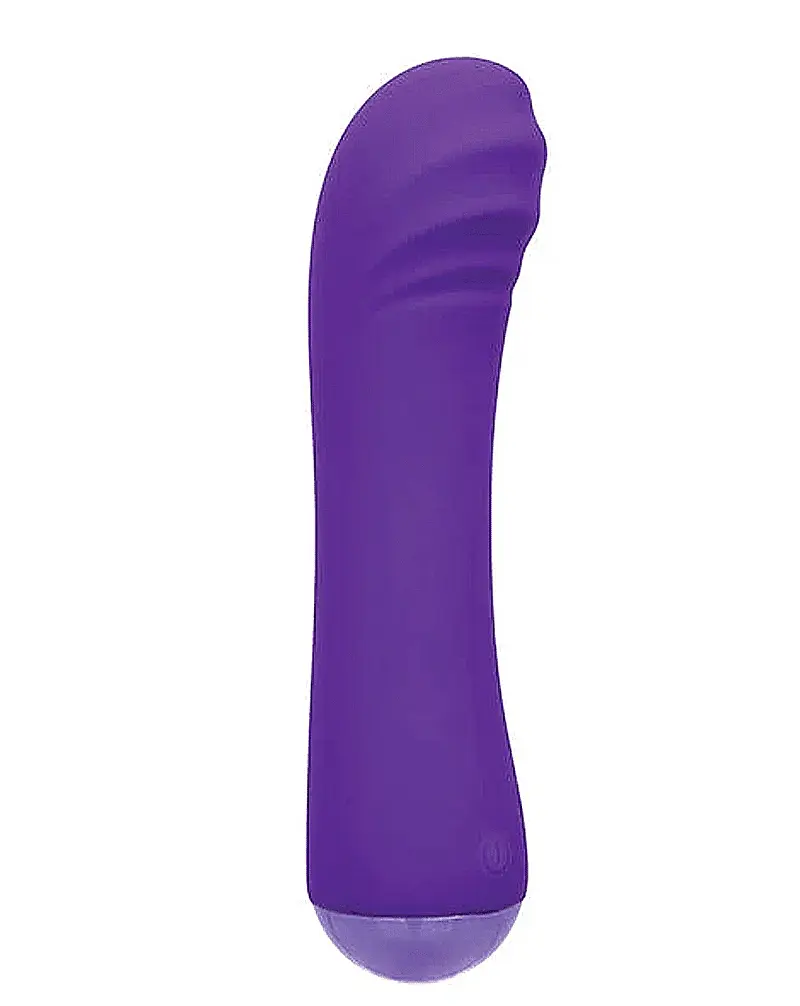
- Toy typesChoose a vibrator or non-vibrating wand that is 5-7 inches long and has a slightly curved end. The curved design helps with precise stimulation.
- How to useInsert the toy, keeping the curved end facing the front wall, and slowly adjust the angle. Try different vibration modes or static pressure.
Precautions
- Avoid cervicalThe cervix is located next to point A and is particularly sensitive during menstruation; impact may cause pain. Be gentle and keep close to the anterior wall.
- Individual differencesIf there is no intense pleasure, it is normal. Dr. Sadie Allison emphasizes: "Everyone's 'point of pleasure' is different, there's no need to force it."
How does point A feel?
Unlike the firmness of the G-spot, the A-spot has a texture similar to the vagina, but it becomes softer and more spongy under pressure. Dr. Sadie Allison states, "When stimulated, it becomes lubricated, and the feeling of pressure and sensitivity increases." User descriptions: Deep fullness, wave-like orgasms, non-localized pleasure. Unlike clitoral orgasms, it is more internal and longer-lasting.

Point A vs. Point G
| feature | G point | Point A |
|---|---|---|
| Location | Front wall, 2 inches deep | Front wall, 4-6 inches deep |
| size | Coin size | Area rather than point |
| Stimulation methods | Come here for movements, shallow penetration | Deep scraping, toy assistance |
| Feel | Pleasure after urination | Increased lubrication, deep pressure |
| Orgasm type | Spraying may | More intense, longer |
The G-spot is easier to reach, while the A-spot requires deeper penetration. Dr. Evan Goldstein called the A-spot the "A-zone," which is rich in nerve endings.

Stimulation at point A in practice
Start with masturbation, then gradually move to a partner. Key points: relaxation, communication, lubrication.
Finger skills
Lie on your back with your palms facing up and explore deeply. The doggy style allows your partner to enter from behind.
Toy Techniques
Choose toys with curves 5 inches or larger.
Vaginal vs. Anal Stimulation
The vagina directly targets the A-spot; the anus is indirect, through the thin walls. The latter is suitable for those who prefer anal sex, but requires more lubrication. Dr. Sadie states, "The anus can enhance the experience, but the vagina is more precise."

Best Technique
- Finger: Scrape sideways.
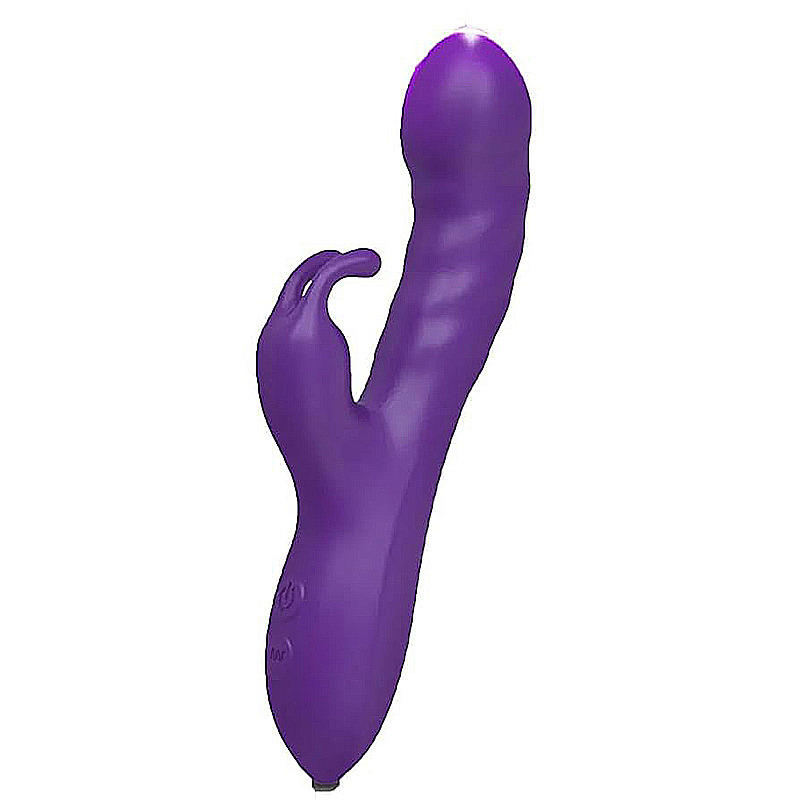
- Vibrator: Curve head, adjust settings.
Best position
The following positions are best suited for stimulation of the A point because they allow for deep penetration and precise angles:
1. Elevate missionaries
- methodLie on your back with a pillow or sex wedge under your hips and pull your knees towards your chest. Your partner enters from the front, at an angle towards the front wall.
- AdvantagesShortening the vaginal canal makes it easier to access point A.
- suggestionAdjust the pillow height to ensure comfort.

2. Paparazzi style
- methodThe subject should be on all fours, with the partner entering from behind, adjusting the angle to avoid the cervix. The subject can sway their hips to control the depth.
- AdvantagesSuitable for deep penetration; can incorporate elements of Game of Thrones.
- NoticeCommunication helps avoid pain.

3. Female on top
- methodThe partner lies supine, and the subject straddles them, controlling the angle and speed of penetration. Leaning forward is beneficial for stimulating point A.
- AdvantagesHighly autonomous, suitable for exploring personal rhythm.

4. Embryo crossing
- methodLie on your back with your legs slightly raised. Your partner enters your anus from the front, indirectly stimulating the A spot. Combining this with clitoral stimulation enhances the effect.
- NoticeSufficient lubrication is required; proceed slowly.

Ejection probability
Stimulation of the A-spot can trigger vaginal ejaculation, but it's less common than the G-spot. Dr. Sadie states that the G-spot is more strongly associated with ejaculation, but A-spot orgasms are generally more prolonged. User cases suggest that deep penetration (such as with a 7-inch toy) may trigger similar orgasms.
Conclusion
Exploring the A-spot is a journey to sexual pleasure, but not the only one. Sinclair emphasizes, "The core of pleasure is your own experience." Whether or not you find the A-spot, continuously exploring your body's responses, communicating with your partner, and maintaining safety and comfort are key to enhancing your sex life. If you experience any discomfort, consult a gynecologist.
Further reading: