




How to play mahjong
sparrow(Mahjong)—Also known as "Four-Player Hearth-Shaking Game", "Essential Competition for Elders During Chinese New Year", and "Character Test".
Originating in late Qing Dynasty China, legend has it that someone, out of sheer boredom, put together over a hundred dominoes, thus beginning countless cycles of family harmony (and discord).
The game is usually played by four people, and the objective is simple:To form a winning hand faster than others.At the same time, they try every means to make their opponents so angry they want to pound the table. It is said that "luck accounts for 70%, skill for 20%, and trash talk for 10%, but the losers always blame luck, while the winners always say that they rely on their strength."
Table of contents
Mahjong tiles consist of 136 tiles, divided into:
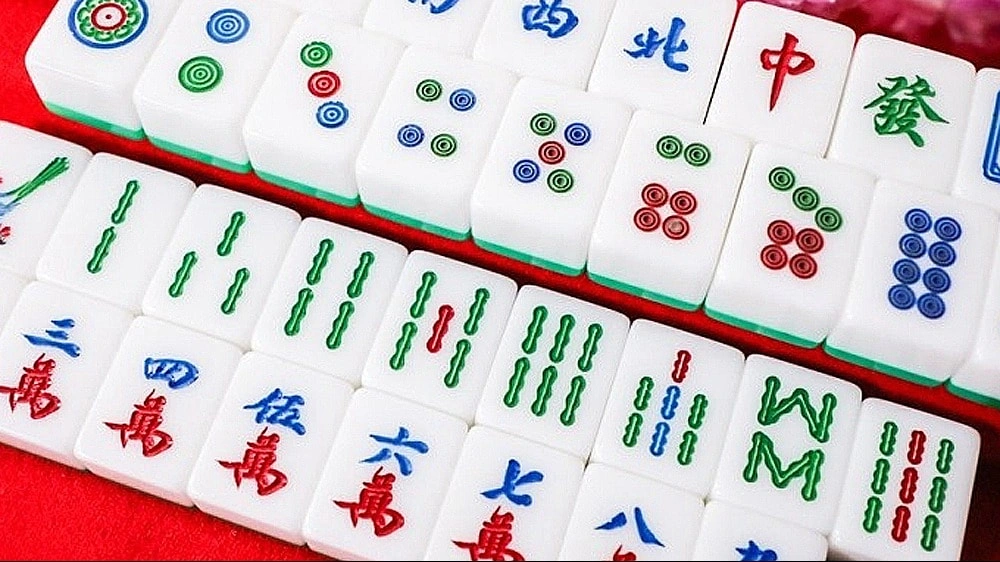
- Number cardsThe tiles are of the suits: bamboo, string, and character. They look like donuts, bamboo skewers, and coins. There are 108 tiles in total, with numbers from one to nine, representing how many tiles you need to win by drawing the winning tile yourself.
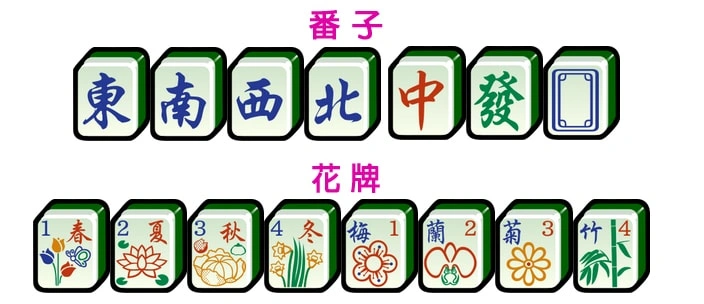
- Character Cards: East, South, West, North (wind direction) + Zhongfabai (the three great fantasies of life: winning the lottery, getting rich, and lying down), a total of 28 cards.
Traditional playing cards were made of bone or ivory, while modern ones are made of plastic—because breaking them is too expensive. Essential props also include dice (to determine who is unlucky first), a scoring stick (Japan-exclusive, like a game score), and a dealer indicator (aka a target).
- PlayersThe standard is four people, sitting on the four sides of the table.
- Cards: Use 144 tiles (including Wan, Tiao, Tong, Wind, Arrow, Flower, etc., with slight variations in local rules).
- TargetBy drawing, discarding, eating, ponging, and konging, you can form a specific winning hand (e.g., 4 sets of melds plus a pair of eyes).
- Winning methods: Self-draw (drawing the required tile yourself) or discarding the tile that another player discards.
- Variants: Taiwan Mahjong (16 tiles), Guangdong Mahjong (13 tiles), Japanese Mahjong (Riichi, Yaku-sou scoring), Sichuan Mahjong (Blood Battle to the End), etc.
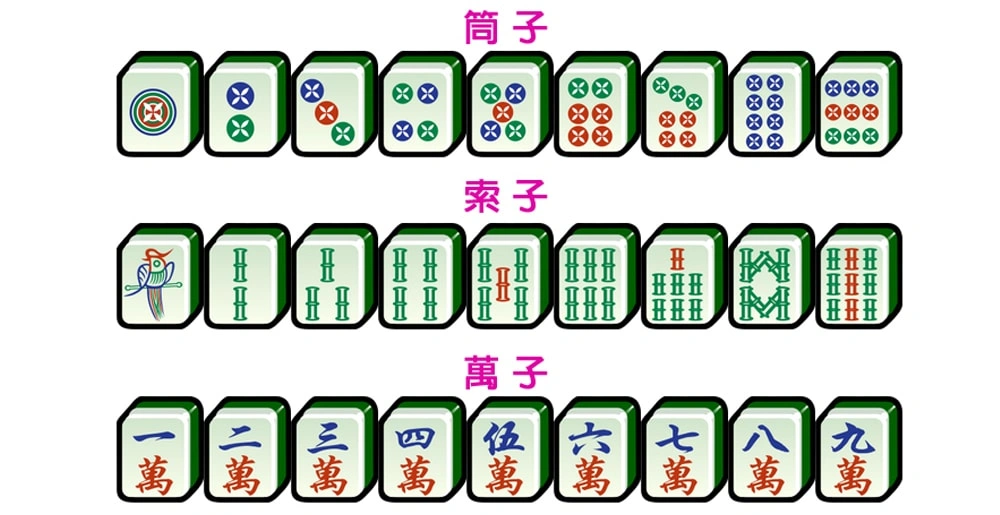
Understanding Mahjong Tiles:
- Ropes: Four of each from one to nine ropes.
- Ten thousand: Four of each from ten thousand to ninety thousand.
- Four of each of the following: One to Nine of Bamboo.
- Fanzi: four each of the following: East, South, West, North, Center, Hair, and White.
- Flower plaques: one each of spring, summer, autumn, winter, plum blossom, orchid, chrysanthemum, and bamboo.
Friendly reminder:Good card-playing etiquette reflects good character; bad card-playing etiquette means no one will want to play with you during the Chinese New Year. This game may cause high blood pressure, break ties with family and friends, and keep you up all night. Please use it in moderation.
Basic Rules (13 cards, 4 players)
1. Game Preparation
- The four people sat down and decided on their seats and who would be the dealer.

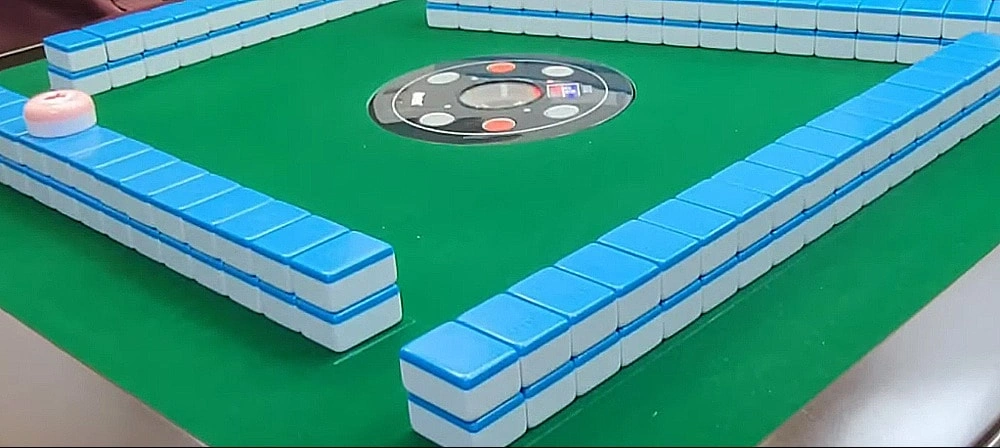
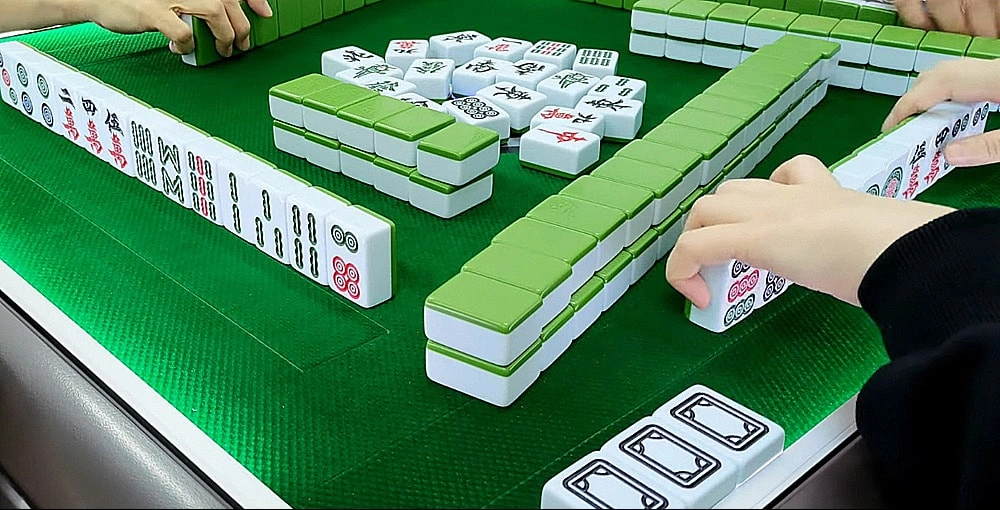
- Shuffle the cards, stack them (2 cards per stack, 17-18 stacks per side), and roll the dice to determine the opening position.
- Everyone starts 13 cardsThe dealer has one more card. 14 images(Play the first card).
2. Game Flow
- The dealer plays first. → Draw cards counter-clockwise in sequence → Play cards → Until someone wins or the wall of cards is empty (draw).
3. Eat, Pong, Kong, Win
| action | illustrate | example |
|---|---|---|
| eat | The card played by the player before you can be combined with two cards in your hand to form a straight (only applicable to the player before you). | I have a 5 and a 6 of bamboo in my hand, and the player before me plays a 7 of bamboo → I take the 5, 6, and 7 of bamboo. |
| bump | Any card played by any player can form a set of three identical cards with two cards in their hand. | Two blank tiles in hand, someone plays a blank tile → you get a set of three blank tiles. |
| bar | If you already have three identical tiles in your hand, and anyone discards the fourth tile (open kong) or you draw the fourth tile (closed kong), you can win. | Three blank tiles in hand, draw a blank tile → concealed kong |
| Hu | Hand + Last card = Legal winning hand | Listen to the four-seven rope, touch the seven rope → Hu |
4. Winning Hand Patterns (Basic)
- 4 sets of melds (straights/triplets/kongs) + 1 pair of eyes (of the pair)
- Special card typesSeven pairs, thirteen orphans, and all unreliable (scoring according to the rules).
5. Draw
- If no one wins after all the tiles have been drawn from the wall, the game ends in a draw. The dealer may remain the dealer or the dealer may change (according to the rules).
Common terms
| the term | mean |
|---|---|
| Ready hand | One more card is needed to win |
| Self-draw | If you draw the winning tile, all three players have to pay (usually double the amount). |
| To set off firecrackers. | If a player discards a card that allows another player to win, the player who discarded the winning card pays the difference. |
| Safety sign | Discard tiles that are almost impossible to win with (such as tiles that have already been played). |
| Raw/Cooked Sheets | Raw tiles: Tiles that have not appeared in the wall of tiles; Familiar tiles: Tiles that have been played multiple times. |
| husband | If you have the wrong number of cards in your hand (too many or too few), you cannot win and can only play as a follower. |
| water crossing | People who could win but choose not to often do so in order to get a better hand or avoid trouble. |
| Multiple shots | A single card can be won by multiple players simultaneously (some rules only allow one player to win with that card). |
| Menqing | No eating, ponging, or konging (open kong is considered a broken clean hand). |
| Duanmojiu | Hand has no 1, 9 or honor tiles |
Skill
Initial stage (first 6 rounds)
- Organize the cardsFirst discard a lone tile (wind tiles and arrow tiles unless you're going for a big hand or want to keep a pair).
- Keep the middle cardCards with 3 to 7 are easier to form straights and are more flexible than cards with 1, 9 or honor cards.
- Observe the opponentPay attention to who plays which card and try to deduce the direction of their hand.
Middle game (7-12 rounds)
- Determine the range of winning handsIf someone keeps playing the same suit, they may be aiming for a pure suit.
- Detachment of cards for fire preventionIf your opponent has been waiting for a long time, avoid playing cards that they might be waiting for (especially unplayed cards).
- Get ready to win as soon as possibleDon't be too fixated on big hands; getting a winning hand early is key to a higher win rate.
Later stage (within 10 stacks remaining)
- Beat the familiar, not the unfamiliar.Avoid playing cards that haven't appeared before to prevent being the one to win.
- Discard pairs/straights for safetyIf necessary, dismantle any decks that might lead to a loss.
- Note the difference between the 9 and the character tiles.Later on, these cards might actually be used to win with a pair or a thirteen-card hand.
Common mistakes made by beginners
- Disrupting your hand structure in order to take a card (e.g., forcibly taking a card from the edge of the hand).
- Stubbornly sticking to big hands and refusing to listen (for example, not winning unless it's a pure suit).
- A random kong (an open kong will draw an extra tile and break the closed hand, and may also result in a player winning by konging on their own)
- Not paying attention to the cards played by the other three players (insufficient identification of safe cards).
Key differences in rules across regions
| project | Taiwanese Mahjong | Guangdong Mahjong | Japanese Mahjong | Sichuan Mahjong |
|---|---|---|---|---|
| Number of cards in hand | 16 images | 13 images | 13 images | 13 images |
| Flower Cards | There are (8 images) | There are (8 images) | none | none |
| Qi Hu Fan Shu | Normally none | Starting from 1st (Chicken Hu can be won) | Starting from 1 point (no points allowed, no winning hand) | No Fan to Hu |
| feature | It has a "flowery beard" | It's "packed" | It contains "Riichi", "Dora", and "Yakuman". | The battle raged on until all three sides were defeated before it finally ended. |
Further reading: