

![[有片]把與生俱來的「好色」,用以點燃事業的雄心](https://findgirl.org/storage/2025/11/有片把與生俱來的「好色」,用以點燃事業的雄心-300x225.webp)


Introduction to Japanese director Nagisa Oshima's film "In the Realm of the Senses"
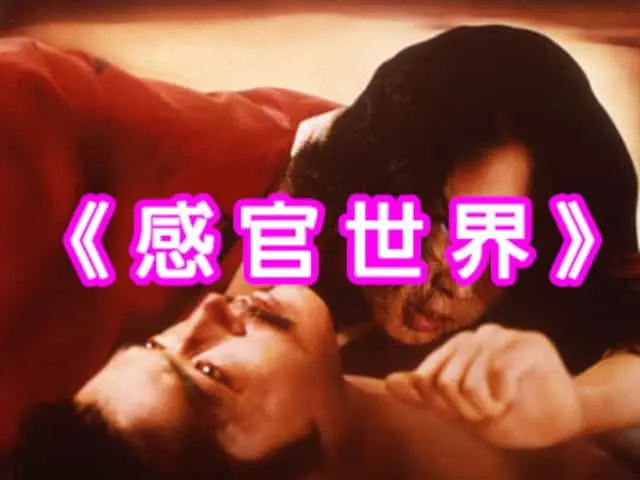
Table of contents
《Senses(Original title: 爱のコリーダ, Ai no Korida, English translation: In the Realm of the Senses) is a film directed by a Japanese director.Nagisa OshimaDirected by Nagisa Oshima, this classic film was released in 1976. With its bold subject matter, unconventional approach, and profound exploration of human desire and extreme emotions, it sparked considerable controversy and discussion in the international film industry. Adapted from the true story of the 1936 Japanese "Abe Sada Incident," the film tells a passionate, destructive, and tragic love story. The following will introduce the film from its background, plot, themes, artistic features, and impact.
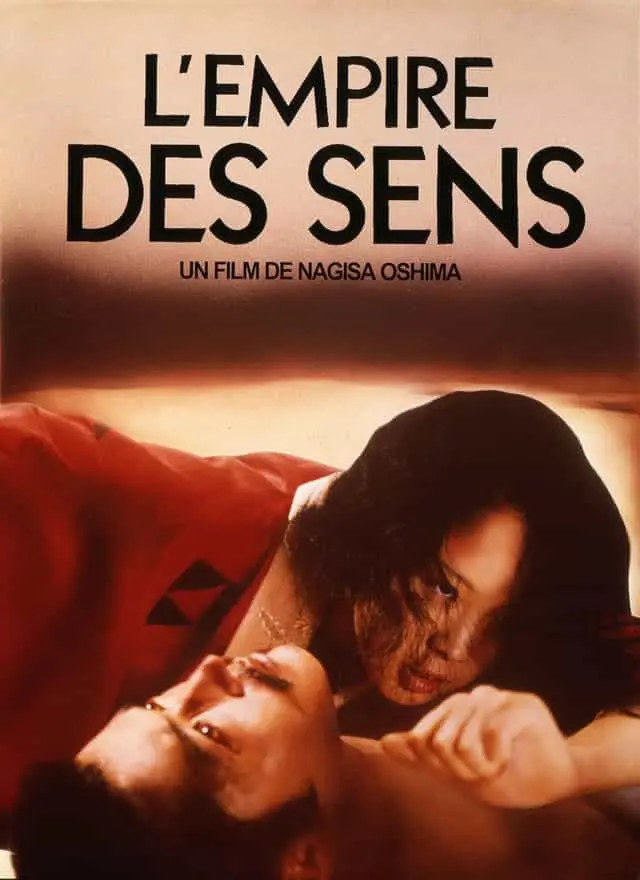
| director | Nagisa Oshima |
|---|---|
| Producer | Anatoly Doman Koji Wakamatsu |
| screenwriter | Nagisa Oshima |
| Leading actor | Eiko Matsuda Fujitsuya |
| Music | Minoru Miki |
| photography | Hideo Ito |
| Editing | Keiichi Uraoka |
| Length | 108 minutes |
| Place of origin | Japan France |
| language | Japanese |
Movie background
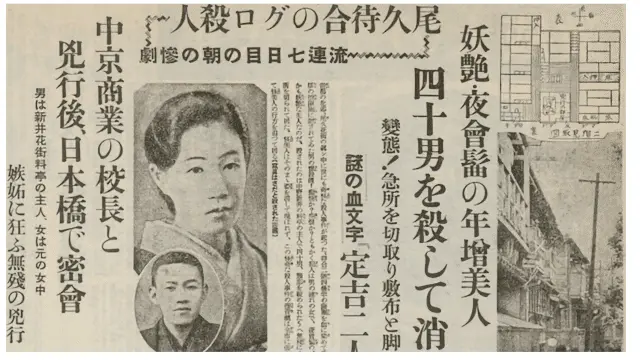
*In the Realm of the Senses* is adapted from the sensational true story of the "Abe Sada Incident" during Japan's Showa era. In 1936, a woman named Abe Sada in Tokyo, driven to madness by her lover Yoshida Kichizo, ultimately murdered him in a fit of extreme lust and mutilated his genitals, shocking society. This incident not only became a focal point of society at the time but also, due to its themes of sex, violence, and the limits of humanity, became material for later literature, film, and cultural studies. Nagisa Oshima used this incident as a blueprint, transforming it into a film that is both artistic and controversial.
The film premiered at the Cannes Film Festival in 1976, immediately sparking fierce controversy due to its explicit sex scenes and violence. In Japan, the film was strictly censored for violating then-existing obscenity laws and was even banned at one point. Nagisa Oshima subsequently engaged in a long legal battle with the Japanese authorities, making *In the Realm of the Senses* a classic case study exploring artistic freedom and censorship. International distributions of the film have faced varying degrees of editing and restrictions in different countries, but its artistic value and intellectual depth remain widely recognized.

Plot Synopsis
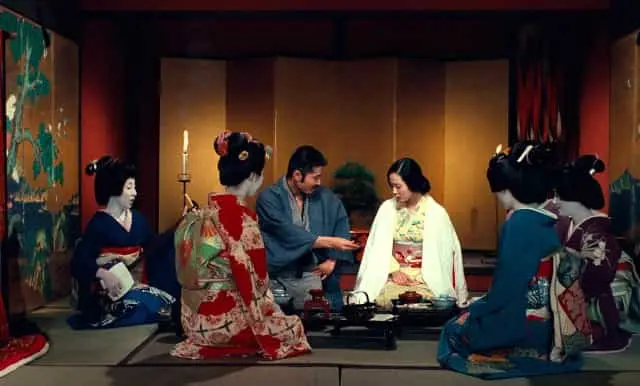
Set in 1930s Tokyo, *In the Realm of the Senses* focuses on the love and lustful entanglement between the protagonist, Abe Sada (Eiko Matsuda), and the protagonist, Yoshida Kichizo (Tatsuya Fuji). Abe Sada, originally a prostitute, becomes a waitress at a small bar, where she meets the bar owner's husband, Yoshida Kichizo. The two quickly fall into a passionate physical relationship, their lust overflowing and uncontrollable. Their relationship gradually evolves from initial passion into a morbid obsession; in pursuit of ultimate pleasure, they begin to engage in increasingly extreme sexual acts, even defying moral and social norms.
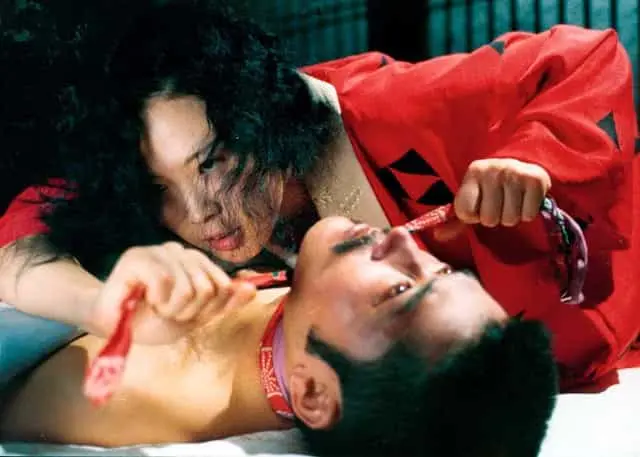
As their relationship deepened, Abe Sada's possessiveness towards Kichizo intensified. She couldn't tolerate his contact with other women and even felt jealous of his wife. The two ultimately decided to elope, hiding away in a small hotel, indulging in endless sex and sensual exploration. However, this extreme love ultimately led to destruction—Abe Sada strangled Kichizo during a sexual encounter and cut off his genitals, attempting to "possess" him forever. The film ends with a scene after Abe Sada's arrest, leaving the audience with endless contemplation on this tragic love story.
Theme and meaning
*In the Realm of the Senses* is not merely a film about desire, but also a philosophical work exploring humanity, freedom, and social boundaries. Through the story of Abe Sada and Kichizo, Nagisa Oshima reveals the contradictions and extreme tendencies of humanity when facing desire. The film's core themes include:
- Desire and DestructionThe love between Abe Sada and Kichizo begins with physical attraction, but ultimately leads to their self-destruction due to uncontrollable desires. Through their actions, the film explores how desire can become a destructive force when reason is lost.
- Freedom and TabooNagisa Oshima challenged the social norms and censorship of his time with explicit sexual depictions, attempting to explore how individuals pursue freedom in the face of social oppression. The actions of the two protagonists in the film represent both a rebellion against traditional morality and an ultimate liberation of personal desire.
- Gender and PowerAbe Sada gradually displays a desire to control Kichizo in their relationship, subverting traditional gender roles. Her actions are both a dedication to love and a pursuit of power, reflecting the complex dynamics of gender relations.
- Aesthetics and DeathThe film intricately links lust and death, presenting a desolate aesthetic. While Abe Sada's actions are extreme, they possess a poetic tragic quality, leaving the viewer both shocked and moved.
Artistic Features
The art style of *In the Realm of the Senses* is typical of Nagisa Oshima's works, blending traditional Japanese aesthetics with modern cinematic language. The following are its main artistic features:
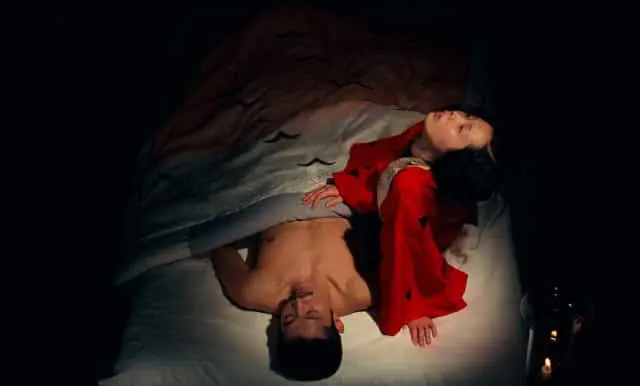
- Visual styleThe film employs numerous indoor scenes, creating a claustrophobic and oppressive atmosphere. Cinematographer Itsuo Yoshioka uses soft lighting and intense colors to highlight the sensual impact of the erotic scenes, while also imbuing them with a certain classical aesthetic.
- Music and sound effectsThe film's score, composed by Japanese composer Minoru Miki, blends traditional Japanese musical elements with modern styles, creating an atmosphere that is both romantic and eerie. The sound effects are also cleverly employed; for example, the interweaving of breathing sounds with ambient noise enhances the film's immersive experience.
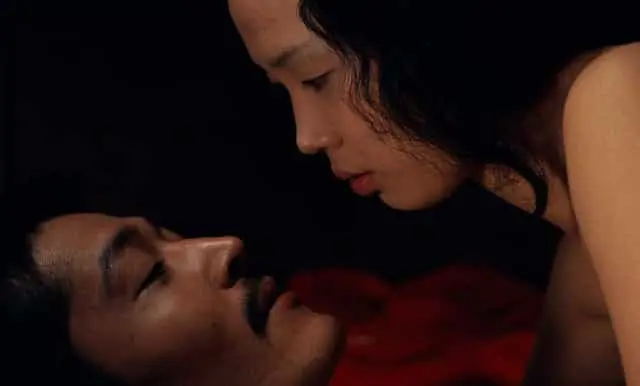
- Acting and directing techniquesMatsuda Hideko and Fuji Tatsuya's performances were extremely powerful, perfectly capturing the characters' madness and vulnerability. Oshima Nagisa's directing style was bold and precise, using long takes and close-ups to capture the characters' inner struggles and the outburst of their desires.
Impact and Controversy
Since its release, *In the Realm of the Senses* has remained one of the most controversial films in cinematic history. Its explicit sexual depictions and violent scenes challenged the moral boundaries of the time, sparking heated debates about art, pornography, and censorship. In Japan, the film's ban and Nagisa Oshima's legal battles made it a symbol of artistic freedom. Internationally, it is considered one of the representative works of the Japanese New Wave cinema, profoundly influencing subsequent filmmakers.
Furthermore, *In the Realm of the Senses* has inspired numerous discussions about sex, love, and the limits of humanity. It is not merely a film, but a cultural phenomenon that has influenced literature, theater, and the visual arts. Even today, the film remains an important text in film studies and gender studies, with scholars interpreting its philosophical implications and social critiques from various perspectives.
Conclusion
In the Realm of the Senses is a film ahead of its time, challenging audiences' understanding of love, desire, and humanity with its bold style and profound philosophical reflections. Through this work, Nagisa Oshima reveals the madness and fragility of humanity in the pursuit of ultimate emotions, while also raising profound questions about the conflict between social norms and individual freedom. Although the film's controversial nature makes it unsuitable for all audiences, its status as a classic of art cinema is undeniable. For viewers willing to delve into the complexities of human nature, In the Realm of the Senses is a masterpiece worthy of repeated viewing and contemplation.
Movie content
After the war, she was released from prison and found a job in Inaricho, in the heart of Tokyo: at the Hoshikikusui bar.
Every evening, the nearby workers—because it was a "working-class pub"—would gather there to drink sake and shochu, and enjoy grilled squid and pickled radish. Around ten o'clock every night, Abe Sada would appear.
The scene was grand. She descended the stairs—the stairs themselves were vast, ending right in the middle of the customers. Abe Sada always wore a brightly colored kimono, a kimono reminiscent of the scene of her crime—early Showa era, 1936. She would appear at the top of the stairs, stop, survey the crowd below, and then slowly descend. From where did she come down?
No one knew. Some said her hideout was on the second floor, filled with old photos and crammed with furniture. Others said the staircase didn't lead anywhere, and she had to climb up from the back to appear in public. In any case, the descent was quite dramatic; she paused several times, gazing at the guests below, her eyes sweeping over one after another. As she slowly descended, indignation was evident on her face. This indignation...
It was always obvious. It was part of the performance, part of the entrance ceremony. On the surface, it was out of anger at the men's actions downstairs. Without exception, they all had their hands on their genitals. Fingers clenched, then they turned away, chuckling. Upstairs, Abe, coming downstairs, would put on an angry expression, her burning gaze sweeping over those downstairs, their clenched hands and louder giggles. She would pound on the railing in fury, her laughter echoing through the air.
The cause of this pantomime was Abe Sada's crime. Twenty years ago, she cut off her lover's penis. Of course, this was after his death. He died because the two of them discovered that if she strangled him hard, his exhausted penis could be reborn. But one day, she strangled him too hard and killed him.
Twenty years later, when her customers mention these things, they hide their penises and chuckle. And she, feigning anger, admits to these things.
At the bottom of the stairs, she would stop and scan the room with her burning gaze. There, in the increasingly quiet place, she would stand and glare.
The giggling stopped. Some of the men hunched over, as if genuinely terrified. Perhaps they really were terrified, because this woman was already a legendary figure. She was a murderer. She had served time. She had written a book about her deeds. They might think she could commit the same crime again.

She stood there like a basilisk. The last chuckle vanished. Silence. Only then, as if receiving the longed-for respect, did Abedin smile. It was a warm, friendly smile as she poured drinks and patted others on the back, her face beaming.
Like many bar hostesses, she became like a man, like a group of boys. However, unlike many, she actually strangled a man and then cut off his penis. Abe patted your back, a chill running down her spine. —
Hello, back again? Do you like it here? She asked, looking down at me, and added, "It's all the best here, guys. Now let's have a drink together."
Then she walked to another table, glancing back at me every now and then. Her gaze was full of interest. She seemed to be thinking about something, perhaps wondering if I also knew her story.
I know, and I'm curious about how she and her story have changed. To impulsively kill one's lover, or to panic and save the person one loves like a child during a disaster—that's one thing. But to collude with others, to portray oneself as a vulgar terrorist, and then become a laughingstock—that's yet another.
She had indeed hurt the man at first, but now it seemed she was inflicting double damage on him. She was also harming herself, turning something so important to her, something that had shaped her life, into a joke. I felt she was utterly treacherous. Laughter erupted again. Several of the bolder ones shouted that they were too scared to go to the toilet. Others yelled that she should hide her knife when she was around. She smiled, patted herself, and walked around in her Showa-era striped kimono like a teacher among mischievous students.
However, occasionally, her radiant smile would vanish. She seemed to be thinking. She stood there, a sake bottle in one hand, absentmindedly. What was she thinking? Oh, what was she thinking? I thought to myself, I'm half-drunk now. She might be that night twenty years ago, or she might be that unpaid bill.
Whatever it was, she quickly regained her composure, grinning as she moved between the tables. However, this was only temporary. Her nightly visits never lasted long. An hour later, she vanished. No one saw her return upstairs, and no one among the drunken crowd downstairs missed her.
Perhaps she could no longer bear the tragedy that her life had become. Perhaps she went upstairs to pay the bill.

Eiko Matsuda
"Oh no, I actually prefer Europe," she said, turning to watch the sun slip behind St. Peter's Basilica in the pitch-black summer heat.
I don't need to guess the reason. Many Japanese people find freedom abroad, but few have a reason like hers.
This is so interesting. Of course, I have friends here too.
She was originally an actress in the Terayama Shuji Theater Company, but was later discovered by Nagisa Oshima and starred in "In the Realm of the Senses," playing the scene where Abe Sada strangles Fuji Tatsuya and cuts off his penis. Although this scene, along with many others, was not shown when the film was released in Japan, there was still enough footage to draw criticism from newspapers and magazines.
This is outrageous. This is not how a real actress should behave. And—perhaps the main reason for the criticism—she seems to have acted solely for foreigners, since only foreigners were allowed to watch the entire performance. Yet, this is a purely Japanese story. Whatever she did, it's about our own people. So why would this so-called cheap actress expose our shame abroad? Why would she do it? That's the question. This man has never been criticized. He, Tatsuya Fuji, was a small-time actor at the time, and this film greatly boosted his career. Thanks to this film, he later became a star, appeared in cigarette commercials, and never had to perform nude again. But not her. She is a good actress, that has been proven, but she didn't get any leading roles, only erotic ones. She even got a contract as a nude dancer. There were even higher demands, such as giving Japanese people more money to experience firsthand everything that was taken from them on screen. —Oh no, that's not the reason at all, she said, her skin tanned brown in the dim light, like the black of St. Peter's Basilica: I don't care what the media writes. If I did, I wouldn't have lasted long. No, really. I love Europe. I have my own little haven in Paris now, and I also love coming to Rome. She sat in the twilight—a black low-cut dress, an ebony and amber necklace, black shoes, a black handbag. I knew what lay beneath that elegant exterior. Because I'd seen the movie too, her naked skin felt more real to me than the composed elegance of the woman sitting beside me on the Roman balcony. —Not because of what they wrote, of course. In fact, many women who haven't done this are in worse shape. There were even some compliments—Japan Sports called me brave. You know what? Well, they know. She was completely different from Abe Sada in the movie. There, she was a maid, cheerful, innocent, and simple, playing childish games with her master. Now, dressed in black, she moved with grace, a chilled martini between her nail-painted fingers, turning to speak to someone in French, then turning back to answer my earlier question.

—Every day? Oh, I go shopping. Watch movies. Go to cafes with friends, things like that.
She sat fragilely on the edge of the chair, as if she didn't belong there, as if she had appeared suddenly like a bird on its way to somewhere else, as if she would shatter at the slightest touch—but she was still the muscular, voluptuous woman with her legs spread wide in my memory.
Every line seemed to plead firmly and politely, "Don't touch me," her body saying, each line an undeniable rejection. She appeared imprisoned in a kind of asexual fashion.
Did the real Abe Sada treat herself the same way? After leaving the bar in Inari-cho, she disappeared. Nikkatsu made a softcore pornographic film based on her story, which didn't cause any controversy. Later, Nagisa Oshima wanted to make his version but felt he might need permission. After a long search, she was found in a nunnery in Kansai—she had cut her hair, was devout, and didn't raise any objections.
"It's easy for people to think I'm a martyr who fled my country," Matsuda Eiko said with a laugh. "But believe me, that's not the case at all."
Atonement doesn't necessarily require cutting your hair; it can also be a fresh start. She wore a Parisian dress, as black as a nun's garment. She became Abe Sada in her own way and paid the same price. There are many kinds of nunneries.
Further reading: