





armpit hair

humansarmpit hairThe existence of underarm hair (also known as axillary hair or armpit hair) has long been a focus of biological, evolutionary, and cultural studies. This article explores, from an evolutionary perspective, why armpit hair has been preserved during the significant reduction of body hair in humans, and its biological functions include pheromone transmission, reducing friction, and protecting the skin.
Table of contents
Historical background of the evolution of human body hair
The evolution of human body hair is a core topic in evolutionary biology. Millions of years ago, human ancestors possessed dense body hair, like modern chimpanzees, which served as insulation and skin protection. However, with environmental changes, humans gradually lost most of their body hair, retaining only scalp hair, eyebrows, armpit hair, and pubic hair. Why was armpit hair retained? This requires an evolutionary perspective.
The evolutionary motivation for the reduction of body hair in humans
according toEvolutionThe reduction in human body hair mainly occurred about 2 million years ago.Homo erectusThe Homo erectus stage. Scientists believe this is related to the African savanna environment. Early humans migrated from forests to open grasslands, requiring long-distance running for hunting. Dense body hair would hinder sweat evaporation, leading to overheating. Research shows that humans have developed a highly efficient sweat gland system, and reduced body hair helps dissipate heat.
Professor Nina Jablonski pointed out at the STIAS symposium that the loss of body hair in humans is a key factor in adapting to high temperatures.
However, hair in areas such as the armpits has been preserved, indicating that it had specific advantages. Evolutionary biologists speculate that armpit hair originated from primate ancestors, around 70 million years ago during the mammalian era. Early mammals used body hair for insulation and camouflage, but after diverging from humans, armpit hair shifted towards an auxiliary reproductive function.
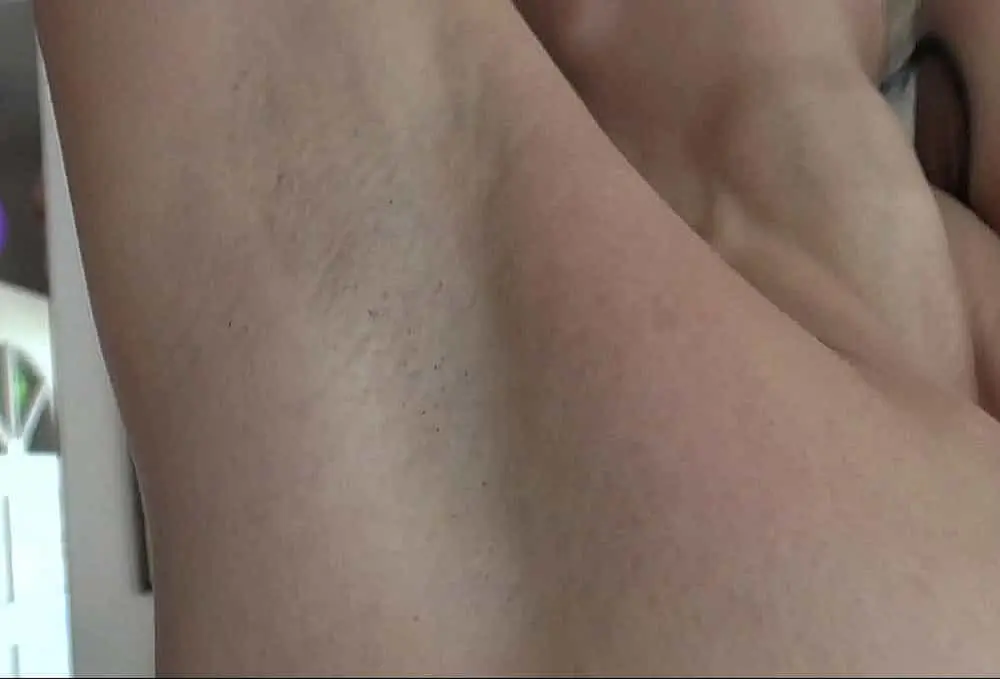
Why armpit hair was preserved during evolution
The evolutionary reasons for armpit hair can be divided into three categories: adaptation, sexual selection, and genetic inheritance.
- Adaptive reasonsArmpit hair, located in an area densely populated with sweat glands, helps absorb sweat and reduce bacterial growth. Healthline also points out that armpit hair can attract pheromones, enhancing sexual attractiveness.
- Reasons for sexual selectionAccording to Darwinian theory, body hair patterns influence mate selection. Armpit hair may be used to release pheromones to attract the opposite sex.
- Genetic inheritanceNIH research indicates that while human hair has no survival value, it is not completely degenerated.
A study from the University of Utah has found that the human genome still retains the complete genes for body hair, but evolution has shut down most of them.

Detailed Explanation of the Biological Functions of Armpit Hair
Armpit hair is not only an evolutionary remnant, but also serves multiple functions. The following is an analysis from a scientific perspective.
Pheromones
The most well-known function of armpit hair is to facilitate the release of pheromones. Pheromones are chemical signals that influence sexual attraction. Wikipedia states that the armpits release pheromone-containing odors, which armpit hair can absorb and slowly release. Armpit hair acts like a "fragrant sponge," trapping scents to attract a mate.
Studies show that male armpit hair pheromones can enhance female attractiveness, and armpit hair is a sign of maturity.
According to a CBC report, underarm hair reduces friction and indirectly supports pheromone function.

Reduce friction and protect skin
Vinmec HospitalThe article emphasizes that underarm hair reduces friction between the arms and body, preventing skin inflammation.
In the hunting era, this facilitated prolonged activity. In a TED-Ed video, Nina Jablonski explains that armpit hair acts as a lubricant.
In addition, armpit hair filters bacteria, reducing the risk of infection. PMC research indicates that hair has a protective function.
Other functions and modern significance
Armpit hair can also regulate temperature and absorb sweat. Modern research shows that the risk of infection increases after hair removal, supporting its protective function.

Timeline and chart of human body hair evolution
The evolution of human body hair spans millions of years. The following timeline is based on scientific literature.
Time period overview
- 70 million years ago (Paleocene)Early mammals developed body hair for insulation.
- 6 million years agoA branch of humans and chimpanzees, with dense body hair.
- 2 million years ago (during the Homo erectus era)Body hair begins to decrease as they adapt to the grassland environment.
- 300,000 years ago (when Homo sapiens appeared)Body hair pattern is fixed, underarm hair is retained.
- Modern times (past 10,000 years)Culture influences hair removal habits.
Chart showing data: Timeline of body hair evolution
| Time period | milestone event | Description of changes in body hair |
|---|---|---|
| 70 million years ago | Origin of mammals | Fully covered in body hair for insulation |
| 6 million years ago | ape branch | Dense body hair, similar to modern apes |
| 2 million years ago | The emergence of Homo erectus | Body hair reduced by 50%, enhanced heat dissipation |
| 1.7 million years ago | Hunting adaptation | Armpit hair is specialized as a pheromone carrier |
| 300,000 years ago | Formation of Homo sapiens | Modern body hair pattern fixed |
| 10,000 years ago | Agricultural Revolution | Culture begins to influence hair concepts |
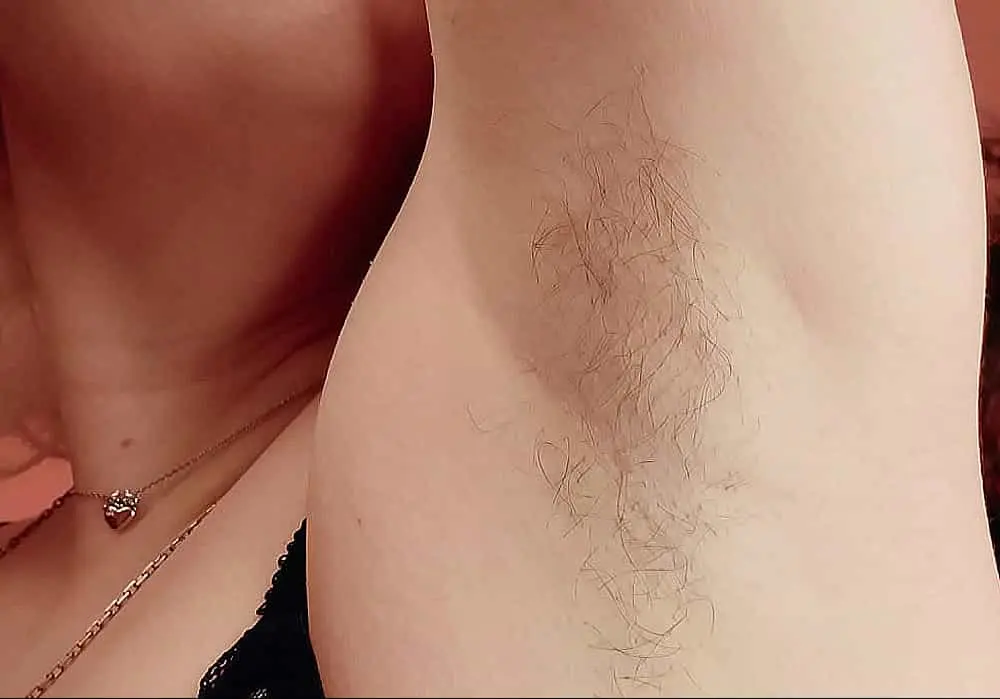
Important milestones and their reasons
The key milestones in the evolution of human body hair are as follows, each including the time period, cause, and impact.
Milestone 1: The Origin of Body Hair (70 Million Years Ago)
Reason: Mammals adapted to land, and body hair provides insulation. Impact: It lays the foundation for hair growth.
Milestone 2: The ape branch (6 million years ago)
Causes: Climate change, deforestation. Impact: Body hair begins to differentiate.
Milestone 3: Significant reduction in body hair (2 million years ago)
Reason: Grassland hunting requires heat dissipation. Smithsonian magazine points out that hairlessness enhances endurance for hunting.
Milestone 4: Specialization of armpit hair (1.7 million years ago)
Cause: Sexual selection, pheromone requirements. Impact: Retaining armpit hair as a reproductive advantage.
Milestone 5: The Influence of Modern Culture (10,000 years ago to present)
Reasons: Agriculture and social norms. Ancient Egyptians had already removed their hair.

Chart: Milestone Timeline
| Milestone number | Time period | reason | Influence |
|---|---|---|---|
| 1 | 70 million years ago | Thermal adaptability | Hair basal formation |
| 2 | 6 million years ago | Climate change | Branching |
| 3 | 2 million years ago | Heat dissipation requirements | Reduced body hair |
| 4 | 1.7 million years ago | Sexual selection | Underarm hair retention |
| 5 | 10,000 years ago to the present | Cultural norms | Hair removal trend is on the rise |
Armpit hair from a cultural and social perspectiveArmpit hair has different meanings in different cultures. In ancient Egypt, women removing armpit hair symbolized purity. In modern times, a YouGov survey found that 531 people in Britain believe women should remove their armpit hair.
Hair removal trend analysis: Stylist magazine, 66%: Women remove underarm hair for hygiene, 25%: Millennials stop hair removal.
Gender differencesMen's Health, 68% for men to trim underarm hair, 17% for women to let underarm hair grow naturally.
Scientific Research and Future ProspectsCurly hair is unique to humans and is related to body hair. In the future, gene editing may change body hair patterns.
Latest researchIn 2023, the University of Utah announced that genes related to body hair can be activated.
Health impactHair removal may increase the risk of infection, while underarm hair has a protective function.
The presence of armpit hair is a testament to evolutionary intelligence. Its functions are diverse, ranging from pheromones to protection. While cultural trends alter habits, the biological essence remains unchanged. Future research could focus on the interaction between genes and the environment.
10 Common FAQs about Human Armpit Hair
-
Why do humans have armpit hair?
The primary evolutionary function of armpit hair is to help disperse pheromones. The odor-causing substances secreted by the sweat glands in the armpits are absorbed by the hair and released slowly, enhancing sexual attractiveness. At the same time, armpit hair reduces skin friction, preventing chafing when sweating.
-
When do armpit hairs start to grow?
Armpit hair is a secondary sexual characteristic, typically starting to grow during puberty (around 10–12 years old for girls and 12–14 years old for boys), stimulated by androgens. It takes 2–3 years to fully grow.
-
Why do some people have very little or no armpit hair?
Genetic factors play a role. East Asians (including Chinese) generally have sparser and finer armpit hair, which is related to a mutation in the ABCC11 gene (this gene also affects the dryness or wetness of earwax). A small number of people have low androgen receptor sensitivity or endocrine problems.
-
Will shaving armpit hair make it grow back thicker and thicker?
No. That's an urban legend. Shaving only cuts the hair shaft; the hair follicle remains intact. The newly grown hair has a flat tip and appears thicker and darker, but the actual number and thickness are the same.
-
What are the hygienic functions of armpit hair?
Armpit hair can absorb sweat and bacteria, reducing direct skin friction and bacterial growth. However, modern people often use deodorants, which has weakened this function. Studies show that people with no armpit hair are more prone to skin irritation.
-
Why do men usually have more armpit hair than women?
High levels of androgens (testosterone) stimulate hair follicle growth. Men typically have higher density and length of underarm hair than women.
-
What is the relationship between armpit hair and body odor?
Armpit hair itself is odorless; body odor comes from the breakdown of secretions from the apocrine glands by bacteria. Armpit hair provides a larger surface area for bacteria to attach, which is why people with armpit hair have a more noticeable body odor.
-
Does removing underarm hair increase the risk of bacterial infection?
Yes. Shaving or hair removal can create tiny wounds that allow bacteria to enter. A 2025 study showed that people who frequently shave their underarms have a 20–30% higher incidence of folliculitis.
-
Why didn't armpit hair disappear during evolution?
Human body hair has decreased significantly to facilitate heat dissipation, but armpit and pubic hair have been retained, primarily due to sexual selection: pheromone dissemination helps attract mates. Other theories include reduced friction and marking sexual maturity.
-
Do people still need armpit hair these days?
From a survival perspective, it is no longer necessary (modern hygiene products have replaced its function), but from a biological perspective, it remains part of sexual characteristics. Whether to retain it is purely a matter of personal aesthetics and cultural choice.
Further reading: