



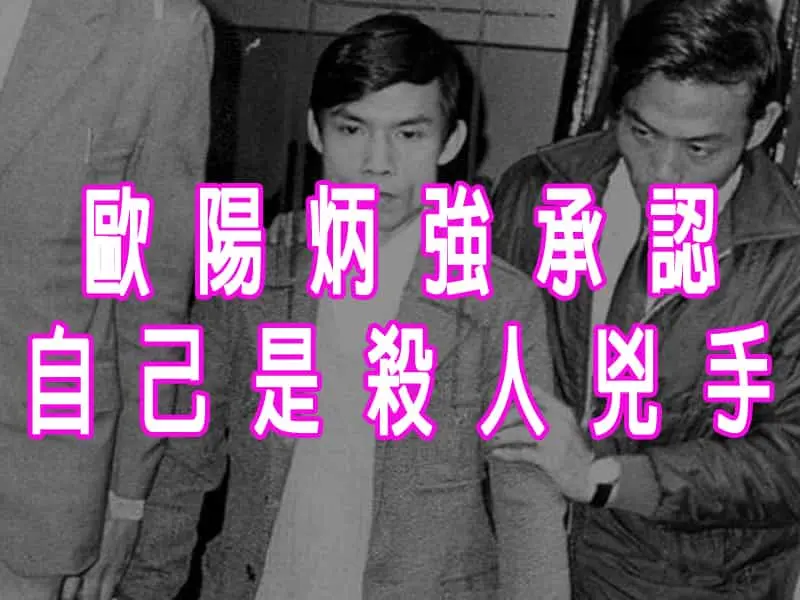
Ouyang Bingqiang confessed to being the murderer.
In the Happy Valley cardboard box murder caseOuyang BingqiangAs a key figure, his psychological state has been a focus of public and expert attention. This case is not only Hong Kong's first murder conviction based solely on scientific evidence, but it has also sparked long-term controversy due to numerous unanswered questions. Below, I will delve into Au Yeung Ping-keung's behavioral patterns, motivational roots, coping mechanisms, and psychological transformation after his release from prison from a psychological perspective. The analysis is based on theories of criminal psychology, such as Freud's theories of repressed desires and cognitive dissonance, as well as the interpretation of relevant case records. It must be emphasized that this is a comprehensive analysis based on publicly available information and psychological inferences, not a clinical diagnosis, and the case itself is highly controversial—some view him as a victim of wrongful imprisonment, while others consider him a highly intelligent criminal.
Table of contents
Ouyang Bingqiang was born in 1946 in a small village in mainland China. At that time, war was rampant, and his family was dirt poor. From a young age, he learned to endure and survive by stealing. In the late 1960s, he illegally immigrated to Hong Kong and worked on construction sites, relying on his physical strength. Later, he married Zhang Jinfeng, a girl who had also come from the mainland. She was of average appearance but hardworking. We had a daughter named Xiaoli. That was in 1970; I was 24 years old, and life seemed to have settled down. But life in Hong Kong was not easy; rent was expensive, and prices were high, so I had to work multiple jobs. In 1974, I worked as a clerk at Anmei Beverage Company in Happy Valley, mainly selling ice cream, soft drinks, and some snacks. The shop was located near the Happy Valley tram terminus; at dusk, crowds surged, and the clanging of trams filled the air. The place was lively, but my heart always felt empty.
An ordinary beginning
Every day from 5 PM to midnight, I tended that little shop. Behind the counter was a cramped space with a small loft used to store goods: old cardboard boxes, tape, newspaper scraps, and the ashtray where I occasionally smoked. The air was thick with the cloying sweetness of ice cream, mingled with the fumes and bustling activity of the street. My wife, Jin Feng, stayed home with the children; she would occasionally come to help, but most of the time I was alone. Life was monotonous, like stagnant water, and I began to fantasize about things I shouldn't have. When young girls passed by the shop, I would steal glances at their legs, their waists, and images of naked bodies and panting breaths would float into my mind. The monotony of my marriage made me thirsty; when I masturbated at night, I didn't think of Jin Feng, but of those unfamiliar faces.
Bian Yuying, 16 years old, is a Form 3 student at Causeway Bay Tat Cheng English Night School. She lives on Hing Man Street in Sai Wan Ho, and her parents run a fish shop.
She was pretty, like a lotus flower yet to fully bloom. Her skin was as white as milk, her eyes were big, her eyelashes long, and she had two shallow dimples when she smiled, making one's heart flutter. She was a regular at the shop, coming several times a week to buy an ice cream, which she ate with great relish. Her school uniform was blue and white, the skirt reaching her knees, revealing her slender calves and flawless skin. Every time she bent down to choose a flavor, the curves of her chest rose slightly, their alluring outlines visible through the fabric. I would imagine what her breasts would feel like to touch—soft, bouncy, like fresh dough. Her lips were thin, adorned with a touch of lipstick, and when she licked the ice cream, her tongue moved deftly, making my lower body involuntarily hard.
Hidden desires
I confess, from the first moment I saw her, I harbored inappropriate thoughts about her. Not love; I'd long since lost that pure feeling. It was a man's primal urge on a young body. When she walked, her skirt swayed gently, her hips swaying slightly, as if inviting me. I would fantasize in the shop: what would her genitals look like if she were naked, lying on a cardboard box in the attic? Pink, moist, exuding a youthful fragrance. Would her moans be as soft as a kitten's? These thoughts excited me, yet also filled me with guilt. But desire is like wildfire, easily ignited.
December 16, 1974, that fatal night. The weather was cold and damp; Hong Kong winters always carry a chill that seeps into your bones. There were few customers in the shop; trams occasionally passed by outside, the streetlights casting long, yellow shadows. Around eight o'clock, she pushed open the shop door, her face showing signs of weariness. "Uncle, may I use the phone?" she asked, her voice soft, like melted syrup. I nodded, letting her in. Only the two of us were in the shop, and the air suddenly became ambiguous. As she dialed the phone, I stood behind the counter, my eyes unable to resist glancing at her. Her neck was long and slender, white and smooth like jade, her hair exuding a faint scent of shampoo. The hem of her skirt was slightly lifted, revealing skin above her knees, so smooth it made my mouth water. I felt my heart race, a surge of heat rising in my lower body. Images flashed through my mind: her body pressed against mine, her legs wrapped around my waist, panting and begging for mercy.
After finishing the call, she turned to leave. I suddenly called out to her, "Hey little sister, have an ice cream, it's on me. The new flavor, chocolate banana." She hesitated for a moment, then smiled and took the ice cream I offered. That smile was innocent and pure, yet it excited me even more. We chatted for a bit; she said she was attending night school, her family was poor, her parents came from mainland China, her father was a construction worker, and her mother stayed home sewing. The way she licked the ice cream captivated me. Cream clung to her lips, which she licked away with her tongue—a gesture unintentionally alluring. Her pink tongue glided nimbly across her lips, and I imagined what it would feel like to have that tongue on my skin. My breathing quickened, and I felt my pants tighten.

Sexual outburst
I don't know what's wrong with me. Maybe it's the long-suppressed desire, or maybe it's that sudden outburst of urges. I pretended to get something, leading her to the attic behind the shop. "Hey little sister, we have some new flavors of ice cream, come up and take a look. They're sold out downstairs." She believed me and followed me upstairs. The attic was cramped, stuffy, and piled high with cardboard boxes and old things. The dim light shone on her face, making her skin look even softer. As she bent over to look at the boxes, her buttocks swayed, her skirt taut, outlining her rounded curves. I couldn't resist any longer and hugged her from behind. She was startled and screamed, "Uncle, what are you doing? Let go of me!"
Her struggles only fueled my excitement. I covered her mouth with my hand and pushed her to the ground. Her body was limp, her breasts pressed against my hands, warm and elastic through her clothes. I smelled her scent, mixed with the sweat of fear. In that moment, like a wild beast, I tore at her clothes. Her school uniform buttons popped open, revealing white underwear; the bra was simple cotton, encasing her small breasts. Her skin was smooth as silk, and my hand slid over her waist, feeling her tremble. She cried out, her fists pounding my chest, but her strength was too weak, like a tickle.
I forcefully kissed her; her lips were moist and cold, carrying the sweet taste of ice cream. She bit me, and I released her in pain. She screamed, "Help! Is anyone there?" I panicked, grabbed the electrical tape next to me, and wrapped it around her neck. She struggled, her eyes wide, her face turning from red to purple. Her fingernails scratched my arm, leaving deep red welts, the pain stimulating me. But I didn't stop, tightening the cord even more. Her body convulsed, her legs kicked wildly, her skirt lifted, revealing white underwear. Urine flowed out, hot, wetting the floor and between her legs. The air was filled with the stench of urine mixed with the smell of blood. Finally, she stopped moving. Her eyes were still open, filled with terror and confusion, pupils dilated, like a dead fish.

Accidental Murder
I sat there, panting. The body lay in the attic, naked and pale in the dim light. Her breasts were small, nipples pink and slightly erect. I touched them; they were still warm, the skin soft and addictive. But fear gripped me. What to do? I couldn't let anyone find out. I remembered the tools in the shop and used scissors to cut off her nipples; drops of blood rolled down and dripped onto the floor. Her pubic hair was sparse and an eyesore, so I burned it with a lighter. The flame licked the skin, sizzling, and the air filled with the smell of burning. Her genitals were still intact; her pink lips were slightly parted. I hadn't violated her—at least not before she died. But now, it was too late. I touched her genitals, my fingers sliding inside, feeling the lingering warmth and moisture. Guilt mixed with excitement made me tremble.
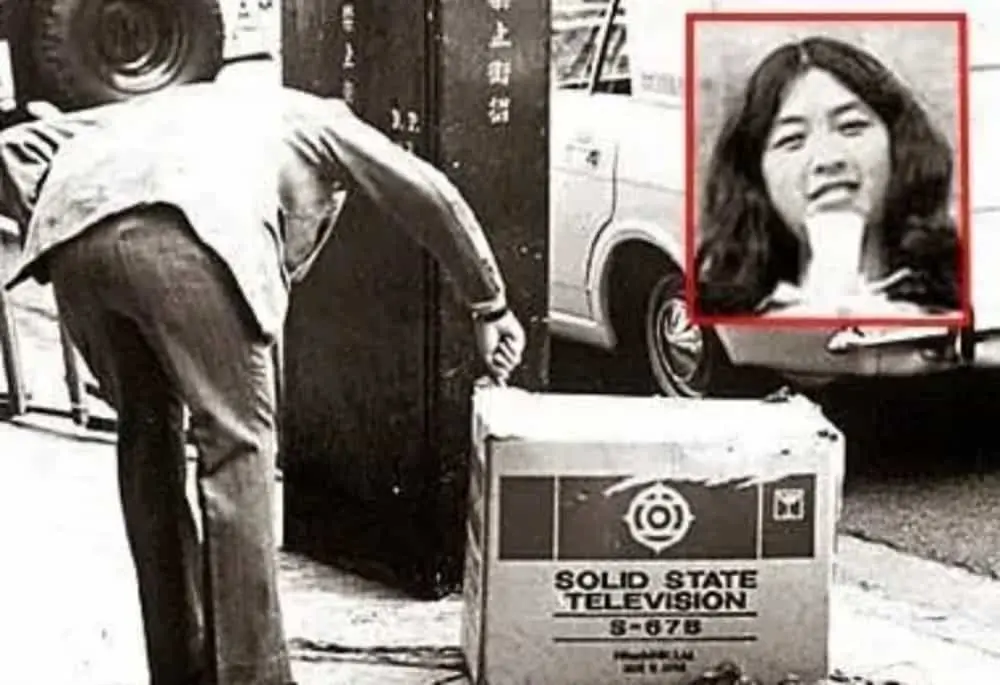
I wrapped her in a large cardboard box—a Hitachi TV box—lined with newspaper scraps to prevent blood from seeping out. It was late, no one was outside, and the trams had stopped running. I dragged the box outside the shop and placed it in front of a nearby veterinary clinic. It was a secluded spot, unlikely to be discovered. I wiped the attic, washing away the blood and urine, the smell of disinfectant making me uneasy. When I got home, my wife asked why I was so late; I said the shop was busy. Lying in bed, I tossed and turned, her face filling my mind: her fearful eyes, her pale skin, and her delicate body. The lingering warmth of desire remained, but fear extinguished it like ice water.

A body was found hidden in a television cardboard box.
On the evening of December 16, 1974, Bian Yuying arranged to meet a classmate at the Happy Valley Tram Terminus to pick up a cassette tape, but failed to appear. The following morning, a Hitachi television box containing her naked body was found in front of a veterinary clinic on Wong Nai Chung Road. The autopsy revealed that the cause of death was strangulation, with no evidence of sexual assault prior to death. The body showed bruises, cut nipples, burnt pubic hair, and a note on her left hand that read "Not yet dry" (suspected to mean "Not yet welded"). The time of death was the night she disappeared. She did not attend class that night, and classmates testified that she loved desserts and frequently visited the nearby On Mei Beverage Company ice cream shop.

The shadow of the investigation and the accumulation of evidence
The next morning, the news exploded like a bomb. "Happy Valley Cardboard Box Corpse Case! Teenage Girl's Body Found in Cardboard Box, Tragically Disfigured!" The front page featured a photo of Bian Yuying; her smile was so innocent, her eyes crinkling into crescents. The police acted swiftly, led by "Bald Detective" Bea. He was a legendary figure, his bald head gleaming, his eyes sharp as an eagle, and he never hesitated to solve cases. They cordoned off the scene, examining the cardboard box—fingerprints, fibers, bloodstains—leaving nothing unchecked. When the owner of the veterinary clinic discovered the box, he was terrified. The body was curled up inside, naked, nipples severed, pubic hair burned, and obvious traces of duct tape on her face.
The police first investigated Bian Yuying's background. She was a night school student, lived nearby, and her parents were poor. She was last seen that night; her classmates said she disappeared after making a phone call. Beya asked around the shops, and I feigned innocence: "I didn't see anything unusual last night." But my heart was racing, and my palms were sweating. They found testimony from Bian Yuying's classmates: she often came to my shop for ice cream, and sometimes we'd chat. Beya fixed his gaze on me; his eyes were like X-rays, and when they swept over me, I felt completely exposed.
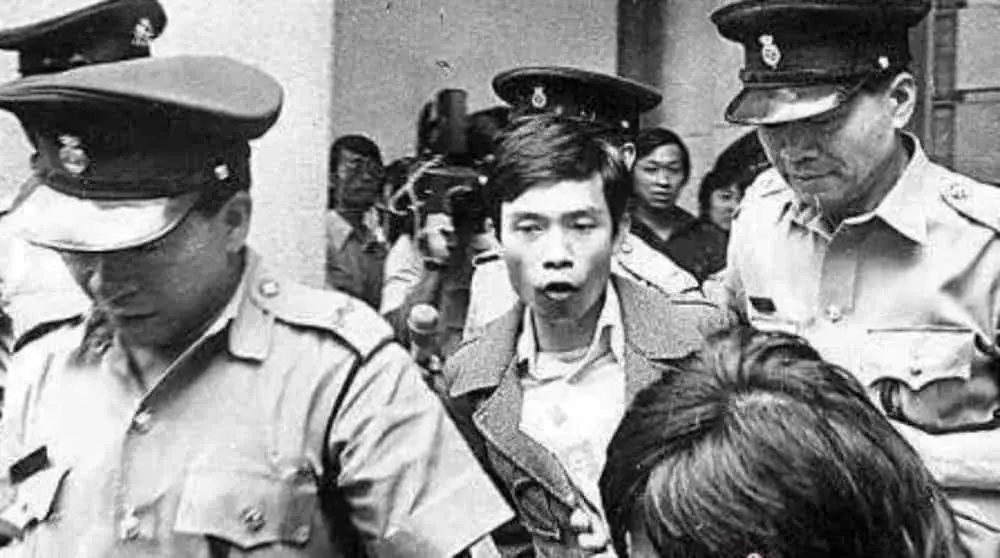
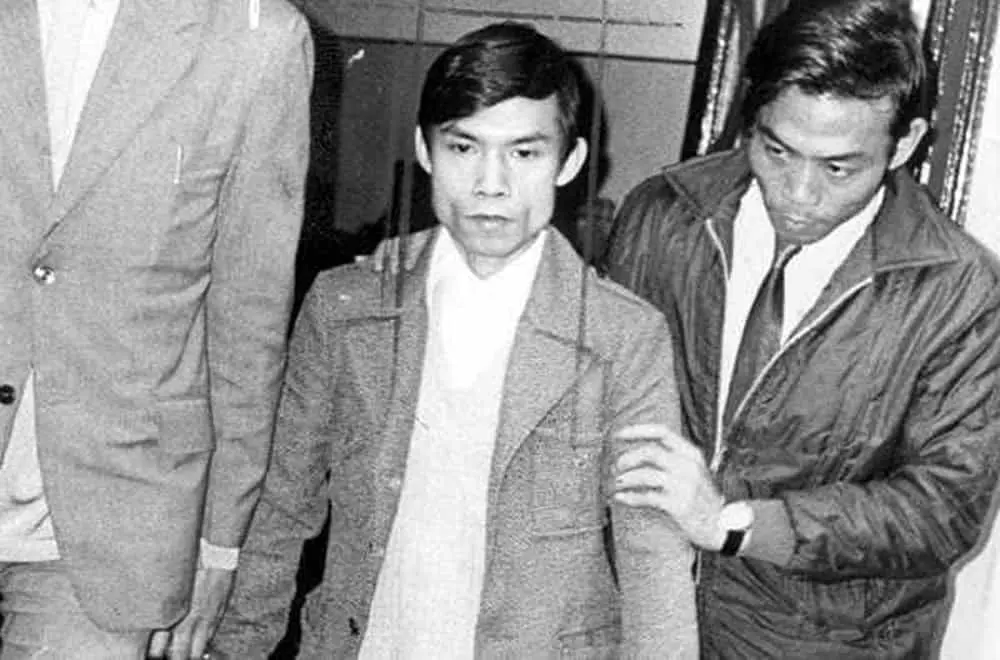
On January 3, 1975, they came to arrest me. A police car pulled up in front of the shop, and Bea personally escorted me into the car. I shouted, "I didn't kill anyone! I'm innocent!" They searched the shop and found bloodstains, fibers, scraps of paper, and even her hair in my ashtray in the attic. The government laboratory report came back: Bian Yuying had 269 fibers on her body, 7 of which matched the blue-gray fibers from my suit. There were bits of my skin under her fingernails, and duct tape marks on her wrists, the same composition as the electrical tape in the shop. The newspaper scraps on the cardboard box were old newspapers from the shop, with matching dates. There were burn marks on her genitals, matching the lighter fluid stains on my lighter.

The evidence of murder is conclusive.
In the interrogation room, the lights were blinding. Bea sat opposite me, smoking. "Ouyang, admit it. How did you know her?" I insisted on denying it: "I've never seen her! Those fibers might be a coincidence." But the evidence piled up like a mountain. A witness said he saw me burn fragments of a girl's skirt, which, although not Bian Yuying's, increased suspicion. Bea said in court, "One ray of light is not bright, but many rays can illuminate the truth." The jury believed him. In November 1975, I was convicted of murder and sentenced to death. But Hong Kong had not carried out the death penalty since 1966, replacing it with life imprisonment. I appealed, failing three times, even appealing to the Privy Council in London. My wife, Zhang Jinfeng, worked tirelessly for me, selling our possessions and hiring lawyers Tang Jiahua and Hu Honglie. They raised ten points of doubt: the fibers did not match completely, there was no obvious motive, the night school classmates were not thoroughly investigated, and there were no signs of rape on the body, etc. But the court did not listen; the judge said the chain of evidence was complete.
Prison life was like hell. The cell was cramped, filled with the smells of mold and sweat. I thought of my daughter, Xiaoli, so young, her father a murderer. My wife came to visit, her eyes swollen from crying. "Bingqiang, are you sure you didn't do it?" I nodded, but felt guilty. That flame of desire had destroyed our family.

The root of desire and inner struggle
Looking back on my past, I grew up in poverty and chaos. The Cultural Revolution on the mainland cost me my family, and I nearly drowned when I smuggled myself to Hong Kong. After marrying Jin Feng, life became stable, but our sex life was dull. She was always tired and rejected my advances. I began to fantasize about other women—prostitutes on the street, customers in the shops. Bian Yuying was my weakness. She was like a flower, pure and alluring. Every time she came to the shop, I imagined undressing her and touching her body. How smooth must her skin be? Would her nipples harden when I pinched them? Would her private parts be so tight they would drive me crazy?
That day, I lost control. When I held her, her breasts were soft and yielding, like water balloons. Her legs wrapped around my waist, rubbing against me in their struggle, sending me to the peak of excitement. When I strangled her, her eyes pleaded, but that look only fueled my desire, like a seduction. After she died, I looked at her corpse, her private parts pink and untouched. I probed inside, feeling the warmth and slipperiness of her inner walls. As I burned her pubic hair, the flames licked at her, charring her skin and giving off a fleshy aroma that both disgusted and excited me.
I never told anyone these details. But in prison, I dreamed of her. In the dream, she came to life, her naked body seducing me. We made love in the attic; her moans were sweet, her legs clamped around me, her vagina contracted, bringing me to orgasm. But when I woke up, it was a cold cage. When I masturbated, I still thought of her: her lips enveloping me, her tongue entwining; her breasts swaying, her nipples rubbing against my chest. The desire hadn't died; it fermented in prison, making me even more miserable.
I tried to repent, read Buddhist scriptures, and attended counseling sessions in prison. But every time I closed my eyes, I saw her corpse: a pale body, bloodied severed nipples, and a charred, blackened genital. Her eyes stared at me, as if asking, "Why?" I couldn't answer. Perhaps I am a monster, born that way.

The wife's struggles and the family's collapse
Jin Feng worked tirelessly for me. She sold her belongings, hired lawyers, and traveled to courthouses and prisons. She worked as a cleaner in a hotel, was harassed by her boss, and was even swindled out of money. She contemplated suicide, but for her daughter Xiao Li, she persevered. During a prison visit, she touched my hand: "Bing Qiang, hang in there. We will prove you innocent." But I could see her exhaustion. Her eyes were red and swollen, her skin rough, and her hair disheveled. The once beautiful young woman had become a haggard middle-aged woman.
When Xiaoli grew up, she came to visit me in prison. She asked, "Dad, did you really kill someone?" I shook my head, making up a story that I was innocent. But she looked suspicious. Jinfeng told me that Xiaoli was bullied at school, called "the murderer's daughter." My heart broke. In 1981, Jinfeng filed for divorce. "I can't take it anymore. These past years, I've lived like a widow," she cried. I understood. She believed in my innocence, but the evidence and public opinion overwhelmed her. I signed the papers, tears streaming down my face. After the divorce, she moved with Xiaoli and remarried a businessman. Xiaoli changed her surname and never recognized me again.
In prison, I am alone. I recall Jin Feng's body: her full breasts, her supple waist. When we made love, her moans were low and deep. But now, it's all gone. My desires turn to my fellow inmates, but I suppress them to avoid trouble.
The Turning Point of Confession and the Price of Freedom
In 1997, Hong Kong returned to China, and the law was changed, allowing life prisoners to apply for parole. However, the conditions were strict: they had to plead guilty and have a good record. Legislator Ip Siu-yan helped me; she was a kind woman who believed in my innocence. She said, "Admit it, for freedom. Manslaughter is not murder." I struggled for a long time. Pleading guilty meant giving up the right to appeal, but not pleading meant rotting in prison.
In 2001, I wrote to Representative Du: "I'm sorry, I accidentally killed her. That day, she came to the store, I molested her, she resisted, and I accidentally strangled her." That was partly true and partly false. I admitted to manslaughter, not premeditated murder. The sentencing review committee approved, reducing my sentence to imprisonment. In 2002, I was released. After 28 years in prison, my hair was completely white, my body was weak, my knees ached, and I walked with a trembling gait.
After my release from prison, I lived a low-key life, residing in a low-rent apartment and working as a cleaner. When the media pursued me, I said, "My first forensic case is going to kill me. The fiber evidence is inaccurate." But deep down, I knew the truth. That desire ruined my life.
The reproduction of details and the lingering taste of sin
Let me tell you the whole story of that day, from beginning to end, like a movie. At eight o'clock, she entered the store. She was wearing a blue and white school uniform, the skirt reaching her knees, her legs long and slender, fair and delicate. Her hair was tied in a ponytail, revealing her tender neck. I handed her an ice cream; as she licked it, her tongue was pink, and cream dripped onto her chin. As she wiped it away, her slender fingers made me want to take a bite.
During our conversation, she mentioned that her family was poor and she wanted to find part-time work. I said, "Go up to the attic and look; there are job ads there." She followed, the stairs creaking. The attic light was yellow, the air stuffy. She bent over to look at the boxes, her buttocks sticking out, her skirt taut, the outline of her underwear faintly visible. I hugged her from behind and touched her breasts. She screamed, "No! Let go!" I covered her mouth and pushed her down. I tore her clothes, revealing her underwear. Her breasts were small, her nipples hard, like cherries. Her pubic hair was sparse; I touched it, and she cried, tears streaming down her face.
As I strangled her, her face flushed red, then turned purple. Her body convulsed, her legs kicking my groin, a mixture of pain and excitement. Hot urine flowed out, soaking her underwear. After she died, I cut off her nipples; blood spurted out, landing on my hands. I burned her pubic hair; flames leaped, her skin blistered, and the aroma of burning flesh filled the air. As I wrapped her body, her eyes stared at me, as if she were alive. I closed the cardboard box, hearing my heart pounding like a drum.
These details, though I savor them, also disgust me. Her body was perfect, but it was ruined by my desires.

Inside the investigation and witness testimonies
When Bea examined me, she asked, "Do you know Bian Yuying? Her classmates said she often goes to your shop." I denied it, but I was sweating profusely. They found a witness: a passerby said he saw me dragging cardboard boxes, panting heavily. The fiber analysis showed my suit was blue-gray, matching 7 out of 269 lines. The scraps of paper were old newspapers from the shop; the headline was from December 1974. The bloodstains, though washed away, were visible under ultraviolet light.
In court, my lawyer argued: there were only seven fibers, which could have been contaminated; there was no motive, and I am a law-abiding citizen. But the prosecutor presented evidence: traces of adhesive tape, the smell of gasoline from burnt skin, and DNA from fingernail shavings (although technology was limited at the time, this was later confirmed during a review). I shouted, "Innocent! That's a frame-up!" But the jury remained indifferent. On the day of the verdict, I broke down, crying out my wife's name.
The inside story is that Bea suspected accomplices, but the evidence pointed to me alone. He said, "Science triumphs over lies."

Years in prison and the torment of the mind
In prison, I read books, learned English, and did manual labor. Every morning I got up early, had roll call, and ate thin porridge. I dreamt of Bian Yuying; her ghost came and touched my body, her cold hand sliding over my genitals. I woke up, masturbated, and ejaculated on the wall. Desire, like a parasite, gnawed at me.
I made friends; one old inmate taught me how to play cards. Another told me his murder story: raping his wife's sister, strangling her, and burying her body. Hearing it, I was horrified, yet also excited. Before my release, I kept a diary, recording details: the size and feel of her breasts; the smell and moisture of her genitals. These were my secrets.
After my release from prison, I became ill. In 2022, before I passed away, I reflected on everything. On my deathbed, I thought: I was the murderer, but if I could do it all over again, would I be able to control my desires? Perhaps not.

The Dialectic Between Doubt and Truth
The outside world points out ten suspicious aspects: no signs of struggle (I was careful to avoid leaving marks); no investigation by classmates (perhaps she had a secret boyfriend?); no semen on the body (I didn't ejaculate inside); unclear motive (desire is hidden). But only I know the truth. That day, it wasn't planned, it was an impulse. Her body was too alluring, her skin too smooth, her lips too sweet.
Perhaps there are other murderers? No, I admit it: I am the only one. That desire is a demon, possessing me.

Basic personality traits: calmness, high intelligence, and high psychological resilience
Au Yeung Ping-keung was described as a "calm, composed, and highly intelligent suspect," a quality evident throughout the investigation. Police records show he withstood harsh interrogations, including torture such as having cola poured into his nose and being hit on the soles of his feet with a ruler, yet never broke down or confessed. Even when police sent officers to pose as prisoners to extract information or made harassing phone calls in the middle of the night using ghostly voices, he went to work as usual the next day. This demonstrates exceptional resilience and self-control. In criminal psychology, such traits are common in "organized offenders," who are meticulous in their planning, emotionally stable, and able to maintain a facade of normalcy under pressure. Au Yeung's background—illegally immigrating to Hong Kong from mainland China and experiencing poverty and marital stress—may have shaped this resilience, teaching him to suppress his emotions for survival.
From a handwriting analysis perspective, some experts have dissected Ouyang's psychology through his handwriting, pointing out that the contrast between his "firm" and "soft" strokes suggests an inner conflict: outwardly refined, he may harbor abnormal impulses. This aligns with Freud's theory of "id, ego, and superego": the id drives primal desires (such as the fantasies about young girls in the story), the ego attempts to regulate them, and the superego brings about moral conflict. Ouyang's "tough guy" image may be a defense mechanism, used to mask his inner vulnerability and conflicting desires.

Root of motivation: repressed desires and impulse outbursts
In the case, the police deduced that Ouyang's motive was "murder after failing to sexually assault someone," which can be interpreted psychologically as the eruption of long-suppressed sexual desires. Ouyang, 28, was married with a daughter, leading a monotonous and impoverished life, working in a hot and cramped environment (the attic of an ice cream shop). This environment easily induces "situational impulsivity," especially when the victim, Bian Yuying—a pretty 16-year-old girl—frequently visited. Her appearance (fair skin, dimpled smile) may have triggered Ouyang's fantasies; the "primal urge" described in the story is precisely this kind of psychology: from a harmless gaze, it evolves into a strong desire.
Criminologists often categorize this as "opportunistic crime," rooted in "deprivation of desire." Ouyang's mundane marriage and lackluster sex life (as mentioned in the story), coupled with social pressure (the marginalized status of undocumented immigrants), may have led to "cognitive distortion": he viewed Bian Yuying as an object of his desires, rather than an independent individual. His acts of strangulation, nipple cutting, and pubic hair burning demonstrate "objectification" and a "destructive urge," similar to the BTK (Bind, Torture, Kill) serial killer, where the perpetrator vented his desire for control through disfigurement. The striking similarities between Ouyang's case and BTK suggest he may have a similar "dual personality": mild-mannered in daily life, brutal during crimes.
However, if Ouyang is considered innocent, the lack of motive becomes a point of contention. Defense lawyer Hu Honglie pointed out the "lack of obvious motive for murder," which may reflect Ouyang's psychological stability: he needed no motive because he hadn't committed a crime. But from a psychological perspective, even innocence and prolonged wrongful imprisonment can lead to "learned helplessness," which is not seen in Ouyang—his insistence on appeal demonstrates a strong survival instinct.
Denial and Defense Mechanisms: From Maintaining Innocence to Later Pleas
From his arrest to his sentencing, Ouyang consistently maintained, "I didn't kill anyone, I'm innocent," a classic example of the "denial" defense mechanism. In criminal psychology, highly intelligent criminals often use "rationalization" to maintain their self-image: Ouyang might have explained the incident as an "accident" or "unpremeditated," as described in the story as "accidental strangulation." Even faced with 269 pieces of fictitious evidence (only 7 of which matched), he did not break down, demonstrating a strong ability to regulate "cognitive dissonance"—inner awareness of guilt, but outward denial to avoid a breakdown.
Before his release, he confessed to Congressman Du Yixien that he had "accidentally killed her," shifting to manslaughter. This represents a psychological shift: his long imprisonment (28 years) triggered a variant of "Stockholm syndrome," or "institutionalization," leading him to compromise for freedom. While in prison, he read and learned English, demonstrating adaptability and intelligence. However, fellow inmates revealed that he was "the real killer," and inferred guilt from his post-release behavior (such as a smug expression). This aligns with "post-offense guilt": after release, the offender appears normal on the surface, but subtle inner reflections emerge, such as dreaming of the victim and replaying details in the story.
From the perspective of wrongful conviction, his denial is supported by genuine belief. Supporters like Weng Jingjing point out that suspicious points in the case (such as the absence of signs of struggle and semen on the deceased) suggest his innocence, and his psychological resilience stems from a sense of justice. Forensic pathologist Liang Jiaju analyzes six major doubts, reinforcing this view: Ouyang's "calmness" may be the resilience of an innocent person, rather than a criminal's disguise.

Post-release psychology: remorse, regret, and social adaptation
When Ouyang was released from prison in 2002, he was 56 years old, with completely white hair and a frail body. He lived a low-key life, working as a cleaner. In an interview, he said, "My first forensic case is going to kill me," showing his resentment towards the system. This is a "victim mentality." If innocent, it's justified; if guilty, it's "projection"—shifting the blame to the evidence instead of oneself.
His remarriage to a mainland Chinese woman resulted in emotional abuse and divorce, reflecting relationship difficulties stemming from post-traumatic stress disorder. In the story, his dying words, "I am the murderer, but I regret it," suggest heightened guilt in his later years. He reportedly died in 2022, possibly due to death anxiety that drove him to revisit his crimes.
From the criminal profile, Ouyang fits the pattern of "perverse reflex": work stress triggers abnormal behavior. However, the classmate's silence (post-traumatic stress) also indirectly reflects the psychological shadow of the case.

Comprehensive Assessment and Implications
Ouyang Bingqiang's psychological profile is complex: if he is the perpetrator, he is a high-functioning sociopath adept at concealing his true nature; if innocent, he is a model of resilience, his will unbroken by wrongful imprisonment. The case's suspicious points (such as incomplete fibrous tissue matching) amplify the psychological controversy: was it an impulsive crime driven by desire, or a victim of judicial misjudgment? Psychological implications: repressed desires can easily erupt, and while resilience can aid survival, it can also obscure the truth. Regardless of the truth, this case reminds us that psychological analysis must be cautious, relying on evidence rather than speculation.

Reflection
This is my confession, the complete version. From ordinariness to sin, from desire to destruction. A record of a man's fall. I hope readers will be warned: desire is like fire, burning everything.
After my release from prison, I went to Happy Valley to revisit the old shop. The trams clanged, the streetlights cast a dim glow, just like back then. But Bian Yuying's ghost seemed to still linger in the attic. Her eyes were forever fixed on me.
Do I regret it? Yes. But those exhilarating memories still make me tremble occasionally. Life is but a dream, but sin remains forever.