





What are the differences between straight-tooth, dog-tooth, and dog-leg gearboxes?

Straight-tooth dog gearbox isstraightCombination of two structures: teeth and canine teeth
- Straight Cut Gears = Straight gears (not helical gears), with less transmission loss, but supernoisyDriving a streetcar makes you feel like the whole car is making a loud "whoosh whoosh" noise.
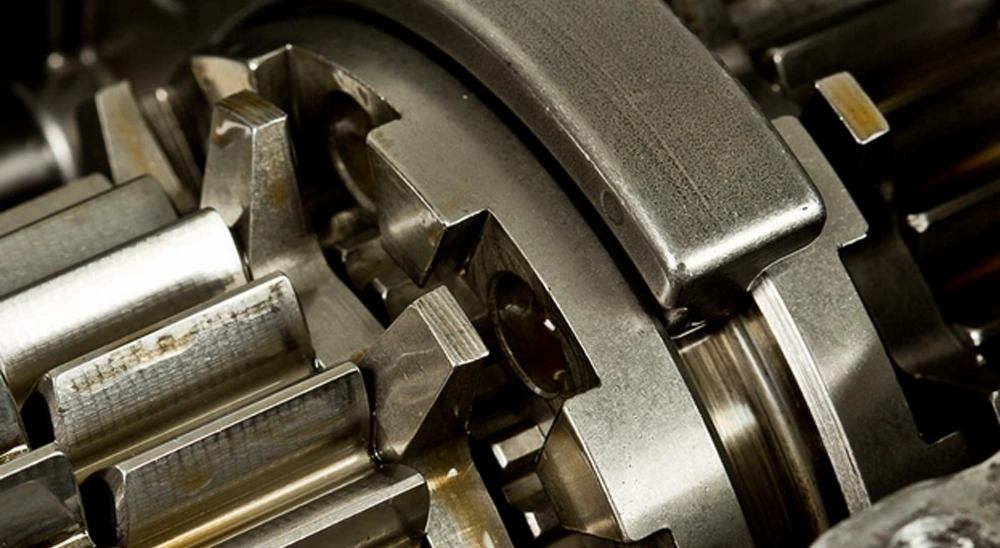
2. Dog Box = Dog Engagement, no synchronizer needed, no clutch required when upshifting. Use the dog engagement to directly bite the gear, super fast, but you'll hear a "click" sound before it engages.
3. Dog-Leg = Dog-leg style shifter, simply "push forward or pull back" to enter the shot.
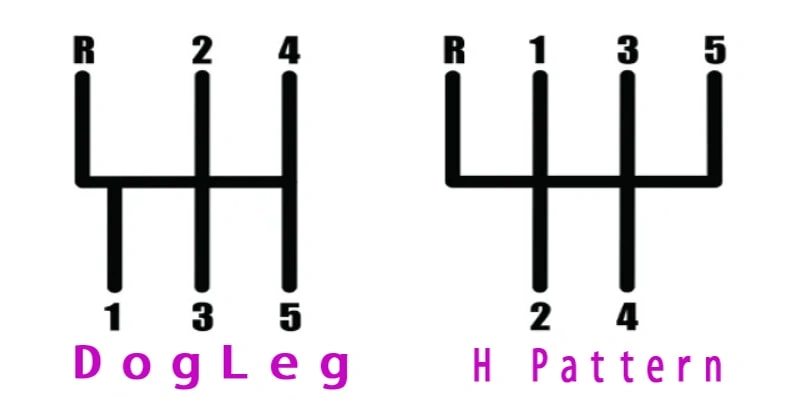
Table of contents
1. What are Straight-cut Gears?
This refers to the gear profile, which is the angle at which the gear teeth cut.
Standard street bikes (helical gears)The teeth of the gears are angled (oblique). The meshing is gradual, so it operates very quietly. However, the disadvantage is that it generates "axial thrust (lateral force)," which pushes the gears to both sides, consuming some power, and requires a heavier gearbox housing for support.

Racing (Straight-cut / Spur Gears)The teeth of a gear are straight lines, parallel to the axis. During meshing, the entire gear impacts each other directly.
advantageIt has extremely high mechanical efficiency, no lateral forces, and all engine power is transmitted directly to the wheels. Moreover, the structure can be made lighter and stronger.
shortcomingExtremely noisy! Because it's a direct impact on the entire surface, it produces a very loud "whining noise" similar to an airplane taking off.
Industry innovations (such as Gearmotive's design): Some modern racing car gearboxes use straight gears in gears 1-4, but at high speeds...5th gear changed to helical gearThis eliminates most of the whistling noise when driving on highways, while also ensuring practicality on streets.

2. What is a Dog Box?
This refers to the engagement mechanism inside the transmission.).
Synchromesh (a type of streetcar)It relies on tiny gears and copper "synchronizing rings" to use friction to pull the rotation speed of both sides to the same level, so that it can smoothly shift into gear.
Dog Box (racing car)The synchronizer ring was completely removed and replaced with 4 to 6 large, dog-tooth-like "dog teeth". Shifting gears was not done smoothly, but rather the dog teeth were directly and roughly rammed into the grooves of the pivot.
How it worksWhen shifting gears, instead of relying on friction to synchronize the rotational speed, the canine teeth are directly and precisely rammed into the groove of the new gear.

Three major competitive advantages:
Lightning-fast gear shifting speedGear shifts take only 30-50 milliseconds, making every second count.
Clutchless upshifting: No clutch needs to be pressed when upshifting. Simply by using the racing computer (cutting off ignition/fuel) or by the driver quickly "relaxing the throttle", the transmission torque is briefly released (unloaded), and the gear lever can be pushed forward.
Continuous power outputClutchless shifting eliminates the delay in power interruption, allowing the engine to continuously maintain its maximum torque output range.
Daily CostsThere will be a loud metallic clanging sound when shifting gears (clang, clang). Downshifting requires extremely high rev-matching skills, otherwise the canine teeth are very easy to break.
Dog-Leg gearbox (track-specific gear layout)
This has "completely nothing to do" with the internal mechanical operation of the gearbox; it simply refers to the H-shaped gear position marking on the gear lever.
Layout featuresThe first gear of a traditional manual shifter is located in the upper left corner, while the first gear of a dog-leg shifter is located in the lower left corner. To shift to second gear, the shift lever needs to be moved up, to the right, and then up again, following a trajectory resembling the bent shape of a dog's hind leg.
Track thinkingThe race car only uses first gear at the start and when exiting the pit lane. Once it's running, second and third gears are the most frequently used. The dogleg design pushes first gear to the side, leaving second and third gears in a central row.straight line.
AdvantagesWhen drivers are aggressively cornering or exiting corners, they can shift gears by simply "pushing straight forward and pulling back," which is the fastest way to shift gears and ensures they never shift into the wrong gear.
Classic car modelsLegendary European performance cars such as the BMW M3 E30, Lamborghini Countach, and Porsche 928 have all used this technology.

Why do people often confuse the terms "Dog Box" and "Straight-cut Gears"?
Because pure racing cars, in pursuit of the ultimate performance, will put both of these technologies into the same gearbox: using a Dog Box to achieve a shift speed of 0.03 seconds, and then combining it with spur gears to squeeze out the last few horsepower for transmission efficiency.
However, in theory, these two can be separated. For example, some rally cars use a Dog Box mechanism for durability, but with helical gears, so the shifting is just as fast, but the noise is slightly quieter.
Further reading: