



Do you think you're so great?

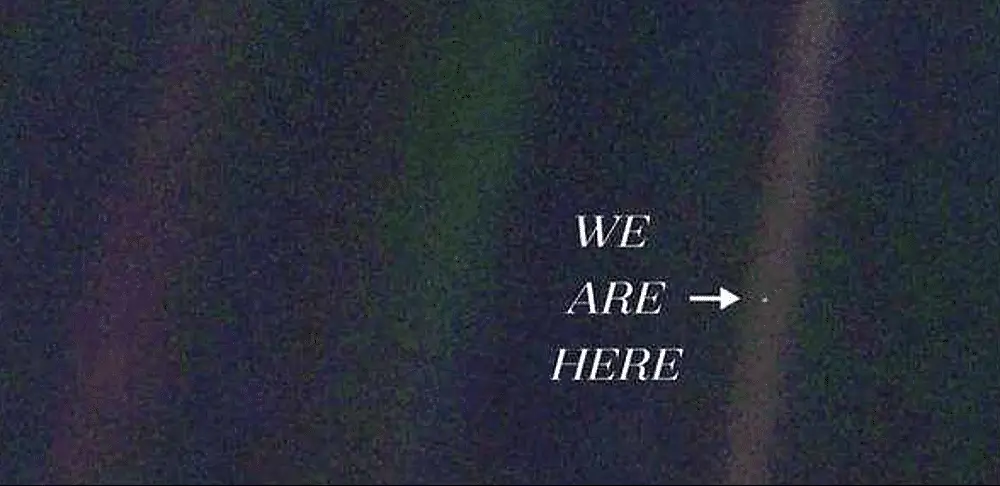
At 6.4 billion kilometersVoidIn addition,Voyager 1It slowly turned around, completing its final gaze.
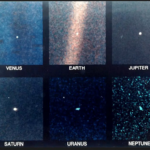
That was in 1990.Valentine's DayAs this spaceship was about to bid farewell to the solar system forever and head towards the cold, boundless interstellar space,Carl SaganThe doctor made a seemingly "impractical" request: to let it look back one last time and see where it came from.
The engineers hesitated—it would consume precious propellant, and the subject being photographed would be barely visible in the lens.Dark Blue DotIt has no scientific value whatsoever.
But Sagan insisted: "Look at that little dot. That's our home. That's us."
And so, in a place far beyond the limits of human vision, the shutter was pressed.
Table of contents

It shocked everyone
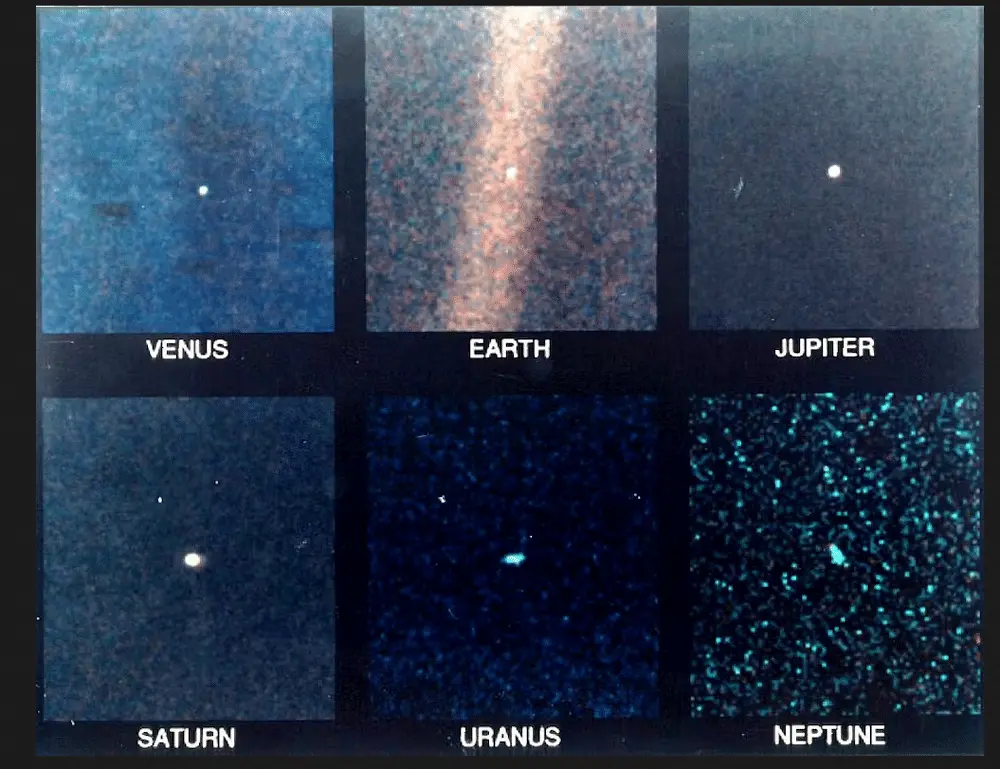
In that areavastIn the boundless darkness, Earth occupies only 0.12 pixels—A speck of dust suspended in sunlightIt almost disappeared into the darkness of the universe.
This photograph is like a mirror from deep space, reflecting our most authentic situation:Do you think you're so great? You're just a speck of dust in the universe.
Seeking civilization from the outside
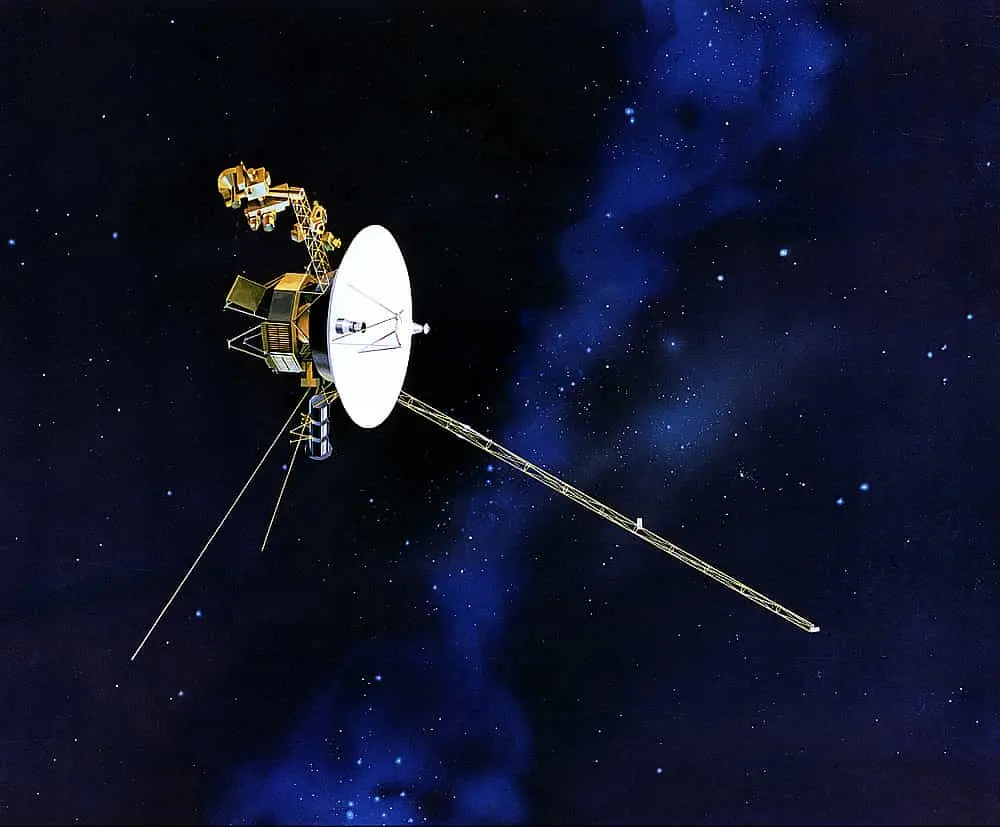
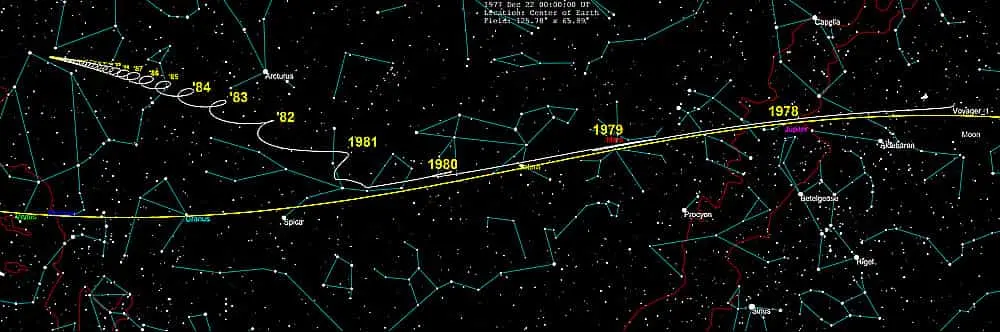
Forty-seven years have passed, and Voyager 1 has already left the heliosphere of the solar system, becoming the first interstellar object created by mankind. Its power is running out, and its equipment is shutting down one by one. It is expected that around 2030, it will lose contact with Earth forever and fall into eternal silence.
But before that, it carried a golden record, engraved with human greetings, music, the sounds of nature, and the imprint of life on a planet. Even though it would take 30,000 years to leave the solar system, even though its speed was as slow as a snail in the vast universe, it still carried the most tender desire of a species: to be seen, to be remembered.
The truth
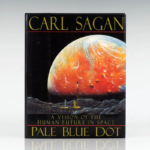
In his 1994 book, *Pale Blue Dot*, Sagan revealed the profound insights he gained from this photograph, writing:
"Take one more look at this tiny dot. Right here. This is home. This is us. On this tiny dot, everyone you love, everyone you know, everyone you've ever heard of, every single person, whoever they are, has spent their entire life here. All our joys and struggles, the countless proud religious beliefs, thought systems, and economic principles, every hunter or conqueror, every warrior or coward, every creator or destroyer of civilization, every king or farmer, every young couple in love, every parent, all hopeful children, inventors or explorers, every spiritual mentor, every corrupt politician, every so-called 'superstar,' every so-called 'supreme leader,' every saint or sinner in our human history… everything we are, all of us, exists on this single speck of dust suspended in a ray of sunlight."
Earth is but a tiny stage in the vast arena of the universe. Consider the bloodshed and carnage waged by emperors and generals, all for the fleeting taste of glory and victory, of dominating a small, insignificant point. Consider the endless brutality that unfolds between a group of people in one corner of this tiny point, and another group in another corner of the same tiny point, almost indistinguishable from one another. How frequent can their misunderstandings be? How urgent can their desire to annihilate each other be? How intense can their mutual hatred be?
Our pretentiousness and arrogance, our illusions of special privileges in the universe, are challenged by this tiny, faintly blue dot. Our planet is a solitary speck of dust, shrouded in the vast darkness of the cosmos. In our limited understanding, within this vast expanse, there is no indication that salvation will come from elsewhere to help us redeem ourselves.
To date, Earth is the only known world inhabited by life. There is nowhere else—at least not in the near future—that our species can migrate to. We can visit, but not permanently. Whether you like it or not, Earth is currently our only home. Some say that astronomy is a humble and character-shaping discipline.
Perhaps nothing illustrates the folly of human arrogance better than this photograph of our tiny world taken from distant space. To me, it also serves as a reminder of our responsibility to treat each other kinder and to protect and cherish this dark blue dot—our only known home.
You are just a passerby.
On that tiny dot, one person is reading these words. Another is preparing dinner. Some are just being born, some are leaving. Billions of stories are unfolding simultaneously, each story equally precious, each life equally fragile.
Our hatred and forgiveness, our wars and peace, our pain and ecstasy—all of it happens on this speck of dust. All our history, all our art, all our love and loss unfold in this fragile point of light.
Do you think you're so great? In the vastness of the universe, our national borders, ideological disputes, and personal grudges and gains are too insignificant to be seen by any distant eyes. Our planet is but a speck of dust in endless darkness, and each of us is a speck of dust upon dust.
On a cosmic scale, our home is so small, so lonely. There is no indication that anyone will come to save us except ourselves. There is nowhere else, at least not in our lifetime, that we can call home.
Be kind to others
Voyager 1 continues its journey, farther and farther away, darker and darker. It is like a time capsule, carrying a…civilizationThe most beautiful part floats in eternal darkness.
And we remain on this pale blue dot.
Perhaps this is the most profound lesson of that photograph:Now that we know we are just a speck of dust in the universe, how should we conduct ourselves?
Our arrogance and pride seem so absurd, our hatred and division so insignificant. But at the same time, our love and creativity are all the more precious—on this fragile home we share, we are each other's only one.companionThey are each other's only witnesses to their story.
When we look up at the starry sky and feel our own insignificance, we also feel the preciousness of our connection with one another. Because in this boundless darkness, the warmth on our blue speck of dust is the only light we know.
In this vast universe, we are but a tiny speck of dust. But that is precisely why this small blue dot is so precious—it carries everything humanity has. Perhaps this is why we should be humble, cherish what we have, and treat one another with kindness.
We have learned to love, created beauty, and pursued meaning—perhaps this is our gentlest form of resistance against the vastness of the universe.
And love is the most affectionate signature we leave for the universe.
10 Frequently Asked Questions about Pale Blue Dot
-
What are pale blue dots?
On February 14, 1990, Voyager 1 took a photo of Earth from 6.4 billion kilometers away. Earth occupied only 0.12 pixels, like a blue dust suspended in the sunlight.
-
Who took the photo? When?
This photo, taken by Voyager 1 spacecraft on February 14, 1990 (Valentine's Day), shows a distance of approximately 6 billion kilometers from Earth.
-
Why is it called "Pale Blue Dot"?
The Earth appears very small and dim in the photograph, just a blue dot, hence Carl Sagan named it the "Pale Blue Dot".
-
Who suggested taking the photo?
Astronomer Carl Sagan persuaded NASA to allow Voyager 1 to turn back and take a family portrait of the solar system before leaving it.
-
What famous speech did Carl Sagan give about this photograph?
In his 1994 book, Sagan wrote, "Look at that point again. That's home, that's us... that's the only home we know." This emphasizes that humanity should treat each other more kindly and cherish the Earth.
-
Are there other planets in the photo?

This is part of a family portrait of the solar system, consisting of 60 photos covering the Sun and 6 planets (Mercury and Mars were not photographed due to lighting conditions).
-
Why does the Earth appear blue?
The photo was taken using blue, green, and purple filters, due to atmospheric scattering of blue light and ocean reflection.
-
What is the significance of a photograph?
It reminds us of humanity's insignificance in the universe, that all history, wars, joys and sorrows occur on this speck of dust, and calls for setting aside arrogance and uniting to protect the Earth.
-
Are there any updated versions of the photos?
NASA reprocessed the original image in 2020, making it clearer; Cassini also took a similar "blue dot under Saturn's rings" image in 2013.
-
What is Sagan's book, Pale Blue Dot, about?
Published in 1994, with the subtitle "A Vision for the Future of Humanity in Space," it expands upon photographs to discuss the universe, humanity's place, space exploration, and responsibility to Earth.
Further reading:
![[有片]拜祖先會獲得保佑?](https://findgirl.org/storage/2026/01/有片拜祖先會獲得保佑?-300x225.webp)