



The feud between Steve Jobs and Sony
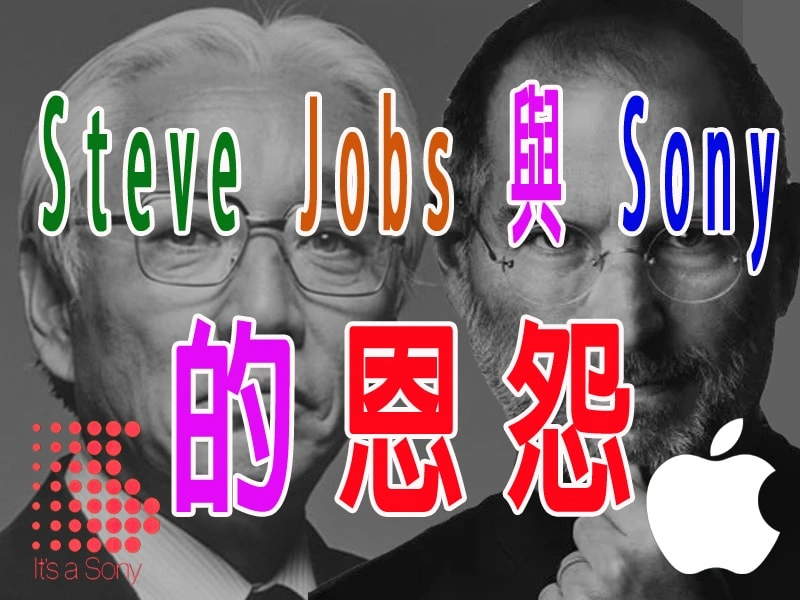
From fanatic to relentlessly attacking their idol—the protagonist is...Steve JobsThe supporting actor is a former source of pride for Japan. SonyHe went from being a number one fan to a Sony destroyer, personally sending his idol to the grave of history.
Table of contents
The pilgrimage of the number one fan
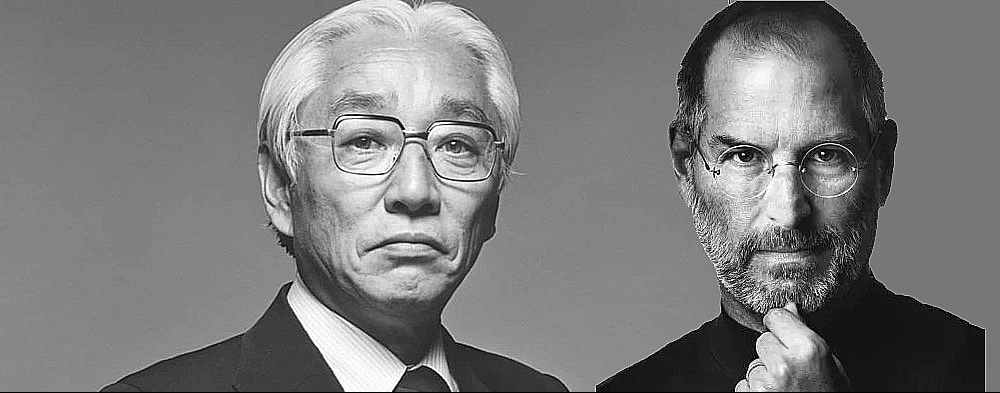
In the 1980s, before the young Steve Jobs was hailed as a legend, he was at Sony. World's Number One Brain Fan.
He flew to Japan multiple times, just to pay homage to Sony's headquarters. Sony founder Akio Morita liked this young man very much, often personally receiving him and even gifting him a first-generation Walkman TPS-L2. What was Jobs' reaction upon receiving the Walkman?Demolished on the spotHe examined each part from every angle, like a forensic pathologist dissecting a cadaver.
He visited Sony's factory and toured the production line. He saw that the workers wore different colored uniforms according to their roles and thought it was "really exquisite and meticulous." After returning to the United States, he immediately instructed Apple's factories to follow suit.

Former Apple CEO John Sculley recalled, "Back then, Steve's North Star was Sony. He didn't want to become IBM, nor did he want to become Microsoft."He just wants to become Sony.He even considered naming the later iMac "MacMan" as a tribute to the Walkman.
He poached Hartmut Esslinger, a German designer from Sony, who had previously designed over 100 products for the company. Esslinger later remarked, "Half of Apple's soul is Japanese."
Before the term "Apple fan" came into being, Jobs himself was a die-hard Sony fan.

Fans become harsh critics
Over time, Jobs's idol worship of Sony began to waver. He found that his idol was turning into a "dead fish".
In 1985, a young and impetuous Jobs uttered a famous quote that has been used by the Japanese as a sarcastic label for decades:
"The Japanese were washed ashore like dead fish."

The meaning of this statement is simple: although Japanese companies may seem very strong now, they will be dragged down by their own "big company disease" and become helpless dead fish. Sony later perfectly demonstrated what it means to "turn a dead fish over—but can't turn it over."
Every time Jobs went to Japan, he would call the president of Sony directly: "Can I visit today?" Once he arrived, he would critique Sony's new products one by one, like a food critic—and without holding back.

Case 1: PSP's CD/DVD drive
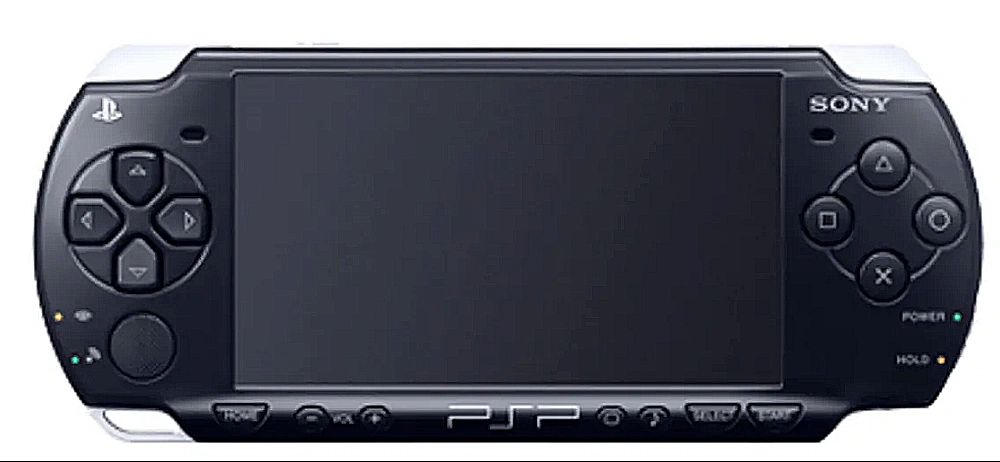
In 2004, Sony launched the PSP handheld game console, which used UMD discs. Jobs immediately criticized it: "It's 2005, and you're still using discs? This stuff is outdated!" Sony executives probably rolled their eyes in their hearts at the time: "What do you computer sellers know about game consoles?" As a result, a few years later, the PSP's successor models obediently abandoned discs and switched to pure digital downloads.
Case Study 2: Cyber-shot Camera
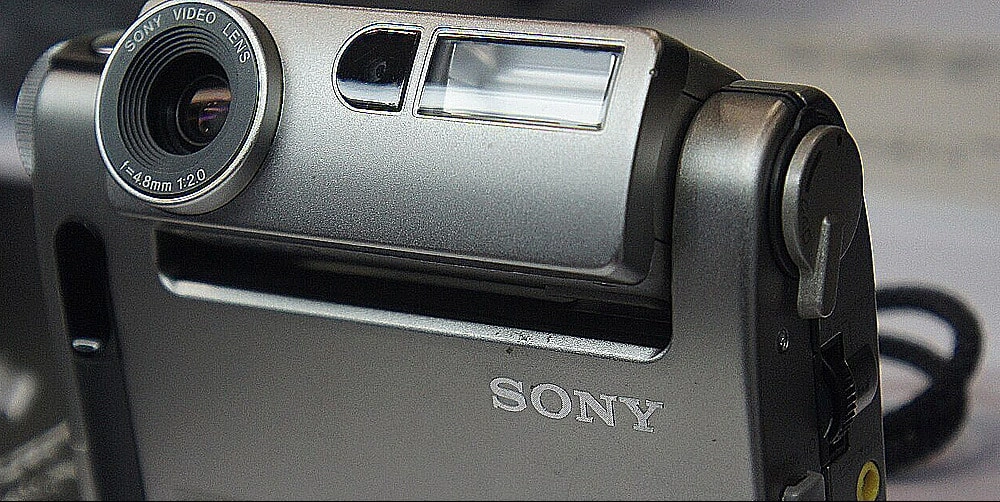
Jobs picked up a Sony Cyber-shot and said, "If this thing had built-in GPS, I could record everything in my life." Sony executives thought it made sense, and they actually put GPS into the camera.Many of Sony's so-called "innovations" were actually taught to them by Jobs, their "super customer."
He went straight to the point and said, "The PSP is garbage."
In January 2007, shortly after the iPhone launch event, Jobs gave an interview to Time magazine. When asked about his views on competitors, he fired back:
- Treo (Palm phone): "No."
- BlackJack (Samsung phone): "No."
- PSP (Sony handheld console): "This is garbage."
- Sony Mylo (Sony's portable internet device): "Garbage."
- Microsoft Zune: "Garbage."
At the time, the PSP was the world's best-selling handheld game console. Jobs wasn't just criticizing one product; he was declaring war on Sony.Your so-called mobile entertainment devices are outdated in my eyes.
There was widespread lamentation within Sony. Even more shockingly, according to a Japanese journalist, Sony had actually established an internal organization... "Jobs Reaction Team"Every time Jobs visited and offered his opinions, Sony would hold an emergency meeting to discuss how to respond.An outsider has been able to influence product direction more than Sony's own board of directors. What do you call this? You call it "a giant baby company needs an external mentor".

Attempt to "incorporate" it—to make VAIO run Mac OS X
In 2001, at the Sony Open in Hawaii, after finishing his round of golf, Jobs took out a Sony VAIO laptop; the screen was running... Mac OS XHe directly suggested to Sony President Kunitake Ando, "Let's pre-install Mac OS X on the VAIO."
It's important to know that Apple never licenses macOS to other PC manufacturers. But Jobs made an exception for Sony. The reason is simple—VAIO's industrial design and brand image are the only non-Apple hardware worthy of macOS.
Sony refused, stating that they "didn't want to spend resources on such special effects." Ando later recalled, "Can you imagine..."A computer salesman came to teach us how to sell computers?"
That's right, a computer seller later crushed all of you who sold mobile phones, portable music players, and game consoles.

Fans became the terminators
Jobs' real "fatal blow" to Sony wasn't his verbal attacks, but rather the launch of a series of products that Sony simply couldn't handle:
| Apple Weapons | years | Aiming at the target | result |
|---|---|---|---|
| iPod | 2001 | Sony Walkman | Sending Walkmans to Museums |
| iTunes Store | 2003 | Sony Music (CD sales) | Completely disrupting the music industry |
| iPhone | 2007 | PSP + Sony Ericsson | Defeated handheld consoles and feature phones |
| App Store | 2008 | PlayStation Network | Developers abandon closed handheld systems |
Sony once dominated four major battlegrounds: music players (Walkman), record labels (Sony Music), game consoles (PlayStation), and mobile phones (Sony Ericsson). Apple used... iPod + iTunes The physical fortress of the Walkman was destroyed, with iPhone + App Store It revolutionized the ecosystem of handheld and mobile games.
Jobs launched targeted products to directly compete with every business that Sony relied on for its survival.
This is the essence of "I learn from you, then I surpass you, and finally I destroy you."

The collapse and infighting at the top of Sony
At a symposium in 2007, then-Sony CEO Howard Stringer directly criticized... Steve Jobs was a "greedy bastard"..
Why? Because Jobs refused to share the profits from the iPod with record companies. But when Sony sold the Walkman, it didn't give record companies a single penny either. This double standard of "allowing officials to set fires while forbidding ordinary people to light lamps" made Sony look quite ugly.
More importantly, Sony has serious [issues/problems]. Big corporate diseaseSony comprises Sony Music, Sony Pictures, PlayStation (game division), and Sony Corporation (electronics company). These divisions are frequently embroiled in internal conflicts.
- The music industry feared that MP3 players would encourage piracy, so electronics companies were prohibited from making MP3 players.
- The film division wants to exclusively release Sony content on PlayStation, while the electronics company wants to open up the platform.
Nobuyuki Idei, Sony's early CEO, was criticized for "emphasizing corporate governance over product development," leading Sony to lose its direction. Employees jokingly referred to the company as... "Completely lost".
The netizens' comments are excellent:
Sony could have become Apple, but it chose to become the "United Nations"—many departments, much arguing, little output.

One mobile phone = Walkman + mobile phone + computer, and the entire Japanese electronics industry collapses.
The phone you're holding today, whether it's an iPhone or an Android, can:
- Listening to music (I used to want to buy a Sony Walkman).
- Make a phone call (I used to want to buy a Sony Ericsson).
- Internet browsing, office work, watching movies (I used to need to buy a Sony VAIO computer)

Previously, you needed to carry three things; now, you can do it all with just a mobile phone.
This is great news for consumers, but for the Japanese electronics industry... Hellish bad news—Because one company wiped out the businesses of three companies.
Japan's electronics industry once dominated the world by "manufacturing various specialized electronic products." Now, all of those products have been replaced by a mobile phone.
| before | Now | Japanese companies' fate |
|---|---|---|
| Walkman | Music apps on your phone | Sony Walkman becomes an antique collectible |
| digital camera | mobile phone camera | Nikon, Canon, and Olympus sales collapse |
| PSP (Power Spy) | mobile games | PSP was defeated by iPhone |
| Navigation device | Google Maps | Car navigation systems have almost disappeared. |
| Computer, alarm clock, MP3 player, radio... | Mobile App | All disappeared |

Sony's ultimate fate—selling insurance is the real deal.
These days, electronics are no longer Sony's main business. So what is it doing?
- Selling insurance(Sony's financial and insurance division is the real cash cow.)
- Selling image sensors to Apple(Working for iPhone, earning $20 per piece)
- Making Spider-Man movies(Sony Pictures uses profits to support its electronics division)
Sony's old advertising slogan was: "It's a Sony!"
It should now be: "It's a Sony... insurance claims hotline."
Walkmans are still being sold, priced at 30,000 NTD each. The buyers say... "This isn't just listening to music, it's recharging your faith."Sony sold off its VAIO laptop business. Sony Ericsson ceased to exist as early as 2012, and since then, its mobile phone market share has been less than 11 TP3T, with annual losses. The only remaining competitive product, PlayStation, uses chips from AMD in the US and is assembled by Foxconn in Taiwan; Sony is merely a brand owner and system integrator.
If you visit the Sony flagship store in Ginza, Tokyo, you'll notice an interesting phenomenon: the largest display area is dedicated to Sony's financial and insurance services, while PlayStation is relegated to a corner.

The former electronics giant has now become a company that makes a living by selling insurance.
A satirical summary circulating online Sony's current business model:
The money earned from PlayStation was used to offset losses in the mobile phone business; the money from selling image sensors to iPhones was used to make televisions; the money earned from the television division was used to support the film company; and the money earned from the film company was used to buy insurance licenses—because buying Sony stock is less profitable than buying a Sony life insurance policy.

After Jobs' death, Apple's stock price increased 27-fold, while Sony is still struggling.
When Steve Jobs passed away in 2011, Apple's market capitalization was approximately $350 billion, and Sony's was approximately $17 billion. At the time, everyone was saying, "Will Apple collapse without Jobs?"
As a result, more than a decade later, Apple's market value exceeded $3 trillion.It has increased 27 times compared to when Jobs died.
Sony's market capitalization has hovered around $100 billion for more than a decade. The size difference between the two companies is now almost unimaginable.
Some say, "Jobs' love for Sony was the kind that would kill you—first learn your technology, then make a better product than yours, and finally utterly crush you."
And what about Sony? From an "idol" to a "laborer," from "buying up America" to "being defeated by America."

🇯🇵 Final Funny Bonus Episode: Japan is back? Back to where?
Someone asked: So what exactly does the phrase "Japan is back" mean?
Sanae Takaichi said, "Japan is back," and yes, it really has back.Back to the depressed era of the early Heisei period.
The following is The "authentic" translation of "Japan is back".:
| What they said | The real meaning |
|---|---|
| Japan is back | Japan's wave of bankruptcies is back. |
| Japan's technological renaissance | What's being revived is "counterfeiting technology". |
| The spirit of craftsmanship reappears | What is being recreated is the "craftsman bowing in apology". |
| Sony returns to glory | What has returned is the "glory of selling insurance". |
| Toshiba Restarts | The starting point was "to file for bankruptcy in court". |
| Japanese-made mobile phones are back. | What came back were "phone parts that worked for Apple". |
If you hear someone shout "Japan is back" again, please respond with a smile:
"Yes, Japan is back—back so much so that even the Walkman has become an app on your phone."
Previously, Sony made $200 from selling a Walkman in Japan; now, Sony makes $20 from selling a CMOS sensor to an iPhone.
This is the economic miracle of "Japan is back."
As for Japan Electronics Corporation?
They can't help but be idle now, because all their work is done with a mobile phone.

Steve Jobs' story teaches us one thing
The truly terrifying fans are not the ones who idolize you.
Instead, it's the one who learned your skills and then kicked you off your pedestal.
Apple's "soul is half Japanese," but ultimately, that bloodline became the deadly weapon that killed its parent company. Sony missed the train of the digital revolution and the wave of smartphones. Jobs said they were like... "Dead fish" Perhaps it wasn't wrong from the beginning.
In the past: Sony was a god, and Jobs was a believer.
In today's world: Apple is a god, and Sony is... an insurance salesman.Further reading: